
Peter Sandback will tell you he’s not a great woodworker. And maybe he’s not a handcut dovetails kind of guy. But every time you turn around he seems to have developed another innovative and dynamic technique and designed a whole slew of great pieces around it.
When I first saw his work ten or twelve years ago, he was building impeccably crafted tables with concrete tops and selling them all over the country. He had developed a method for casting a thin shell of concrete around a core of foam, making the tables light enough to ship. For good measure, he had also come up with a surface treatment that made the concrete stain resistant–a problem most concrete countertop makers had yet to solve.
By 2008 Sandback was pushing in a very different direction. After years of experimentation, he had figured out how to make thin end-grain log slices, glue them to a plywood substrate, and create tables with what looked like inch-thick slabs of tree–but without the threat of warping or cracking. He has made a lot of great pieces using that method, and you can see them and his concrete tables on his website, www.petersandback.com
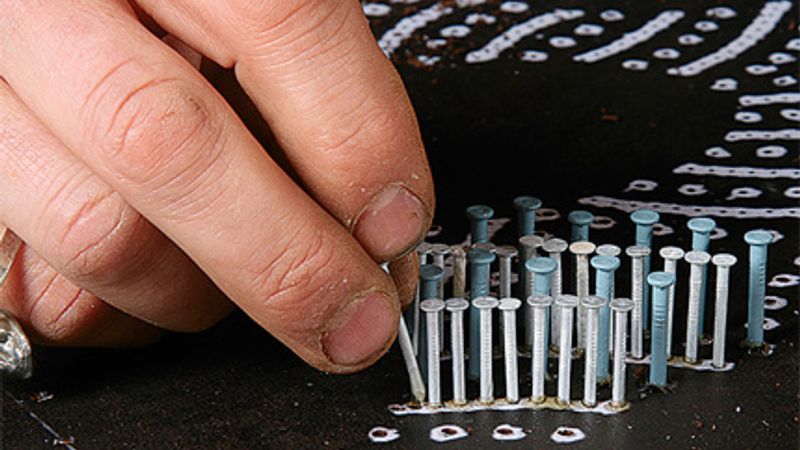
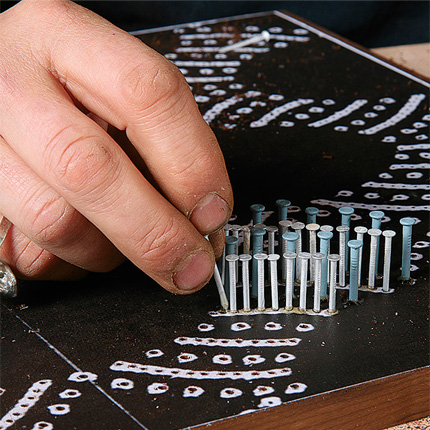
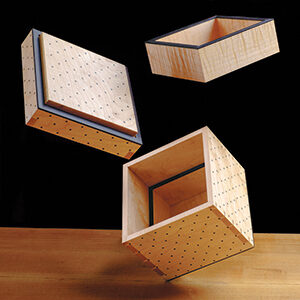
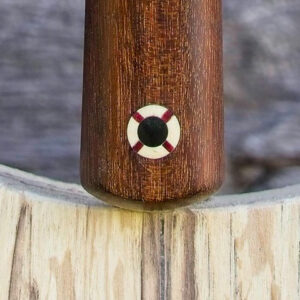
His current specialty, which is featured on the magazine’s back cover and in this audio slide show, is making elaborate inlaid patterns using aluminum nails. The slide show presents a range of pieces he’s decorated with the technique and explains how he creates a pattern step by step.




Comments
Jonathan and FWW,
Thanks for your wonderful back cover pieces. Peter's work is inventive and beautiful. Thanks for sharing a new way to do surface treatment on wood.
Sir, you did a superb job on your narration. With your discription and Peter's talent showing his labors. It was a pleasure in both relms. Thanks to the both of you.
Hi can anyone tell me where i can find designs similar
to what peter use to create his nail art.
thanks paul.
Excellent woodwork, excellent story and very effectively presented. This was good. Thanks.
Great piece. just got my recent mag and saw the back cover. I like when people think out of the box and do innovative things!
Where did Peter source the aluminum nails, and what size nails does he use?
I found copper and aluminum nails at RH Leahy in California. Great price, sold by the pound and they ship.
Sorry, should have been R.J. Leahy. Call them, they were great on the phone to work with. here is a link: http://www.rjleahy.com/store/nails/aluminum1.htm
The artistry of wood and nail is remarkable and elegant in its simplicity. The photography and narration was likewise excellent. Both made a inspiring presentation. I think I'll try something similar ! ! !
Great story. I never would have thought of using nails in such a decorating way.
Log in or create an account to post a comment.
Sign up Log in