Table Saw Safety Goes Under the Microscope–Again
 Feb 04, 2011
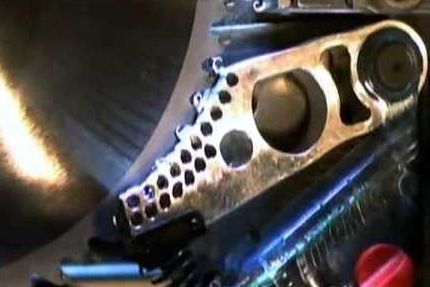
Does the CPSC's closer look at tablesaw safety spell doom for Steve Gass' airtight patent protections on SawStop-style braking technology?
According to a USA Today article, tablesaw safety in the United States is getting another look from the Consumer Product Safety Commission (CPSC), and saw manufacturers may get a call to testify as to why the problem has not been addressed sufficiently.
The CPSC says there are about 10 finger amputations a day, and that is in home shops alone. That’s too many, says CPSC Chairman Inez Tenenbaum. “The safety of table saws needs to be improved,” she says, “All options are on the table for CPSC at this time.”
| More on the Great Tablesaw Safety Debate We’ve been covering the developing story for a while now. Be sure to catch all the dirt on this increasingly controversial topic. • Man Wins Big Money in Tablesaw Lawsuit |

Already U.S. tablesaw manufacturers are complying with a UL requirement of equipping all saws with a riving knife, as European saws have been for years. A riving knife is designed to prevent kickback, which often results in hand and finger injuries. But there also is a push to incorporate “flesh-sensing technology” into the saws. This technology, pioneered by Stephen Gass, senses the presence of a body part and stops the blade before it can do harm. The technology, combined with the antikickback benefits of a riving knife, make for a safer tool, says Gass.
Gass had tried to sell his idea, called the SawStop, to a number of saw manufacturers, but in the end his efforts were rejected for a number of reasons (cost and the possible admission of liability were two major ones, according to an article published on finewoodworking.com).
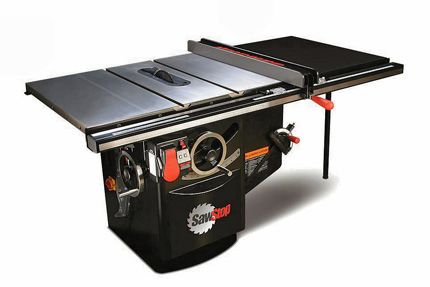
Gass and his colleagues, David Fanning and David Fulmer, went on to start their own saw company, which now offers three tablesaws under the SawStop brand: two cabinet saws and a contractor saw. But Gass also has been actively pushing the CPSC to require better safety standards for the industry, many of which were brought to light last year, when a jury awarded $1.5 million to a man injured in a tablesaw accident.
I called a few major saw manufacturers, who declined to comment on the situation. But some representatives who did not want to be identified say that including flesh-sensing and blade-halting technology will have a profound effect on the woodworking tool industry and will increase the price of any tablesaw. Gass agrees. “It would require the redesign of every table saw in the market,” he says. “This will require a significant investment on the part of the power tool manufacturers and it will increase the cost of the lowest price table saws.”
Gass says a more expensive saw is a far better option than paying for and living with a devastating injury. “I think the end result is that woodworking becomes a safer endeavor, which will lead more people to engage in it,” he says. “Everybody benefits.”
|
PROPOSAL TO CPSC
|
-
Does the CPSC's closer look at tablesaw safety spell doom for Steve Gass' airtight patent protections on SawStop-style braking technology?
-




Comments
"The first thing we do, let's kill all the lawyers"
Congratulations Mr. Attorney Glass your technology resulted in an outrageous damage award that hopefully need never be paid out. In addition your saws are selling all over the country. Now you are getting greedy. Have you invented a similar technology for chop saws, radial arm saws, band saws, skilsaws? How are these any less dangerous than table saws?
Safety with any power tool is about proper operation and training
I question the 10 finger amputations a day data. I suggest this is a case of statistical manipulation.
@hydroelectricguy:
The amputation figures come from compilation of hospital ER data. The CPSC just gathers together the numbers from all of the hospitals in the US (the rate they came up with is about 3800 per year). And yes, the other kinds of saws cause amputations, too, but at significantly lower rates. (Many of the available reports don't clearly identify what kind of saw did the damage, which makes the estimation job more difficult.)
Of course, all of this information is freely available from the CPSC, but I guess in today's society, uninformed speculation is far more popular than making an effort to find the truth...
-Steve
Hydroguy, you can bet your a** that Gass has long term plans in place to add his specific safety features to anything with a blade if he hasn't already done significant design work on those ideas. I love how his proposal to the CPSC exactly describes his system. Can't just be happy with having your own company selling your product, need to cram it down everyones throat whether they want it or not.
Bob
I'm glad this is happening. I would like to get a Sawstop, but can't afford even the cheapest Sawstop table saw. If this becomes a requirement, a safer table saw will be cheaper for all (compared to the cost of a Sawstop).
"When some hear the word "regulation," they imagine government rushing to the defense of consumers. In the real world, government serves up regulation to those who ask for it, which usually means organized interests seeking to block a competitive threat." --Holman W. Jenkins, Jr.
http://online.wsj.com/article_email/SB10001424052748703445904576118020915591658-lMyQjAxMTAxMDAwMzEwNDMyWj.html
Does Glass want government to provide him with an endless stream of royalties? There are plenty of bureaucrats already at work, contriving means to deprive him of them.
To follow up on saschafer's point, you can search the CPSC’s National Electronic Injury Surveillance System yourself here: https://www.cpsc.gov/cgibin/NEISSQuery/home.aspx
You need to enter a code for certain types of injuries (find them here: http://www.cpsc.gov/neiss/completemanual.pdf). (looks like tablesaw injuries are 0841)
Then you can query things like body part (finger), diagnosis (amputation), and such.
-Gina, FineWoodworking.com
I have thought about upgrading my saw for several years; I work on an old old saw and haven't had an accident yet. Initially I thought a little about getting a Sawstop until I read about the lawsuit; after that I was decided to get the new Delta and stay far away from a Sawstop all together. If all saws are required to have his technology, I will make sure that I purchase my new one before the new regulation kicks into effect.
BStev,
I have read that Gass' original intent was not to build and sell safer tablesaws but rather, to pioneer and license the technology. That has always been my understanding and I can't help but sense that's what may be on the horizon. Who knows . . .
Ed
We operate table saws and indeed have never used Sawstop before. However we are considering the purchase of a new cabinate saw and have made the decision to go Sawstop because its a robust saw, well made, well balanced and hey if my boy misses the point of all those lessons then $80 + Sawblade is cheap compared to his fingers (or mine for that matter). I agree they are more expensive, but so are airbags et al so you pays your money...... Cheers from NZ
There is no absolute safety guaranteed safety device. My oldest sister was killed wearing her seat belt when her car was side impacted. This safety device will work to a point and then another one will be put in place because it isn't perfect. this never again mentality has to stop. There are far too many safety devices that are removed due to there being unsafe with them on for a specific method of work.
The best safety system is proper usage of the tool, saw, drill, lathe etc.
The problem isn't with lawyers (I admit I am one) nor is it with the government creating regulations. The real problem is that many Americans rarely take responsibility for their own actions, assuming that someone else must be responsible for their own negligence or failure to follow safety instructions. To be sure, table saws are inherently dangerous, what with a raised hard metal blade with sharp teeth spinning above the table, often with no guard in place. No way around that, but the danger can be managed. I applaud the SawStop technology, and don't begrudge the inventor from trying to earn a living from his efforts. Moreover, I think that the major manufacturers were foolish not to license his technology. But that shouldn't make its use mandatory. Because when it all comes down to it, no one is required to use a table saw - as woodworkers we choose to, and assume that risk when doing so. Now we just need to convince the jurors, who are rarely lawyers, and often regular working people, that they should not feel so comfortable handing out huge judgments.
Interesting how Mr. Gass's proposal exactly describes what his saw is capable of. One foot per second isn't a very high velocity to choose as a limit. I have been very tempted to be the first person to lose a finger on a sawstop and have my retirement in comfort at sawstop's expense. It really wouldn't be very difficult to do. Anyone desiring instructions please send $10 and a self-addressed envelope to..............................
Won't be long and not a sole will be able to move out of their house for safety concerns defined by their elected officials...
Of course no more wood turning, and no manufacturing in the US, and a significant drop in the std of living from higher taxes, a lethargic overly risk averse federal govt.
There is a place for stds to improve safety, but at some point each of us is accountable for our actions. Once the federal gov takes over accountability, they also take away freedom.
Push back. Vote out your congressman if they have been in for more than two terms, no matter how good they are they have become part of the system...
To side with the barrister, it is a truth that too many are willing to check their scruples at the courthouse door whenever faulty decision making ends in self inflicted injury. My pops always told me to NEVER blame my tools. But then again, he was NOT a lawyer.
"Such a deal," the ambulance chasers say, "That wound is worth cash m-o-n-e-y. Don't delay, call 1-800-ASK-Y'SELF for the number of the nearest hungry litigator. CALL NOW!"
always,
All power tools are inherently dangerous. They are designed to change the structure of a hard substance--wood. I do not have a guard on my tablesaw because I want to be very cautious when using it. The sight of that whirling blade focuses my attention.
I am afraid that the saw stop technology will lull users into being inattentive if they feel safe. I want to be a little fearful.
I think the technology is wonderful and am all for anyone who wishes to use it. I just don't want to be forced to use it which is where this is going. Just like dead man controls on power lawn mowers. We have become a "nanny state" and it it really sad.
As a retired trial judge I can assure you that trial lawyers are handmaidens of irresponsibility and if Mr. Gass believes they won't turn on him if they see the slightest opportunity, he is in for a surprise. His invention raises the standard of care for all saw makers including himself. It is just a matter of time before he becomes a victim of his own arrogance.
I would be willing to get behind the idea of requiring the SawStop technology, so long as it held up to a cost/benefit analysis. That is, cost of severed digits (e.g.: loss of use, medical expenses) vs. cost of deploying the technology.
You can harp on personal responsibility, but when it comes to injuries it's not just the injured person who suffers. When that person shows up at the ER we all share the expense, whether it's through our taxes or health insurance premiums.
This reminds me of when automotive airbags became mandated. The marginal improvement in front seat mortality OF BELTED PASSENGERS was around 5%. (And airbags did zero for roll overs, ejections, etc.) Of course, for those stupid enough to be unbelted, the improvement was better, so the government mandated airbags. The good news is that once the technology became widespread, the cost of airbags went down, not to zero but not the huge gap it was. To me, this is a lesson in democracy wherein the capable pay for the safety of the dumb. I guess this is noble but since I will die with my Sears (Delta) tablesaw which has been shorn of even the limited "safety" equipment of the 1980's when I bought, all I can say is good luck. I shouldn't but I await the day when a really stupid person hurts themselves with a $2000.00 Sawstop and sues. BTW I guarantee that part of the $2000.00 is to cover the litigation. Welcome to America.
Lawyers are a symptom, not a cause. People without a sense of personal worth, hire lawyers (or dumb people with a missing digit are enticed to hire ambulance chasing lawyers) to litigate their dead end lives for a percentage of the settlement.
Wow... I am flabbergasted by all the "Nanny State" comments, the I've stripped my table saw of all its safety features etc. But first...
I am a personal injury lawyer in Canada and an amateur woodworker. I haven't read the decision in the landmark case which has precipitated all the discussion so I may be off on some details. I stand to be corrected by anyone who has read the decision (not newspaper articles about it). I can tell you that in Canada workers injured on the job are covered by our Worker's Compensation legislation. We would look at this accident as a combination of negligence on the part of the employee for failing to inform himself on the proper use of the tool (reading the manual) and negligence on the part of the employer for failure to provide adequate instruction on the use of the machine. The likelihood of a products liability suit would be remote. Now...
Everyone seems very worried that Mr. Gass' invention will be "jammed down their throats." We live in an age where our cellular phones have more computing power than a desktop PC of 10 years ago and more than a computer that would fill a room from 20 years ago. The costs for this technology are quite reasonable. The technological power available today is tremendous yet what have manufacturers of table saws done to improve safety that they have not been compelled to do? Very little. Why are there not competing technologies to what Gass has to offer? It's not like he's the only one with a brain. The cost of healthcare services to repair amputations is a cost to society generally both figuratively and literally. If one company alone goes the route of increased safety features the extra cost can be substantial. If all companies are forced to take steps the economies of scale reduce the costs for all. How much has the cost of table saws gone up since the introduction of riving knives? The woodworking industry , from my perspective, is not particularly innovative. If they need a nudge, so much the better.
I see that the decision was handed down by a jury so I presume that in the US as in Canada there were no reasons for judgment, just judgment. That makes tracking the facts of the case more difficult.
P.S. I think I will keep my airbags hooked up, just like all those other mandated affronts to my liberty like seatbelts, car seats for babies etc.
This is one more step at removing darwinism (that is, survival of the fittest, smartest, and most competent of the woodworker/contractor species) from a society that no longer values making a person responsible for his or her own actions. Hmmm, lets make it so damn expensive for someone to buy a table saw so they won't cut themselves. while we are at it lets take away kitchen knives and the only scissors stores can legally sell are the plastic safety scissors my preschooler has learned to use!
A government big enough to give you everything is a government big enough to take everything away! <--- a quote by a very smart person
I guess I should buy a couple back-up table saws that I can just put in storage until I need them. That way when my saw finally dies, I won't have to pay for a new one with all the bells and whistles that I don't want.
I bought my ryobi tablesaw on price. If I had to pay the price of a sawstop, I wouldnt get into woodworking as a hobby
Recently i nipped a finger with another tablesaw. Am I going to sue the manufacturer as well? No
Will I let someone else work with my equipment? previously - no problem, now, Definitely not. If i want to start a home business, I will definitely make sure i get workmans compensation and give training. but i'll most likely end up doing the stuff myself
If I do end up getting a sawstop, will workman's compensation pay the 'rearming" of the sawstop, since it saved them money? dont think so, but that would be something to look at
(in south africa, so things might differ for me)
Little old Switzerland has Prevention, Inspection and Accident Insurance all under one roof.
Viz http://www.suva.ch - most of it is either in German, French and Italian , but there is quite a bit in English.
Enjoy
P.S. SUVA stand fro Schweizerishe Unfall VersicherungsAnstalt, or, Swiss Accident Insurance Establishment
Having used a Saw Stop table saw I can say it's a very nice table saw. But my own table saw is much less expensive - about 1/4 the price. Note: Each time the Saw Stop triggers it costs about $75 to replace the aluminum assembly that stops the saw blade.
BTW: You can be sure the CPSC proposal above was written by Gass's lawyers.
It's one thing to require the technology, but it's quite another to require Gass's specific technology. I don't think the CPSC can require manufacturers to purchase his invention but in specifying it as they do are they impinging on his patent? In other words, if the other manufacturers interdependently came up with something to do the same thing, would they still have to pay a royalty? One would hope not. Then the price of safety would come down - similar to the way it works in the auto industry.
Saw Stop is a great idea and obviously is a finger safer. The other safety problem I see, with low cost table saws, is their wide throat plate opening and no way to modify it. The plate is made of thin sheet metal and attached with sheet metal screws. These saws have neither a provision nor option for a zero clearance throat plate. The hazard is for narrow rip and short cross cut pieces to fall into the throat opening next to the spinning blade, either of which can kick back to the operators hand or face. From a design stand point the fix is simple and would also eliminate many injuries. A blade break is a great idea, but I don't think all injuries are from finger/blade contact.
My sawstop is on order right now. I purchased it based primarily on the fact that it is a good, well-built saw and has an innovative safety feature. I am a weekend hobbyist who enjoys woodworking, but I am also a professional musician and teacher who needs all of my fingers in order to perform my job and provide for my family. I look at this as a personal and in my case a pragmatic decision to purchase this saw. Should the government mandate such proven safety technology? I'm not sure, but it hasn't stopped them before in other cases over the years. I know that I will still be careful (as I am with my current one) using the saw because there is an economic incentive to do so. The brake is around $80 to replace, in addition to the cost of a new blade. I would gladly pay that cost if there was an event that caused the safety brake to activate. To those who say that this is no substitute for safe practices, you're correct. However, accidents happen. I see countless videos online from professional woodworkers with missing digits or portions of such. I have to believe they know the proper safety procedures and used them, but things happen. That's why they are called accidents. I can't afford such an accident, but woodworking for me is something I enjoy very much.
It might be a little helpful to understand the 1.5 mil verdict. The suit was not brought by the injured individual. He was at work when he was injured, so he was treated and compensated by workers compensation. The Workers Compensation policy brought the action against the saw company to recover their costs of treating and compensating the individual. This was one big company (insurance) versus another big company (Sawmaker). It was not a matter of an "ambulance chaser" or an individual who refused to take "personal responsibility." This was strictly what the personal responsibility people would consider a "good lawyer" ie "corporate shill" trying to boost the profits of his insurance company client. Contrary to the beliefs of many of you, the most egregious abuses of the litigation system are committed in corporate v corporate cases, which make up the vast majority of all federal litigation and a significant portion of all other civil litigation.
Hmmm. I've got a copy of the Constitution right here, and I'm failing to find anything in there that gives Congress the specific authority to regulate table saws.
The prices better not go up because of dumb-ass people out there. I know there are accidents, but, just like guns, and yes, I said guns. It is the person pulling the trigger that kill, NOT the gun! Same goes for this situation. Come on let's get back to COMMON FREEKIN SENSE
If you're stupid enough to get your finger in the way of the blade, you and you alone should suffer the consequences. It's really easy to avoid, PAY ATTENTION! The Feds intrude on our lives too much anyway with their job justifying prosposals and regulations.
My first comment was blank because I was speechless.
Did you ever wonder why Gass is pushing this so hard? He owns the patent, and that would force the other manufacturers to pay him royalties if they use his system.
However, that doesn't stop the saw manufacturers engineering departments from designing something close, and getting a patent themselves, without paying him one red cent.
It also doesn't stop the numerous law suits from people who have been injured. After the saw manufacturers start using a similar system, thus admitting liability, as was stated in the article, the big payouts will either start closing the doors of some companies, or adding more onto the cost of the new saws.
The federal government has been guilty of making things ten times worse, especially the CPSC, when it comes to tools, or our workplace. It's true that we needed some of it, but they can go overboard, and I think the skin sensing technology will be one case in particular.
Folk's, it all boils down to the user making a dumb mistake, and getting cut, all on his own. It doesn't matter who sued whom, what matters is that it made it into the legal system to start with.
I mentioned the gun scenario a long time ago, about this very same thing, as I've seen listed under these comments here. When you buy a gun, and shoot yourself, or somebody else, the gun did nothing wrong; the one who pulled the trigger was at fault, and this is the same exact thing. You got yourself cut, so live with it! Don't expect to go into court to sue a company because of your own idiocy. Some tried that with the gun manufacturers too.
The only way a suit should be brought, is that if a guard malfunctioned, or broke, and or a riving knife failed, and caused an accident. If they were in place, and worked like they should, it was your own fault.
Take responsibility for what you did to yourself, and don't make the rest of us pay for it in the future. That includes state workers comp. too! If you want to be in the insurance business, expect to pay out over peoples carelessness, and don't try to collect what you lost from somebody else. If the tool malfunctioned, then go for it, but if it didn't, as with this case, well sorry, it was your loss for insuring them in the first place.
OK, let's take this a few steps farther. Why stop at table saws? Let's apply the same technology to shapers, routers, bandsaws, jointers, skill saws, dremel tools and anything else that spins a sharp cutter. I'm sure some enterprising inventor can tweak Gass's wonderful invention to encompass all woodworking tools.
Very well said Will Matney !
I hope everyone is happy now that the CPSC is involved. Look at the mess they have with the lead requirement for kids toys and you think this will be any better?
If it is true that we are losing 10 fingers a day, in home shops alone,and more in the commercial shops that is a big cost to society in hits the medical insurance cost that we all have to pay. An then there is the pain and suffering of those who have been injured.
The industry has been reluctant to adopt this change. Now SawStop, in true entreprenual fashion, has taken the risk to use this distinguishing technology to build a business. Well done.
We now have a choice, let free marketie low price saw continue, injure people needlessly and rack up our total insurance bills or do we encourage saw makers by making a level competative field by government requiring safe technology. If this happens there is afair chance that someone will come up with a better, cheaper technology so the cost of "safe" saw will rapidly come down. Just like new technology in a competative market has done is so many other cases.
I'd vote for making it a requirement on a go forward basis and infact might favor retrofits of effective riving knife in older saws.
Progress is never easy or free
The Damn Marxist government in Washington wants to get its fingers into every facet of American life. If they start regulating table saws, its just a matter of time before they regulate every other tool.
The cost to the taxpayer will be enormous as not only will the cost of tools rise, but the taxpayer will be burdened by the additional cost of the bureaucracy necessary to enforce it.
Nothing the current administration in Washington does is free of some kind of hidden political motive. My guess is the environmentalism wackos in the Obama have a problem with wood working as it depletes trees.
I lost a digit in a slammed door a number of years ago. How do you think the government might want to fix that?
Not sure I understand all of the resistance here. Seatbelts, airbags, child seats, children only in back seats until a certain age, GFCI in bathrooms, etc., etc. are not in the Constitution either. Patents are what protect innovation. Why do we resist this one that has proven to save fingers? The other saw manufacturers would behave EXACTLY the same was as Gass, if they'd come up with the technology. That's what capitalism is all about.
As we in the UK often import legal ideas from the USA I look with concern at the decision made regarding liability in the original case and the proposal to make blade stop technology mandatory for all the reasons that have been covered in previous comments.
Does this also mean that as some car manufacturers have implemented technology to stop rear end shunts, by sensing the speed and distance to the car in front and automatically applying the brakes if there is a risk, that all car manufacturers should be licensing and applying the same technology?
I can only see higher costs and more money for the lawyers in all countries if this sort of decision is allowed to go ahead. Will we be stopped from using sharp tools as we may cut ourselves?
Kevin
Bah, humbug.
Anyone who believes that this has to do with genuinely useful and fully researched societal advancement is encouraged to disabuse themselves of the notion and perhaps seek counseling. Social engineering driven by the profit potential for insurers and a few patent holders is driving this, not altruistic (dream on!) interest in preserving our hides. Follow the money - always follow the money.
It's the overzealous work of the same gaggle of uninformed Foggy Bottom lawyers who banished the 150w flood and (in 2012) incandescent bulbs (over which issues I too am incandescent.) I've worked with power tools for nearly 60 years, yet they never interviewed me to discover why it is that all my digits remain attached - haven't heard much about their deposing you other experienced hands out there, either.
As typified by this threat, our elected solons seem unable to sort grain from chaff, and impose witless legislation willy-nilly in the school of "Do something even if it's stupid so they know we're in here pitching for them," especially if there's a buck or two under the table(saw.)
There is no simplistic inherent safety attached to the human condition, and there is no means by which to guarantee a level outcome for every person, regardless of subject arena. The overweening compulsion of these ignoramuses to do good on every front, regardless of their knowledge and understanding, and no matter the harm they do, will eventually render us all paralytic if we allow it.
Hang on to yer jointers, boys; we ain't seen nothin' yet. Remember the OSHA horse! Don't let 'em see yer hammer! With what gratuitous interference will we be blessed when they discover that we deploy large scary-sharp chisels and other nefarious implements of dismemberment that DON'T have motors attached?
I took a kickback in the throat a few years ago that I "just" survived. All the medical care cost over $100K. Now I wear a full face shield that protects my throat when using my table saw, but most importantly I THINK about every single cut I make.
So, does CPSC mandate thinking? Of course not. Just last week I had some contractors at the house. They were ripping on their little contractors' saw without a fence or, of course, a push stick, or anti-kickback device or kerf knife. When they get injured do they deserve $1.5 mil for excessive stupid?
The lawyers are salivating. Beware.
Fortunately I already have a beast of a tablesaw which I will never replace... if I didn't, I might be buying one now before the new legislation goes through and makes purchasing a high quality, reasonably priced, and adequately safe tablesaw impossible to find.
Prepare for a flurry of 13" tablesaws & blades...
I say "Buyer Beware" and God bless the free market, or what's left of it. If you think SawStop has made a better mousetrap then go buy one. If you think you've survived all these years without one because you practice safe and sound shop techniques then you probably don't need one. There has yet to be a safety device that somehow could not be defeated, bypassed or abused and I don't think SawStop will escape this unfortunate curse.
Mr Gass would benefit greatly, should the CPSC get this implemented. Mr Gass has what we call in capitalism a MONOPOLY on flesh detecting technology. Why should he be allowed this when the government looks hard at other monopolies in the country?
What first needs to be done is to get competition into the market, and then look at requiring the technology in table saws.
A perfect example of the convergence point of self promoting lobbyists, ambulance chasing laywers and nanny state, pro regulation bureaucrats, who armed with infinate wisdom only seek to protect us from ourselves(while expanding their own power base). Of course operator licensing and the appropriate mandatory training and safety courses can't be far off, nor can the annual OSHA inspections.
While I applaude the development of this technology, I give "a finger" to those who would deny me the freedom to take responsibility for my own actions and the activities that I choose to engage in.
I think it's sad that saw manufacturers aren't trying to be innovative. Manufacturing is becoming a race to the bottom as far as I am concerned. From what I understand the Sawstop technology works well. I don't care what anti-government weekend warriors think. Its a technology that creates a safer work environment for professionals at a small cost relative to running a business. I would buy a small job site saw with the technology if it was available.
No one sees that Gass has bit of a conflict of interest here ?
Looking at the cases (all 3 are viewable online), the safety equipment was removed and safe -sawing methods were ignored.
Who is to say that a future individual loses a digit if they tamper with the SawStop?
It always comes back to that damn gub'mint. Liberal or conservative, they're always gittin' in our bidness. Sheesh! Why don't we stick to the issue at hand which is the table saw and it's saftey (or lack thereof).
Oh, and those lawyers... (until it's YOU that loses a hand or worse)
Oh me oh my, it's statistical manipulation...
Trying to "fix" table saw technology in order to "protect" the consumer is akin to trying to fix stupid. For pitty's sake, take responsibility for removing the blade guard and the splitter. I darn near sliced two finders in two while doing a back-cut on a panel once years ago. I didn't blame anyone; I learned and became more careful. I too would love to see the source for the "10 fingers a day" statistic. That is 3,600 people per year and 36,000 people per decade! I've been building furniture and cabinets for over 20 years and I know a lot of woodworkers; I know of 1 (me) that has hurt himself on a table saw. May we finally stop with the sensationalism and read the manual, or at least take responsibility if we don't?
If in the ?wisdom? of which ever govt agency decides to require the technology on all saws, can it not then limit the royalties to be paid to say.....oh $1 per saw??????
At least this would minimize cost increases.
Govts constantly condemn land for its use, why not this?
If I've read the posts correctly, Glass is a lawyer who assisted in the court case, developed the technology for which to sue on, is there not a conflict of interest going on here?
They obviously don't care about saving fingers, only the appearance of saving fingers. The last bullet point states, "however, the saw may include a bypass function to allow a user to volitionally bypass the system to cut, for example, conductive materials such as aluminum." What if I am done cutting my aluminum, and don't reengage the safety system? What if I disengage the safety system, because I know that my finger is going to be close to the blade as it goes by, and I might touch the side of the blade, but don't want to pay for a new blade and sacrificial stop mechanism? Is Sawstop going to be sued? It is more likely that Sawstop dude hired some lobbyist who took some legislators to dinner, and the legislators didn't think this through, and think this is a great idea. ugh.
YOU CAN'T FIX STUPID.
Well said snewoevad. Government regulation is never really about safety and always about limiting or eliminating liability. I wonder if Gass is really concerned about the safety of woodworkers now, or thinking more about the $ he can make because of his market position and the possibility of selling his technology.
I have been woodworking for about 25 years with few mishaps. As everyone know (stuff) happens no matter how careful we think we are. I have had kick backs and one very bad cut in a finger. These were both accidents that happened even though I used all precautions. I don't think it is necessary for this safety device be mandated for use, but I can see how useful it can be. Installation of this should be voluntary and if a retrofit can be developed for my saw at a reasonable cost then I might buy it. We don't need more legislation we need people to take responsibility for their actions. All power tools are use at your own risk. If there is a design flaw that results in and injury thats different. If a person is injured while using a tool and the tool functioned properly that is a totally different matter and no liability should be levied on the manufacturer. The person who said that no where in the Constitution does it say you have to have a safety device on your saw needs to get a life. I don't think it is the Constitution about seat belts and air bags either, but we need them for protection from our own mistakes and the mistakes of others. Yes, Mr Glass would be benefit, but so will the insurance companies with fewer claims. Don't kill all the lawyers, just get people to accept responsibility for their actions. After all lawyers don't file suit without a client. Let all work safely and think smart.
This is your government at "work". Living in a Veterans Nursing Home I see this all the time. Governments answer to every thing is "taht it away" it is a savety issue. I see it every day around here. Keep asking when they are going to take away the knifes & forks from the table? As I see a savety hazzard, Next it will be our wheel chairs (might fall out of them). Damn "do gooders" as I call them. I also have operated Table Saws for over 60 years and still have all ten (10) of my fingers.
JPMURPHY wrote "...I don't care what anti-government weekend warriors think. ....... I would buy a small job site saw with the technology if it was available." Well JP, IT IS AVAILABLE and you should buy it if you want it, but stop pushing mandatory compliance and the anti-government nonsense.
Are you also if favor of having 'Big Brother' go into the few businesses that have managed to stay in existence and demand they buy all new saws??? You'll see even more jobs go off shore.
And do we have Homeland Security start confiscating all those far more dangerous chain saws that the "weekend warriors" use. Bottom line the technology is terrific and anyone who can afford it should seriously consider buying it but keep the government out of it !!!!!!
And there's little doubt if there sufficient demand, the other saw manufacturers will develop similar technology, or Glass can offer his patent at a nominal charge.
The government gets bigger and more intrusive all the time.
Unless people act to oppose their increasing reach into our everyday lives, you can expect more and more and more regulation.
They know what is good for you. They set regulations to protect you from yourself.
Why is it wrong for the free market to work? If you want to buy a Saw Stop please feel free to do so. If that is a better deal, customers will flock to their door to buy their product. Other companies will have to change or lose market share.
That is not how things get done in America any more. The government calls the shots. Mostly, bureacrats are idiots who follow rule books and have no judgement.
Get involved now. Write you Senators and Representatives.
What a bunch of wingers, really
yes accidents happen when people are tired, distracted, become complacent, take short cuts or stupid. But from what I've seen of human nature so far that pretty much sums it up. And to be high and mighty to think that everyone who gets on a saw day in and day out will never make any error of judgement is rediculous.
And really if there is a technology that can help protect people from a machine that is fatally dangerous, and yet so commonplace, of course it should be adopted.
If this guy can get rich because he has invented something that will save even 1000 people the trauma of losing a finger why shouldn't he.
really ive never read seen so much petty crap as what i read on these woodwork forums. havn't you boys got some sanding to do
Being from Canada much of the US developed technology flows quickly back and forth as well as the ideas to politicians about how they can best save our butts from ourselves. I would like to have a SawStop but I currently have a very good 2 year old saw and do not care to replace it at SawStop prices. I still have all fingers after 20+ years. What is next? Jointers? (Theres a blade to contend with) Routers? Skill saws? Intelligent operation and safety is the issue here and if you are an employer then training is also an issue. Stupidity in operating equipment is not. The lawsuit should not have happened unless the employer did not instruct the operator.
@Opusinwood
QUOTE: "And really if there is a technology that can help protect people from a machine that is fatally dangerous"
Fatally dangerous? Now there's people dying from table saw accidents?
I have more fear of being hit by lightning on the golf course than dying from a table saw accident. (and I've been closer to death after a week with my mother in law than I ever have with my woodshop equiptment).
It is such obvious common sense to have regulations for safety. Safety belts in cars. No lead in paints etc. Anyone who would oppose this is irresponsible and irrational. I cut my thumb off in a table saw. Have no idea how it happened. I now have a SawStop. The finest piece of equipment I have ever owned. I hope there will be more regulations covering planers and the worst - band saws. Grow up. Become adults. This is exactly the kind of thing the government should be doing. The idea that some utopian dream of the free market works is profoundly out of touch with reality
I think the Saw Stop technology is great and if you want to go out and buy one for that peace of mind by all means do so. Credit is do to the inventor too it is innovative and I hope he does profit from it.
What I don't like is how the Government always has to be involved in some sort of regulation or mandate some new law. If they can't pass a law to mandate that new technology be included in new saws produced by other tool companies they will impose new taxes to penalize them.
Someone made a comparison to guns, so true & an appropriate comparison.
I am sick to death of all this government involvement in every fascet of our lives. Let the open market determine how sucessful the technology will ulitmately be.
I don't need some noodle brain in Washington to tell me the table saw in my shop can be dangerous, butt out!!!
Rob Drummond
Hillsboro, NH
Government is in my life way too much. So, mandating certain features should be none of their business. What I would like to see is technolgy developed to allow retrofitting an older saw with the braking feature. The argument that such technologies would increase the price of a table saw is a bit thin considering the price of a new Unisaw or a P2000.
Sadly, it is inevitable. No one wants to be responsible, so everyone will have to be. From the man who made a mistake, the company that filed the claim, the insurance co. that filed the lawsuit, the lawyers who made the case and the jurors who awarded the claim. Each person along the way was just doing his/her job. Insurance by absolute necessity makes the ill-effect on the country worse, but the ill-effect on the individual far better...so every individual signs up. To pay for any damages, one also has to pay for the insurance companies' reasonable cost of doing business as well. The very fact that this case made it to court added to our costs as a country, let alone the verdict that was reached; however, a country where you couldn't file a lawsuit would be far worse. Each and every system is flawed, and over time those flaws accumulate.
I plan on buying a Sawstop saw because it is a saw of comparable quality and comes with a reduced risk of personal injury. There are so many sides to the actual issue that the decision that should be made is unclear: everytime someone gets injured, we all pay (even if it's only an infintesimal decrease in the value of the dollar due to decreased production as a country), our insurance premiums go up so that the insurance can continue to be solvent, and if the individual was on medicare, we pay for that as well. We either pay as individuals a grisly price (with reduced risk to those who are careful and/or can afford the available technology), or we pay as a community in an ongoing way (manageable for a while until so much of our lives are "insured" that we can no longer afford the system itself).
I am afraid that didn't sound very hopeful, but there it is.
As an avid woodworker, I have followed this technology and the pursuit of CPSC by Mr Gass for some years now. I DEFINITELY share concerns about lawyers and an overly intrusive government. The Tea Partiers got it right; significantly limiting and even reducing govt control and oversight is something I can really identify with (oh by the way I have been employed by the government (DoD) for the past 22+ years).
Still, I agree with Mr Gass's proposal and think it is right that all table saws should be equipped (mandated by CPSC)with the technology (I have no financial interest or any relationship with anyone even remotely connected to SawStop). The bottom line for me is this: it saves fingers, period. Now I am not saying that the govt should tell those among you what equipment to use or how to woodwork but lets be honest: we have all run across those "tools" that are not necessarily the sharpest in the shed (if you catch my drift). Despite that finger loss from table saw incidents may not be incredibly high, when one of us or our peers loses a finger, we all pay for it - its just the way the system works (and the new health care fiasco only makes it worse). Any guess on the cost of the avaerage triop to an enmergency room to sew a finger back on or just treat a tablesaw injury? It won't take but a few to run into costs that are off the map.
Moreover this technology, once mandated, becomes mainstream, and then it becomes less expensive than it otherwise would be. Of course, it will still add cost to equipment. So who thinks a saved finger is not worth the cost? I know most of you think it can't or won't happen to you but when someone loses a finger, regardless of whom, I will bet dollars to donuts that most would have preferred to have the technology beforehand (and NONE guessed that it would have ever happened to them). Not having it is kind of like saying inflation is worse than unemployement - until your the one who loses his job because govt bureaucrats (AKA idiots) decided the risk of high prices was not worth the inflation growth may bring. To be sure, inflation is not good but it not as devastating as the lost job to the particular person out of a job. Simiarly, higher tablesaw costs is a small price to pay to avoid higher health care costs and safeguard against the much higher "cost" of a lost finger. How many full time woodworkers choose not to pay for unemployement insurance when it is available?
Also regarding the cost, once the technology is mainstream, manufacturers can take advantage of economies of scale such that they can afford to produce at significantly less cost than if only one (or few) manfacturer's were to implemented (as is the case now). When all have to implement the technology, no one Mfg is at a cost disadvantage and ongoing competition would (if the govt does not attempt to bail ot mfgs when they screw up) ensure those costs translate into saw prices that are fair and reasonable to woodworkers. Then, lower relative costs also make the technology more affordable (and woodworking accessible) to those who cannot woodwork without the technology like the visually impaired or disabled (think military vets).
Are there issues with mandating the technology? You bet and the fear of an overly intrusive govt and its negative impact is very real. But when you boil it down, in this case, the benefits far outweigh the costs. I'll gladly pay the few extra dollars to safeguard another woodworker's middle finger (or even make a whole fist, or pull the trigger on a firearm) so that he/she can join me in using it often to express our mutual opionions of govt excess, waste, and fraud, not to mention, the abuses of trial attorneys.
So what's Fine Woodworking doing to educate the CPSC?
The woodworking community needs to get out in front of this movement now before computer driven safety devices are required on every woodworking tool.
I can just see it now: virtual woodworking on my iSaw – no saw dust to breath, no cut fingers, no finish soaked rages to burst into flames, just press enter and your project is delivered from some developing country.
They would want to scare us by using 10 finger cuts per day, but, according to Google, as of July 2009, there were 307,006,550 people in the US. Dividing that by 3,600 supposed accidents per year, and you have a whopping 1 in 85,279.5 of us. Assuming that half are children, then you have 1 in 42,639.75 of us that get hurt. That 3,600 doesn't sound so big to me, does it you? I would also say that this number is way low, as I doubt half the US population are children without doing some research. The children probably count for about 1/3 of us (children, of age, and elderly). This also includes women, and some do use table saws.
In other words, folks, you odds are 1 in 42,639.75, assuming children for 1/2 the US population, for getting hurt on table saw as of now. In reality, we would need to know how many use a table saw on a daily basis to get the figure, and compare those to the number of ones who get hurt. However, odds are odds.
Now, if I were using a saw, and the blade guard failed, or the riving knife failed, or some other part, and that caused me to get injured, then yes, I would sue. However, if it was of my own idiocy, I would absolutely feel ashamed to walk into a court room, even as a witness for workers comp., and ask for money.
I'm all for Gass getting to profit from his idea. It is a good idea and seems to work well and consistently, which is what you need from a safety device. This is an aspect of the American dream. Invent something great, sell it and make lots of money. I don't even care so much about the government pushing its way into determining how these tools are made. Thats how we ended up with seatbelts(not just in the cars but actually used by the occupants), which do save lives, not just fingers. My issue is with Gass lending his support to the lawsuit against Ryobi. The saw was not defective and the owner removed safety features that come with the saw that would have prevented the injury. Instead of being remembered as an inventive and creative engineer, I'll remember Gass as little more than an ambulance chaser.
Amazingly, I agree with many of the knee-jerk, fact-ignoring, and lawyer-hating (until they need one) heroes who think these devastating accidents only happen to someone else. The government probably doesn't need to intervene. The market will instead.
A large retailer of construction tools in Denver told me two weeks ago that 85% of his table saw sales are now SawStops. Only 5% of the remainer go for Deltas and Powermatics. General (the Canadian manufacturer) and the others share the other 10%. Neither Delta or Powermatic now makes a contractors saw. General still does. Delta's and Powermatic's cabinet saw offerings are priced similarly to the SawStop. If you own a small cabinet shop or are a construction contractor with a couple of employees and workers comp and insurance bills to pay, which way are you going to go?
If the Denver retailer's statictics hold even close to true elsewhere then SawStop already has a considerable part of the market share. Three cheers for SawStop's willingness to inovate and take risks. I hope they get rich.
I just feel badly for the poor schumcks who find themselves working for all the "rugged individualists".
Since all of this mess is happening right now, there are other companies developing flesh sensing technology to be retrofitted onto existing tablesaws. Go to http://www.whirlwindtools.com and take a look. What's nice about this tech is that it can be used on just about any tablesaw in the marketplace now, it won't damge the blade so you have to buy a new one and a new cartridge, and it would probably be a lot cheaper than buying a Saw Stop. I just hope that with all of Gass' patents on the tech, he won't claim patent infringement on this new tech and have them shut down.
Cure stupidity? That would be difficult to do. But we can all take steps to allow us to work safer and more efficiently. Take responsibility for your actions, and inactions. Help protect your workers welfare. Contrary to the belief of many paranoid right wing government alarmist, utilizing modern technology IS THE SMART THING TO DO. A pragmatic approach to safety benefits all. There's a reason there called accidents, not always a result of being careless.
Hopefully other companies will come up with safety innovations this substantial. And yes, hopefully they will figure out how to apply this level of safety to all of our other machines.
check out comments by Schull, ctrpt, and mkozlows also.
FYI, I've worked in this industry 30 years without injury. We ordered a Saw Stop TS when they were first in production for our small company. An improvement over the other 10" Saws even without the safety features. Broader use of innovative safety features will help greatly to reduce the cost.
Keep an open mind.
Accidents happen, regardless of how careful you are. If you have lost a finger or any other event as such, you have every leg to stand on to speak your peace on this. It is what it is, and the facts are the facts.. Odds? Odds are for lottery tickets and Vegas, not fingers. I have several friends who have lost fingers and they are experienced in the shop. They were lost due to an accident. When discussing this same topic with them, they all wish now that they had the technology that would have saved their fingers. Instead, some are still in physical therapy and all are trying to figure out how to move forward with 7,8,9 fingers. The technology is there, buy it or don't. Moreover, I bet every one on this list already has a table saw, so what are you worried about the costs for? By the time you need to replace it, the cost on the technology will be much lower.. Heck, Plasma TVs were $14,000 when they first came out.
Come on folks! Get with it! FW's bias is hanging out by the virtue of the headline of the story "Table saw safety goes under the microscope -- again"! One can almost hear the sigh of frustration before you get to the text of the article.
I have a table saw without saw stop and I still have all my digits, because I am careful and know how to use the tool...and because I'm lucky! But had I lost a finger, would that make by inept or stupid? No, but it place me in the ranks of the unluckuy. And the 10 homeshop woodworkers a day who lost fingers aren't inept or stupid either, they had an accident, plain and simple, nothing more.
The saw stop technology is the first of what will be a new generation of safety devices has caught a lot of attention, and so it should. Everyone agrees that adding that or similarly functioning devices will cost more money. So what? Look at the carnage it will prevent! It would cost a lot less to build cars without seat belts, air bags, impact absorbing bumpers, safety glass, horns, brake lights, and a host of other safety features. So why do we all expect and demand those safety devices on automobiles? Because they save lives!
Why did it take government regulations to force those changes on the auto industry? Because they added to corporate costs and cut into profits. It is a rare corporation who voluntarily adds to their costs at the expense of their bottom line simply to make a device safer. Individual manufactures want to be out of sync with other companies who don't offer such features because they fear the resultant higher profits of their competitors will attract more investment capital than they can attract. But with government regulation, the problem is solved. If every car manufacturer has to build cars with the required safety features, no manufacturer has an advantage or disadvantage in the commercial market place. It is then up to the manufacturer to design to achieve the regulated standard, and in the process, competing firms come up with better mousetraps at relatively lower prices and the overall quality of the product improves.
The same would happen if all saw manufacturers were mandated to employ injury preventing technology. As soon as it is a requirement to employ such technology, a market is created and inventive minds will devise more and better ways to achieve the mandated standard. Saw stop may gain an initial edge, but you can be sure that it won't be long before other equally good or better options emerge, and in the process, a lot of jobs will be created designing and building the new technology and we will all be better off for it.
The manufacturers' concern that use of the technology would imply some measure of liability would go out the window with government regulation. That is because their iron clad defense in a claim against them as to why a particular manufacturer employed saw stop or similarly purposed technology becomes simple, 'because we were required to do so by law'!
And let's give our heads a shake. Government regulation is not the thin edge of the wedge to socialism, it is in fact one of the most important functions of government in a democratic society. We don't regulate those things that are socially desirable and morally laudable. We don't have laws that say parents must love their children, because, with rare exception, we all do! We don't have laws that people must care for their pets, because, with rare exception, we all do! We create regulations in cases where it become evident that people or corporations do things that do not demonstrate responsibility to protect the public interest. So we have laws that say you cannot dump poisons into the environment, because in the past, without those laws, we found that some failed in their responsibilities. We have laws that say you cannot rob your neighbors house because we found that some failed in their responsibilities. Where people and corporations consistently act in a responsible manner, we need no regulations. Where that is not the case, we do!
Regulation, simply put, is the rational, collective response to the lack of individual and/or corporate responsibility. It is not socialism. It is not Big Brother. It is not too big government. It is not something to set one's hair on fire over. It is a necessary function of responsible government.
Jef Keighley
Halfmoon Bay, BC.,
Canada
Regarding the saw stop, the individual who bypasses safety features such as riving knife and blade guard will find a way to bypass the saw stop also. Although inherently safe, the flesh eating technology does not know the difference between flesh and either wet wood or moist glue. Each time this occurs, parts alone are $200.00, and down time in a shop that lets say, has only two additional changes of parts, fails for the third time today?. And playing devils advocate, this will then be mandated on any machine with a spinning blade(router, joiner,planer,shapper,etc...) and this is only woodworking machinery! Lets just mandate a power feeder, thereby no hands near a spinning blade? I agree with the post above that the insurance industry is the driving force. Will a jury always find in favor of deep pockets no matter how at fault the plaintiff is?
These people hollering about Glass making money from an amazing invention are clearly not offended by all of the hand surgeons making money off of preventable amputations. Would you rather pay after the accident or pay to prevent it? And let's not pretend that society as a whole does not pay for the 10 amputations a day in terms of increased medical insurance, lost productivity, and the like. I should think that rewarding an inventor is a much better use of our money than paying for post-accident medical problems. Once all saws have some sort of a blade brake then the cost per unit will drop.
Fine Woodworking is on the wrong side of this one. Their review of the Unisaw a year or so ago did not point out the obvious---the saw is obsolete out of the box because it lacks the saw stop feature. And Mr. McKenna's entry is clearly skeptical---the email alerting us to the blog entry said, "Are the woodworking community's fears of higher prices finally coming to fruition?" This conveys a completely backward sense of priorities. It appears that, rather than protecting the hands of woodworkers, FWW is in bed with the manufacturers who are going to pay plenty because of their foolishness in resisting what is obviously a great idea and one that, I'll bet, will be ubiquitous in ten years if not before.
Just curious as to when this technolgy will need to be added to jointers, routers, chop saws, hand drills, the worst injury I ever received was from a hand drill. How about an ax?
Why stop with table saws? Some idiot some where is going to cut/injure themselves with something that drills, chops, cuts, mortices, or hacks.
So 10 idiots a day cut themselves what about the thousands that don't?
If Mr Gass is so intent on saving us from ourselves, let him open the patents to all saw manufacturers. Prove to us that he is only interested in us keeping our fingers. His reason for backing the ridiculous law suit was purely a profit thing. I tried to split my thumb 50 years ago and at that time, and now, know it was a stupid move that caused it. A riving knife would have prevented my accident but had not been even thought of then. Anyone who says that these accidents are not stupidity should stop and think. If one uses the equipment in a sensible manner and doesn't have a lapse in judgement then they won't have a 'stupid' accident.
I rank Mr. Gass right down there with the lawyers who conjer up these suits. He couldn't rape the saw manufacturers so he is taking a different tact in forcing them to buy his technology at an absurd prices. He is in it for the buck and nothing less. Hopefully the manufacturers will band together and come up with a technology that works, and at a less expensive cost.
Hopefully new comments in a passionate stream:
1. Gass would do well to emulate Bose and their sound system noise reduction technology. Bose continues its research and writing new patents. But significantly, Bose licenses their technology cheaply enough that others are not tempted to "design around" the Bose patents. Bose does not price itself out of the market or spend a lot defending patents against infringement, licensees spend less. Everyone comes out ahead.
2. I have no problem with Gass's providing draft language to the feds regarding specifications for a safer saw. Although the language indeed appears tailored to his system, I think his system was actually designed around the application's technical requirements rather than the draft's merely being blindly adherent to his product. The specs look fine to me.
3. To get into the market Gass intelligently began with a well-built high-end cabinet saw so that the incremental percentage cost of the flesh-sensing was reduced. Only recently is he moving into lower-end saws. I surmise that his amortized cost per cartridge is now reduced enough to make it accessible to a wider market. Smart!
4. SawStop technologists have a good product, know it well, and provide good customer service. I sent my fired cartridge back to them, puzzled as to why it activated. "Look at your miter gauge," they said, "the data show the blade hit metal." Sure enough, there was a very tiny nick in it -- applied to skin, it would hardly have bled. I'm sold.
5. Being dumb can prevail, of course. I cut a V-shaped slot in a 2x4 that dropped the cutoff into the blade, shot it across the shop, and shattered the cutoff. Habitually I stand outside the blade's line of fire, and since I like my bellybutton I'll continue that habit! The point is that all the electronic technology and riving knives in the world do not substitute for inherently safe practices.
Richard Juday, Longmont CO
Seems evErytime you turn the tv on, there is a new home improvement show. AS LONG AS IT IS STRESSED ANYONE COULD DO THIS KIND OF WORK, STUPID PEOPLE ARE GOING TO DO STUPID THINGS. pOWER TOOLS ARE NOT FOR EVERYONE.
If Mr Gass is so intent on saving us from ourselves, let him open the patents to all saw manufacturers. Prove to us that he is only interested in us keeping our fingers. His reason for backing the ridiculous law suit was purely a profit thing. I tried to split my thumb 50 years ago and at that time, and now, know it was a stupid move that caused it. A riving knife would have prevented my accident but had not been even thought of then. Anyone who says that these accidents are not stupidity should stop and think. If one uses the equipment in a sensible manner and doesn't have a lapse in judgement then they won't have a 'stupid' accident.
I rank Mr. Gass right down there with the lawyers who conjer up these suits. He couldn't rape the saw manufacturers so he is taking a different tact in forcing them to buy his technology at an absurd prices. He is in it for the buck and nothing less. Hopefully the manufacturers will band together and come up with a technology that works, and at a less expensive cost.
Some of these comments are just too far out there.
The reactionaries have been on the wrong side of every debate of this kind and yet we manage to progress in spite of them. This time will be no different. Mandating a safety device on woodworking equipment will not impinge on anyone's freedom.
Some folks here need a refresher course in statistics (Will Matney and kentuk55). You can't simply divide the number of accidents by the adult population. That assumes EVERY adult owns and uses a tablesaw, a silly proposition if ever there was one. Try again.
And RC Morrison, according to a paper published by the National Study Center for Trauma and EMS; for cars, SUV's and minivans the decrease in fatalities was 11%, not 5% (CI 95%) They offer a 74% reduction in head and chest injuries as well. Since airbags were not designed to protect against ejection or rollover is it surprising they have little to no effect in such accidents? That's like pointing out seat belts don't help you in a fire. Straw man anyone? Side airbags reduce deaths another 45% and decrease head injuries another 80%. Car companies moaned and wailed and dragged their feet and it took a Govt. mandate to get them installed.
Mandating safety equipment is not going to go away nor should we desire that.
You wingers need to get a grip. The right-wingers were wrong about seat belts, airbags, anti-lock brakes, air filtration, asbestos, lead paint and a host of other things. It's past time to quit flogging this dead horse. The answers to today's problems lies in the present and future, not in some idealized past.
Regardless of intelligence, accidents happen. I support the addition of safety equipment that does not adversely impact my ability to do my work -- especially if it does not add major additional costs. Given how important the issue of flesh sensing appears to be, I recommend that the federal government suspend the patents and put the technologies in the public domain. That will keep the cost down to the manufacturers, and, hopefully, to the end users.
How stupid is our government. Table saw accidents are the result of stupid use of the machine. I have had a few accidents, but in all fairness to machine manufacturers the accidents were my fault. Manufacturers should not be held liable for operators fault. I still have all extremitys but could not blame a manufacturer for my mistake. All this hullabaloo is to make money for lawyers.
Why do we want to let the government decide what is best for us? Thousands of people use a standard table saw safely and the option to purchase a saw stop is available today. We do not need to live in a Nanny State where the federal government dictates what we have to buy
When I was 15 I lost part of the middle finger on my left hand while working a project in High School Wood Shop. Only my Mom paid for the cost of this and no one else. The saw did not cause the loss, my stupidity did. I have been woodworking with saws, routers, drill presses etc since then and have not had another issue with losing a body part. The government really needs to stop trying to save us from ourselves as this becomes cost prohibitive in the end result. Go figure, 100 million table users did not lose a digit today!!!
Let me see! Light bulbs, health insurance, soft drinks - don't you get a bit tired of someone else telling you what to do and how to live. If they change the rules on table saw design what will prevent the same thing as to jointers, band saws, etc. Frankly, I would just like to left alone and not have some bureaucrat who has never had any real experience dictating my life or work style!
How convenient, the draft seems like a perfect match to SawStop technology ;-)
But joking aside, I'm all for it. Two years ago I bought myself a Bosch contractor saw, the SawStop was unfortunately out of reach back then. Today I wish I would have gone for the SawStop. I am usually very careful around the saw and could probably say the same thing that this won't happen to me, all other people who amputated their fingers are dummies and so on. But it only takes a split second of inattention, or even just a freak accident that you could not even have foreseen, and there go your fingers.
If this regulation can bring saw stop (not necessarily SawStop!) technology to a wide range of models, this technology will become much cheaper in the near future. Inflation-adjusted, are we paying more for a basic car model today than we paid let's say 20 years ago? I don't think so. It's economies of scale that bring down prices over time. And let me ask you, who of you here truly worries about the future of the $80 model at the big box store around the corner? Not me. But what unfortunately made a difference for me was the difference between $500 for a Bosch and $1600 or more for the SawStop. If the same Bosch saw had this feature for e.g. $300 more, I'm in.
Regarding the argument why we don't mandate such technology for routers, drills, etc., it's simply because it's not there yet. The government didn't invent the concept of airbags and mandated it out of the blue, it mandated it after airbags had proven to dramatically reduce car accident injuries and fatalities and car manufacturers were still not willing to put proven, common-sense safety technology into every car.
Before I turn on my; tablesaw, radial arm saw, router, electric drill, bandsaw, planer, chainsaw, industrial wood chipper, sawmill, or whatever; I need to turn on my brain. One you start adding safety features to anything, it gives the illusion of perfectly safe. That is; using a saw with this Sawstop technology frees you from being ignorant of safety, as well as personal responsibility, at least with the spinning blade. A person using a saw with Sawstop, could just stand there, carelessly feeding piece after piece of stock with no fear of getting injured, at least by contacting the blade. Now, after surviving the table saw, the person can go on to any other woodworking machines, feeding piece after piece into them. Not needing the brain for tablesaw safety, it likely won't be long before some other machine sends a finger and blood flying around the shop when the machine without any safety stopping technology allows contact with a cutter because the brain wasn't used for any other machine.
My point is, using any tool, even hand tools, requires knowledge for operation and a high level of concentration while the tool is in use. If you run stock through a machine with your mind on other things, you're unable to work safely. If you don't pay attention to what the tool can do if the material slips, kicks, or binds with your hands or body in the way, or throws chips at your eyes, and don't prepare for deflection or prevention, you'll be off to the industrial clinic for care.
Almost fifty years ago, my neighbor was using an unguarded molding head on a radial arm saw, set up as a shaper. He was feeding some short stock into it without any thoughts about safety or prevention, to check for the profile depth. The first pass through, the stock kicked out and his hand went into the cutter, mangling two fingers and slicing a third. In the end, one was gone for good, and the other one was saved, but when it healed, a nerve was pinched which caused him all kinds of pain and grief.
Since I was there when it happened, I learned a lot about safety from this and I understand that being careless with any tool may mean disaster. I'm always looking ahead to try to make sure my actions or the machine's actions can't cause an injury. I don't use any of those tools I mentioned above unless I understand their safety needs and follow normal safety protocol, meaning; learning what could happen from carelessness or inattention, and being alert for possible incidents. Having super safety devices on everything such as a Sawstop on a table saw may be fine for a thought, it isn't the end-all to keeping us 100 percent safe in our shops, that's still the responsibility of the user of the tools.
All you guys whining about this will buy life insurance, health insurance, car insurance, and house insurance without thinking twice about it, some of it mandated.
Consider this table saw insurance... except it is FAR better, because instead of paying out for your LOSS, it prevents the loss.
Glass was brilliant to think up the idea. You will all whine until one of the fingers or hands he saves is yours.
I am all for the choice of Sawstop technology. I do not begrudge the man his money - I do, however, begrudge him his crusade to punish the companies that turned him down, I do believe he should be limited to what he can achieve and not what extra law he can have passed. We are a country of laws and do not need another - Mandate the sawstop and what about the machines that are already out there? are we going to make those illegal? existing machines are causing many of the injuries while new machines are not. I found a clever way around the nanny device on my tractor, I'll find a clever way around sawstop technology should it fail - like it is prone to do. When someone loses a thumb while using one of these expensive saws - what will the monetary award be?
One other thing:
All the animosity toward Gass is not fair. If Sawstop had been YOUR idea, what would you do with it?
I think the answer is very clear: If YOU had thought of the idea, and had fought the companies for years to let your invention see the light of day (as he did) you would be doing EXACTLY the same as he is now.
99% of you should be ashamed that you begrudge him the success that you would be having if you were in his place.
IF YOU SEE A MAN APPROACHING YOU WITH THE OBVIOUS INTENT OF DOING YOU GOOD, YOU SHOULD RUN FOR YOUR LIFE.
***** HENRY DAVID THOREAU *****
Gass says; a more expensive saw is a far better option than paying for and living with a devastating injury. “I think the end result is that woodworking becomes a safer endeavor, which will lead more people to engage in it,” he says. “Everybody benefits.”
Nothing worse than a tyrant working with the approval of his own conscience
I used a Sears radial arm saw for 25 years - a truely dangerous tool if the user is not paying attention ALL the time. One moment of inattention cost me the ends of two fingers. It was my fault - not Sears. Having said that, I waited to get a table saw until I could afford the SawStop. I think it is perfectly reasonable to require that tools have the safest REASONABLE technology available. I support air bags - I do not support requiring that my car be a tank capable of surviving any crash. If a Ryobi el cheapo with flesh sensing technology cost $100 more that would still be cheaper than replacing/repairing damaged flesh.
There is an easy way to deal with problem. The major companies can reveerse engineer the product in question, make one major change and hay presto, apply for a new patent.
In fact, you can disable the SawStop safety mechanism by the simple turn of a key. My question is if you had a SawStop machine given to you, free of charge, how many of you wingers would actually use the bypass or direct your employees to while you sat in your office thowing darts at Obama's picture? Not many, I'll bet, unless it couldn't be helped.
SawStop's literature says they've logged over 700 "finger-saves" so far. That's something to be proud of and a savings of ancillary costs in the millions. And think of the lawyers (including two of the owners of SawStop along with Gass)who won't get a lucrative case. Why wouldn't you spend the extra money to protect the people who work for you?
I'm going to vote with my wallet and buy one this month so that I can take their free dust collection offer.
Everything is a safety thing. You can not protect us from ourselfs. Accidents happen yes but how many of these could have been prevented with the proper safety instruction (most)
Have you ever watched any of the dyi show on TV how they use a table saw and keep from getting hurt or hurting someone is a mistery, they are always in a hurry and they are showing these people that don't even know what a table saw is much less how to use it, then you have the viewers, I can do that i don't need no stinking instructions.
I believe that it is reasonable to require safety features to be added to table saws. The logic of requiring riving knives to be included in all new table saws seems no different, to me, and I think it was a good move.
As for the argument that adding safety features will only make us all complacent while using various power tools may be valid, but I am not so sure. I for one would want to avoid using up a $60 cartridge and ruining my $100 blade by being too casual. Plenty of safety features have been mandated over the years, but would anyone suggest they are all bad for us? So there is something particular about this safety feature that people are responding to. But I don't see that it is any different in principle than splitters, riving knives, blade guards, pawls, or whatever.
What I don't like about Gass is that he is asking for 8% licensing/royalties on the wholesale price of each saw sold. IMO that is way unreasonable for a mere safety feature (even this safety feature), and very likely a major reason why no other manufacturers have come on board. I suppose Gass can ask for 8% since he has a monopoly right now. I imagine that 8% is just for licensing the technology, and does not consider the cost of a saw redesigned to use it nor the cost of including the technology itself.
An earlier posted mentioned some new "saw stop" type technology demonstrated at http://www.whirlwindtool.com/. (NOTE: the poster's URL has an extra "S" in it, and doesn't work). I liked what I saw. An overhead blade guard with a saw stop type feature (albeit a slower shutdown than SawStop's), kickback protection, and dust collection. This system requires you to always have the blade guard in place to have the advantage of protection. There's nothing for sale yet, however.
Once you get past all the politically induced rhetoric about "the guvmint", personal responsibility, dang lawyerz, etc, what is the reason to not use a safer tool? Do you really want to lose a finger or hand?
The car analogy has come up a lot and it's not just airbags. Your car has thousands of little safety improvements throughout from the gas tank to the door handle. How many of you even realize that they're there? Well, you would know they're not if your car suddenly burst into flames and you couldn't reach the door handle. Most of these don't cost much, or sometimes anything, and the ones that do cost more have the benefit where the cost goes down once everyone is using them.
Eventually all the saws will have SawStop or a similar blade stopping mechanism and that day can't come soon enough.
If you look back at how our dads and grandpas built, you'd see that they didn't have a lot of the safety gear we take for granted, eye protection, ear plugs, safety harnesses on the roof. We can point out that they survived, but really a lot of them didn't, or didn't walk away without permanent injuries. How many old builders are hard of hearing? How many still have the aches and pains from old injuries? I want to go into retirement with all ten fingers and still be able to listen to the radio under volume 11.
We've all seen plenty of close calls and probably some real injuries too. Which would you rather have? A "Whoa! That was close!" moment or a trip to the ER without your fingers?
I have a problem with this rush to judgment of saw stopper technology. My issues are not the chant,"Yeah, but I'm really careful." My questions are based on the real world survivability of the stopper's circuitry.
I admit it, I have not seen the schematics for the stopper circuit. But, my best guess is it is a variant of "ground fault interruption." A relative of bathroom and kitchen outlets. When a conduction path, read finger, touches the saw blade a minuscule amount of current begins to flow through the stopper's circuit. It is this infinitesimally small current flow that activates the stop mechanism.
Imagine you are a contractor on a family room remodel. With no room available in the house you set up your tools in the grass covered back yard. It's a dewy morning and the first peice of lumber you place on the saw's table is slightly damp. I strongly suspect that when you flip the saw ON and the damp board touches the saw's table and saw blade at the same time the STOPPER circuit would kick in way before any fingers were even close to the blade
Saws used in contractor service are often left outdoors and uncovered. As such tables and blades are prone to rust and corrosion. Rust and corrosion are growths of oxides and oxides are insulators, they do not conduct current. Even a light coat of rust on a saw's blade or table would most probably allow you to slice through several appendages before the stopper kicked in.
Let's not all bow down to this savior of the woodworker just yet. Before we chuck our gray and gold old friends let's allow the STOPPER technology to prove itself. Either through accelerated environmental testing or in real world conditions.
When I bought my first cabinet saw 4-5 years ago, Sawstop had just starting producing saws. With 2 boys who might take an interest in woodworking, safety was a big concern. The extra cost of the Sawstop, which also got top-notch performance reviews, was far less than a trip to the emergency room. It is odd to me that there seems to be so much resistance to making tools safer. Often, once the safer technology is established, there is no extra cost -- just better design. The Sawstop design is not one of those annoying little "safety" features that we sometimes try to avoid or work around. It's integrated and it works.
My problem with this is that I want the government out of my life. In addition, this guy is obviously trying to profit on his idea, that is wrong when you use the government to do so. Sure tablesaws are dangerous, but then so is everything else in a shop. If a tablesaw can be engineered to a safer concept, then I am for it. But not with government rules and not by Mr. Gass.
I think that you need to take a close look at the data being given by the CPS. Much of it is "speculation" based on real cases. Most of the cases incorporate lacerations and not loss of the digit, big difference.
I think that for many users this technology may actually make the saw more dangerous. If you are led to believe that it is a safe tool, you're more likely to be careless or inattentive. Band saws, miter saws, radial arms, they can all dismember. If you don't respect the tool and know what you're doing, you have no business using it.
Putting any safety argument to the side for a moment....it seems we could again face the possibility of government legislating what kind of saw you are going to buy. Here in B.C. the government has banned incandescent light bulbs and is forcing John Q Public to purchase the curly CFL bulbs on the premise they are "greener" and more efficient. This argument, while at first sounding laudible, does not stand up under closer examination and can now be refuted on several points.
We are all for safety. Park your brain at the door and nothing the government legislates will protect you. What's next?..banning sharp chisels and trammel points?
Sheesh....soon we'll know woodworking as a distant, fond, memory and purchase all our furniture from IKEA...."Oooops, sorry, you can't assemble that yourself Sir. You have to hire an approved PBT (particle board technician) who will come to your house and put it together for you."
I stabbed myself with a screwdriver the other day. I think the government should require that all screwdrivers have flesh-sensing technology.
In the woodworking industry for 40 years - 11 of those as a trades instructor, I have had a few narrow escapes with the table saw - mostly from my own lack of attention rather than the tool and thankfully still have all my digits.
I was impressed with the SawStop the first time I saw it and still think it is a great idea. However I think there are some important questions going unasked/unanswered:
1. All the SawStop demos I saw show the finger [or the sausage] sneaking up to the blade. In my shop, "things" travel a whole lot faster than "sneaking"... How does the finger look when traveling at high speed?
2. There are a lot of accidents with saw mounted molding heads and dado blades. Possibly a lot more than with a standard saw blade. I guess common sense and good-luck are left to look after one in those situations.
3. There are a LOT of other machines in the workshop that one can tangle with - the jointer, the drill press, the lathe, never mind the numerous "portable" tools. [what about the Milwaukee "Hole-Hawg"?] I'd like to see accident statistics on the full range of tools rather than assuming we were doing such a great thing by focusing on one.
I don't understand what these people are thinking. Get the government involed that always works. Let the insurace co. dictate what kind of tools we buy and use. More regulation thats what we need!
Schull Filthy rich? Or not a wood worker!
I say this as someone with 28 yrs. in the carpentry trade as a tradesman, an instructor, and as an employer;
It's a mute point, Saw Stop will rule the market until the other manufacturers match them for safety.
It is now clear that any institutional or business purchaser should not ever consider buying any other table saw for use by their employees (or in the case of schools, students).
When the inevitable accident happens on a non Saw Stop saw purchased since the availability of Saw Stop , it will be easily to proven that the employer/school did not provide the safest option available for use and the jury awards will follow (rightfully).
To argue that the economics of saving a couple hundred dollars can weigh against the loss of someone's fingers or hand is not only ridiculous, it will be pointless legally.
It is unfortunate that so many of you are grousing about this in the light of your personal politics and ideology, it's purely a safety and now a business issue.
I have been using a tablesaw for over 40 years. Twice, I have been bitten by the saw. Once when a push stick broke and once when I was cutting a dado and I did something stupid. Luckily, both time resulted in injuries that were more to my ego then my hands and bandaids took care of the problem. But they could have easily been worse.
Looking at the side of most of the manufacturers, I have to point out that the guards and splitters they provide on most of the saws until this year were junk. They got in the way of safe operation, couldn't be used for many operations, hard to align, etc. etc. etc. Many magazine reviews pointed this out, starting many years ago, but none of the manufactures really did anything to fix the problems until UL required the change to riving knifes. They could have made the change on their own, but didn't. Now they reap the rewards.
Second, many of us woodworkers routinely remove all of the safety equipment as soon as we get the saw. I have to admit I junked the splitter and guard that came with my old Rockwell contractor's saw. But I did replace the splitter with a Beisemeyer splitter setup and I have a hunch it has saved me a bunch of times. I do know that when it is on the saw, I haven't had any problems. I have replaced the original splitter blade with Shark Guard splitters from Leeway Workshop. They are as good as I am going to get for my saw. I am still looking for a good guard, but haven't found anything I really like yet. Guess I am going to have to make my own. Something that doesn't interfer with my using the saw and seeing what I am doing while collecting the dust along the way is what I want.
After looking at the Proposal to CPSC above, I don't think that the requirements can only be met by SawStop technology. Other methods could be used. The patents protecting the flesh sensing part could be a major blockade, but the requirements don't look like it. I am an engineer and if I were going to write a set of requirements, they would look very like the proposal. It will be interesting to see of the other saw manufacturers can get around the patents or decide to buy in.
If I could afford a SawStop Professional, I would buy it in a minute. It is a well made saw and has the advantage of the SawStop technology. SawStop truly came up with a better mousetrap and I salute them for it. Mr. Gass has promoted his invention well and I don't blame him for trying to make a buck from it. U.S. society is built on allowing someone to benefit from their work and his case is no different. If the controls of his saw and the riving knife release were on the front of his saw, I would call it perfect.
With all that said, I have to say that we should be responsible for using our equipment correctly. Use splitter and make sure that our hands are in a position so that if something were to happen, they won't contact the blade. It drives me nuts when I see a woodworking show and the saw doesn't at least have a splitter on it. They make a big fuss about unplugging the saw before changing the blade, but proceed to use it without guards and splitters. As someone said further down this list, "Put your brain in motion before you use the saw".
I'm a reasonably intelligent guy, degrees, professional careers, long experience as a woodworker, yadda yadda, yadda. And like everyone else who's honest about it, I also confess to idiotically cutting corners sometimes, along with wood. My own "wish-I-could-rewind-that-videotape-of-life" moment came as I was using a contractor-style table saw to re-saw a 3/4-inch by 4-inch plank down to 1/4 inch thick. Yeah, yeah, I know, that's not a job for a table saw, and yeah, I know too that I should have been using a featherboard and a push stick. I got off easy. I only sliced off a sliver of the tip of my right thumb. Fast forward: when my decades-old table saw finally crapped out and it came time to get a new one, did I get a SawStop? Nope, it was "too expensive." Would I have bought a saw with flesh-sensing technolgy, even if it cost more, if that was the only thing available? YES I WOULD. I am convinced that if the competitive playing field were leveled by requiring every table saw to have this technology, the cost of this fairly sophisticated add-on would come way down, and safer saws would be only marginally more expensive than the inherently unsafe saws that smart-but-dumb people like me buy now. Bottom line: sometimes we need the government to protect us (and our loved ones) from ourselves. I say, without apology, bring on the regulation. Oh, by the way, even though one of my professions is lawyering, suing the saw manufacturer for my own stupidity was not an option I would choose.
I worked with my Rockwell contractor saw for 35 years without an accident. I generally did not use guards, but had a healthy respect (fear) of the blade and stayed clear of it. When I finally saved up enough money to buy a quality cabinet saw I bought a SawStop, not because I had to, but because it is a precise tool AND it has good safety features. I have learned that accidents happen to smart, careful and good people. As a 20 year veteran of the local fire department, I have witnessed proof of that. I've seen my share of amputations, lacerations and impact injuries from kickback. My good friend lost his right hand last year in a farming accident - he is intelligent and normally very careful, but a nano-second of distraction was his undoing and it can't be taken back.
I have read the comments of those who interpret any regulation as government intrusion. I can see your point. I hate to read about people who expect others to take responsibility for their actions - and get paid for it. But let's face it, if it weren't for litigation there would be no seat belts, air bags or job safety. Corporations are here to make profit and they will do it any way they can. Safety is not their priority, money is. The fact is, some regulations help to keep us safe and they have always been met with resistance from corporations and horror by anti government types.
You will always be able to find good used tools that don't have safety features. But why cut off your nose to spite your face? Have a little humility and admit that even those of us who are intelligent and careful can make mistakes.
For some unknown reason I have been attracted to the numerous articles (pro & con) on the infamous lawsuit involving the Ryobi tablesaw incident. It has been a needless waste of time! I have come to the conclusion that the vast majority of those responding to these articles are doing so just to justify thier existance on this planet (there has to be a reason for the existance of so many stupid people). Nothing is guaranteed in life. When you wake up in the morning if you are looking down at the green and not up at the brown you will probably experience one or more of life's little problems, ie, how to hold your spoon, how not to put it in your eye instead of your mouth and some more hazardous events like walking down stairs, riding a bicycle, driving (God forbid) a motor vehicle. Sooner or later you will have to use that GOD GIVEN power of REASON and make a rational decision that if you don't get your head out of that dark stinky place you will probably cut your fingers off using a table saw. Things like that happen and if they do you have no one to blame but yourself. He (God) did not promise you a rose garden! Some homo sapiens are just not destined to do certain things and should by all means restrict themselves to vocations and hobby's that eliminate (nearly) all posible dangers, (like playing with a nerf ball in a padded room).
For those of you who truly understand the word PERSONAL RESPONSIBILITY by all means have a wonderful career as a woodworker or any other advocation that may possibly be dangerous if you do not accept RESPONSIBILITY for your actions.
For the rest of you - you milk a cow from the side NOT FROM THE BACK. Maybe the government and courts should get involved in redesign of the bovine animal! Wouldn't that be udderly terrific?
During the early days of electrification, Westinghouse and Edison duked it out. Westinghouse went with AC from Nicola Tesla and Edison went with DC. As a part of the early marketing Edison Electric went around doing demos where they electrocuted dogs with AC to show how unsafe AC electricity was. This stuff was done for marketing to make a profit on electricity. The SawStop hoopla smacks of the same sort of dismay to make a profit.
After reading the CPSC thing that SawStop proposed, I think some attention should go to where SawStop doesn't work. I'd preface this by saying that according to SawStop, there ar about 3500 tablesaw injuries per year. According to University of Florida there ate approximately 50,000 injuries per year from tablesaws and chop type miter saws. This indicates that table saws are relatively minor players in the sawing tool injury population.
In reading the SawStop CPSC recommendation, the conditions excluded from coverage by SawStop include cutting wood with a moisture content above 50% and cutting aluminum, which is conductive. I would asume that this also would include graphite, conductive plastics and anything with aluminum foil content. For these the CPSC recommendation includes a bypass switch to disarm the SawStop.
From the SawStop website, the workings of the sensing device requires that the circuitry see a drop in electrical resistance, a rise in electrical resistance and a second drop in electrical resistance before the safety device triggers. This correponds to one saw tooth entering the finger, the saw tooth exiting the finger and then a second saw tooth entering the finger. How fine a blade would it take for the SawStop to be unable to distinguish between teeth and just keep going?
Then, if the wood I happen to be cutting is green, has a damp spot, has an inconveniently placed staple or nail, the device triggers and I've trashed a saw blade and a stop cartridge. How often am I likely to use the bypass switch?
So who wants to start in on an open source design for safety project to come up with something outside the SawStop patents that can be implemented or retrofitted without the licensing fees.
PREVENT THE SENSELESS SLAUGHTER OF INNOCENT HOT DOGS FOR PROFIT!!!
Fair warning-- what follows is philosophical and fundamental....
Jthorn65 (11:57 am Feb 9) writes, "according to a paper published by the National Study Center for Trauma and EMS; for cars, SUV's and minivans the decrease in fatalities was 11%, not 5%. .... They offer a 74% reduction in head and chest injuries as well. .... Side airbags reduce deaths another 45% and decrease head injuries another 80%."
- - 45% reduction of what? Obviously not a reduction of all car-crash fatalities, which have remained at around 40,000 per year. Perhaps it's a 45% reduction in fatalities from side-impact collisions in which the windows are all rolled up and the impacting vehicle was moving faster than 40 mph and, and, and, ....
- - The problem I have with this is that I simply don't take these figures as credible or as being from a credible source. We live in an age of politicized junk science, and one has to look critically at the constituencies that produce the "data." If they have a political dog in a fight, it's likely that they're massaging the data. And safety advocates have political agendas-- their ideal society is one in which elite experts hold a place of high esteem in society and get to dictate to the ignorant masses how they should live. Steve Leavitt, of "Freakonomics" fame, teased out the differential between seat belts and airbags, and came up with a 2-4% difference in fatality rate, and I find him more believable than the CPSC. (That comes down to several million dollars per life saved.)
- - This IS a political issue, and there are lots of control freaks out there who like to see themselves as experts who know better what's good for people than the people themselves. But this is fundamentally undemocratic, and is at odds with the spirit of the Bill of Rights. What is often ignored in considerations of our Constitution is that the democracy envisioned by the founders doesn't only assume a notion of human persons as capable of governing their own pursuits, but it FOSTERS THE DEVELOPMENT of such persons. People who are granted responsibility for their own outcomes will tend to exercise that responsibility more wisely, in greaters numbers, than people who grow up in a society that treats them like children. Nanny states set up self-fulfilling prophecies that diminish human dignity, and operate from an implicit division of humanity into an expert elite group of theorists and implementers on the one hand, and the objects of their theories on the other: the meat-machine masses. As long as this elitism remains implicit, it doesn't occur to anyone that the theorists, in their very theorizing, manifest the very spontaneity and creativity that their theories deny to the human persons they theorize about.
- - Leftist ideology is founded in the social sciences, but these are inherently inadequate to the human condition. The objectifying, empirical methodologies on which they rely inherently cast human persons as meat machines, and are incompatible with the creative and spontaneous aspects of human experience. Though some social scientists may attempt to take these into account, their methods render these aspects anomalous and paradoxical. And in practical terms, the social sciences have been around for 150 years or so, and pretend to offer understanding of human behavior. Are we really saner, and do we understand ourselves better today than 200 years ago? In an age of more sociopaths, serial killers, mass murderers, and child molesters than ever before, social scientists promote the idea of "better reporting" to convince us that things have always been as bad as they are today, though earlier societies were less anonymous and provided less cover for miscreants, and many of the crimes that are supposedly better reported today are messy and don't require sophisticated forensics to detect.
- - The problem here is that we need a balance between regulation and the promotion of responsibility among citizens, and the factors involved are apples and oranges. On the one hand are empirical perspectives that have scientific and technical evidence on their side, but which are incapable of accounting for the creativity and spontaneity involved in matters of responsibility and morality. In the scientific world, spontaneities show up only in chaotic phenomena and at the quantum level, where they are heavily influenced by Heisenbergian uncertainty, and social scientists are not about to have their quest for elitism curtailed by epistemic niceties like this. The kind of knowledge that is power is technical knowledge, and the control freaks of the world lust after the kind of technical knowledge by which they can manipulate the masses, at the expense of the masses' dignity.
- - Our age has material science down pat, and has a good handle on the material forces impinging on human behavior, but we live in a dark age concerning the human spirit. The methods for inquiry that work well for the concrete macroscopic material world encounter limits even within physics, and mislead us in regard to human behavioral creativity. The intellectual paradigm of our empirical age is over 600 years old (it began implicitly in Renaissance trends in art), and is becoming threadbare. If humanity survives this age, another one will follow, and people in the future will mock our ignorance as we mock that of the Middle Ages. Jthorn65 invokes futuristic thinkingas preferable to idealizing the past, but history is full of intellectual discontinuities, and the current state of the world and of intellectual conventional wisdom suggest that we're due for one of these in the relatively near historical future.
The upshot: it's easy to "follow the money" concretely when looking for corruption, but the cyber-bullying crisis, among many other things, should hint at less concrete power-lusts that need to be attended to. Self-righteous pride has been around since antiquity, and its moral dangers noted by contemporaries, but we are so oriented toward technology and science that we fail to attend to spiritual corruption the way we attend to material corruption.
- - This isn't to say that safety-tyrants are conspiratorially ill-intentioned, but only to remind people that the road to hell in paved with good intentions. This is part of the human condition that systematizers of human affairs and reductionists of human persons to meat machines seem to forget.
- - Sorry about going off topic at such length, but questioning conventional assumptions demands it.
Wow! If one were from Mars and read this thread on the proposed safety standards for table saws, the disinterested Martian would have to believe that many people have way too much time on their hands. Why people have to wallow in their ignorance and prejudices is certainly the most depressing aspect of this discussion.
The CPSC has a very long, positive track record of producing standards and guidelines in a very broad range of products, from toys to park and recreation activities. They tend not to produce standards that are outlandish nor oppressive, but rather effective and usually well accepted. They hold hearings, accept expert testimony and generally mediate between opposing and offer effective compromises so that their standards are accepted.
Second, the anger against Mr. Gass is misdirected. He is an American hero: He invented something truly unique, he attempted to sell his idea and was rejected many times; he took a risk, found capital and started making a machine that everyone said nobody wanted. Why do we care if he is a lawyer or has lawyer friends? If you really believe in capitalism, he did everything the market asked of him.
Third, there is nothing wrong with Mr. Gass and his supporters petitioning the government to ask that their views be heard and considered. After all, that is a right contained in the US Constitution (unless you watched Fox News/Sports on Super Bowl Sunday or listened to the house of representatives read the abridged form of the bill of rights.) Lobbying is a multi-billion dollar a year business in Washington DC. It is legal and non-fattening.
Fourth, either we believe in intellectual property rights or we don't. Mr. Gass has the right to his own invention and we should applaud his ability to maximize his profits from his efforts, not whine about his profits. The market will set the price, not Mr. Gass. If those of you are upset with Mr. Gass's proposed royalty, you should really be angry with Delta and their deal with Baldor motors. If Baldor lowered their price, table saw prices would drop dramatically. So when are we storming the gates of Baldor?
Fifth, spend a little time reading some history about American business. Or watch the History Channel. Take electricity- Think AC power was Edison's first choice? The tussle between Westinghouse/Tesla and Edison is pretty exciting reading. American business is a history of dirty tricks, empires failing on false information and in the end the better product, somehow, someway, always seems to prevail.
Finally, a word about cost. In the end, the market decides. High end tools are making fantastic inroads in the professional and hobbyist ranks. Insurance companies are not the enemy. They aren't spending their money, they are spending your money. Professional workshops have to have dust collection and fume and vapor controls that nobody thinks twice about anymore. Employers pay for their own claims through premiums. Just like fire insurance and the 100 year march for safer construction standards, fire sprinklers and so forth, worker safety will drive tool standards.
And if you don't like the new table saws, well, there is always the hand saw.
And for those of us who have a perfectly capable saw and a modicum of safety sense, will we be required to hide our older saw from the inspectors. Or are we just going to protect the new purchases. I can't wait till the ER's around the country have to start reporting Table saw accidents as a means of enforcing someone else's idea of what I should be doing.
Yes the Sawstop is a fine design. It is available to all who wish to have it. Leave the rest of us alone.
I think Sawstop is a wonderful new technology, but I have problems with the government forcing a citizen to do business with a company or individual. What would it be like to have the government force up all to drink only Bud light beer or only Kraft low fat cheese? What if they were to decide that we must all now drive Toyota hybrids?
Me? I'd love to own a Sawstop table saw, but not out of fear or out of coercion, but because it's cool. However, I would rather give up woodworking altogether than to lose my freedom to use the tools that I choose to use.
Why are we always trying to legislate judgement? Instead of insisting on common sense somebody seems to want to protect all of us from stupidity. Those of you who insist on the cost for the potential amputations should step up and demand we all stop eating fast food filler, it's killing all who eat it and we all have to pay for it.
CPSC - hmmm, the same group that is making it impossible for me to make and sell toy trucks without a government approved inspection. I'm sure the law will pass and we'll all be paying $2000 or more for a table saw -- and can drill presses and bandsaws be far behind?
I just bought a Sawstop Professional last week because it's a really nice saw that comes with a riving knife and good dust collection. My choice was between it, a General, and a Unisaw, but I try not to buy Delta if I can help it (bad experience with some of their Chinese junk) and the Canadian made General was just plain too expensive. (yes I know the Sawstop is made in Taiwan).
I just assembled it the other day, that was easy, and haven't had a chance to use it yet, but I use one at Sheridan College all the time. They have four saws, two of them Sawstops and I pick them every time I can, and not because of the "finger thing".
This will be my third and hopefully last table saw.
Ok how about the scenario, I am a woodcarver. Suppose I slip with the knife and say I actually cut a finger severe enough to self amputate. Oh darn it is the fault of the knife for being able to have a sharp edge so therefore we must change the material so a sharp edge is not obtainable. Can I still carve wood? Heck no but who cares as the Government says it is still safe to use the knife. I used to work in a die shop and have seen several people injured by cutters on milling machines. Was it the fault of the cutter? No it was a mistake of the person running the machine that caused injury. Therefore we need to outlaw mistakes as to prevent injury. Is it fair to force a higher expenditure for equipment because of the stupidity of people including the Lawyers, Judges and even the Jury that sat in the case of the saw amputation? No it is not right to force people to use a product the do not want. As for safe saws how many people have been injured by hand saws? I know that they are out there. All it takes is for a hand saw to bind and consequently be forced to cause injury. Here we go again. Who's fault is it?
I sold Sawstop, Powermatic, Delta, DeWalt and Jet tablesaws first at Santa Rosa Tools, and next at the (recently closed) Woodcraft store in Santa Rosa, California for the past several years. My feelings and observations:
1. Slamming the hot dog into the blade: I got my opportunity to do the hot dog test during the SawStop training at the store. Rather than gently slide the hot dog on it's wooden sled into the blade, I stood to the side, grabbed the hot dog by one end and slammed it into the blade, which in my mind would simulate the worst kind of accident. The blade stopped and dropped with a band, and the hot dog had a wide cut (the 1/8" blade kerf) that was about 1/2" long and about 1/16" deep. It this happened to a finger it probably would have bled quite a bit, but a bit of antiseptic cream and a proper bandage would have worked to treat it. Very impressive!
2. Distilled water does not conduct electricity readily, but salt water does. Wet wood can often be cut without triggering the stop. Pressure treated wood has chemicals like copper salts or sodium borates in it, and will trigger the stop. The saws have a static test mode to help determine if a particular material will be a problem.
3. The the requirement for a really beefy chassis and and an heavy-duty articulated arbor would seem to eliminate any possibility of using this technology in any saw costing under $1,000 or more. No more plastic body, aluminum top Ryobi portable table saws for $120. SawStop had to delay the introduction of their contractor saw, supposedly because of the problem of achieving a cost-effective design with the beefiness required for the “blade slammer.” With cast-iron wings and a Biesmeyer-style fence, it will cost you at least 50% more than the excellent Powermatic 64A contractor’s saw.
4. It's hard for a dealer to make money selling SawStop table saws. I've heard comments that stores can sell many dozens of SawStops and barely make any profit. Power tool margins are not great, anyway, and I’ve heard that the SawStop margins, coupled with their stocking requirements, is a real burden. If the other majors are required to re-design around the SawStop technology and pay SawStop an 8% royalty, SawStop could undersell them easily, and perhaps drive them out of the tablesaw business. It gets messy and complicated when you look at the details and nuances.
5. Nomenclature and part numbers are a mess of incoherent and poorly organized names, numbers and letters. We would go crazy trying to make sure we had the right cartridges, fences, cast iron tables, rails, etc for the right saw. I hated working with that product line.
It appears to me that this was a company of nasty, greedy lawyers and marketers, and not woodworkers and logical thinkers.
However, they did get the engineering and manufacturing done to near perfection. SawStop products are very well designed, fit and finish are excellent, and they are a joy to use. If I could afford one to replace my DeWalt hybrid table saw, I would. I just hate giving my hard-earned money to people like these guys.
I still fear the router table far more than I fear the table saw. Anyways, why doesn't the government just offer tax breaks for say 5 years to all companies that already have or begin to employ such finger saving technology in their saws? That way the companies that want to save a little money and maybe bring their technology to the market might be able to do so without such a drastic cost increase to the consumer. It would require no new regulations and at the same time spur innovation.
By the way, I almost lost a finger using a clamp the other day. Piece of crap Jorgensen clamp!
I challenge the product testers at Fine Woodworking and Fine Homebuilding to repeat the SawStop "Hot Dog" test under realistic table saw injury dynamics. (I seriously doubt that anyone (of sound mind) has been injured while slowly pushing their finger sideways into the blade.)
How quickly does SawStop react to an air dried (say 20% or 25% moisture) board AND hot dog being pushed through the saw at the same time, at typical ripping or cross cutting rates? Does relative moisture content of the material being cut change or inhibit the responsiveness of the SawStop triggering?
Can SawStop react to that hot dog attached to a board in the process of being kicked back? How quickly does it react to the hot dog being thrown into the back or the top of the blade, as would happen with a kick-back injury? What does that hot dog look like if you drop it on top of the running blade, as might happen with blade contact after a cut? Or two or three hot dogs contacting the blade simultaneously?
I also challenge you to test under the realistic conditions that carpenters, cabinetmakers, and hobbyists might encounter in real-life working conditions - condensing, damp, or foggy environments, extremes of heat and cold, or cutting materials that are exposed to the elements.
I'll bet you a year's subscription that the damage to the hot dog is significantly greater than what we've been shown in their demos and ads.
The way the SawStop folks are using the courts and government agencies to create the market or at least change the economics of the market to allow their more complex and costly product to compete sickens me. It may be a great product, but if it is, it would be able to succeed on its own merits. It apparently can't without the help of the courts and government to force their competitors into licensing agreements with them.
I've used a table saw for decades without injury - I rely on a variety of jigs, shooting boards, feather boards, sleds, and hold-downs, and none of the original safety junk it came with. I'm a lot more worried about injury from the drill press, jointer, and table-mounted router - in about that order - than I am the table saw. I really worry that ramrodding such technology into our homes and job sites will create a false sense of security around machines of all kinds, and I know that any sense of security or faith that the machine will protect you from itself is a very dangerous notion in the shop.
Not to make light of what to many is a bad injury but a little dose of skepticism seems in order. In a land of 300 million people with a very high penetration of table, chop and hand held saws there are 10 amputations a day. Some of these are almost certainly relatively minor. To be blunt, loosing the last joint of a single finger is a nasty price to pay for a moment of carelessness but it is not like somebody tied you down and cut it off with a pair of pliers. For that matter my guess is that the majority of these accidents dont compromise function all that severely even though some will. None of these losses is life threatening and none threatens anyone's health or safety except the user.
Then there is the question of how many of these injuries arise from table saws. The wording is not clear and does not even indicate whether planers or other tools are involved.
Ten sounds like a big number when paired with adjectives like horrific and avoidable and then labelled with a price tag like $ 2000. Truth is the real number of serious injuries due to table saws is likely much smaller.
Someone needs to do some serious investigating into these numbers before they are taken at face value. Certainly they cannot be believed if they come from Glass or someone paid by him in this context.
It is not hard to believe that a body like the CPSC could end up trying to save all this pain and suffering at such a relatively modest cost. Truth is I doubt that a $2000 price tag has ever stopped most of them from doing anything, especially since it will be other people's money. They will see some pretty nasty pictures and here some pretty nasty stories before the day is done.
The other thing that is clear here is Glass' business plan: Have a great idea. Do the tech. Make the product. So far so good, but it is far too expensive and people left to their own devices perceive the risk as acceptable when faced with the price. Part B; given that you are a lawyer, therefore becomes gaming the regulatory system into forcing people to pay your price: Find a Test case that seems sent from above. Provide expertise, statistics and expert testimony. Get a big settlement and generate buzz. Repeat as required. Move on the CPSC before anyone gets a chance to call their congressman. Sell licenses to the manufacturers who then have to comply. Sell your company. Retire on your yacht. Too bad for all the people who will never own a table saw (or the other tools that get caught up in the whirlpool) because they are 5 times the price they used to be. Better for them to use handsaws anyway - it's good exercise.
Is there a plan C ?. Perhaps, maybe his fall back position is to create enough buzz to make the saw stop mandatory only on saws used in commerce. That seems almost OK to me. Cutting off my finger in MY basement on MY saw doing something of MY choosing to save MY $2000 is a different situation than a contractor spending an extra $2000 on a piece of equipment which will generate many times that in revenue over it's working life and will be used for many times the hours per year and many operators, generating a much higher aggregate risk level. So why not start with OSHA? Think Lobbyists for the answer to that one.
The idea that these few lost digits can result in so much cost to so many millions of people is ridiculous, especially in a country where so many other much more severe risks are accepted daily by everyone.
For the total cost of saving those few amputated fingers there are so many better things to do, but none that I can think of will make Glass so rich.
Dont wait - write your (new) congressman, NOW!.
I'd love to get someone to prove those numbers. About 4000 people a year lose a finger? For how many years? And how come I have been wood working for 20 years and only know one (and he lost his fingertip to a jointer)? I think we need to call bullshit.
Common sense no longer prevails. In fact, big brother is going to assume common sense for us. So, what is next? How about chain saws, lathes, gouges, hand saws,...... And to the poor guy who was injured, no one did it to him. He did it. If we want to play with dangerous toys, assume (no, accept) the responsibility.
tenleft writes: "In a land of 300 million people with a very high penetration of table, chop and hand held saws there are 10 amputations a day."
Your implication is misleading. It is 10 amputations of how many people were using a table saw on that day. Considerably less than 300 million.
Just put a large lable on all table saws that reads(CUATION THIS MACHINE HAS NO BRAIN SO PLEASE USE YOURS WHEN IN USE). When I was 16 in school woodshop my teacher gave us over 10 hrs. of testing before we were alowed to touch a tablesaw.The blade had to be the right one for thewood we were cutting,adjusted no more a 1/16"above the top of the wood being cut,always have the guard in place,and never ever have your hand on the wood ,always use at lest a 12"pusher for saftey. I am 58 yrs.old now and have worked around power saws of all types and I have never gotten cut because I use something that no one else seeme to know how to use (COMMON SENSE).TRY IT SOMETIME IT WORKS GREAT.
Thank God we will eventually have these safety devices. I hope we can get them to be retrofitted to older models. My brother-in-law almost lost his surgery career because of a just an accident. I don't care how much concentration you can have, you will eventually loose that concentration and be subjected to a situation that will cause injury. It's not because you are stupid, its because you are human.
I think that a Class Action Law Suit should be taken out against this ignorant idiot for all the things that he did wrong. 1)You DON'T ever put the saw blade up to it's maximum elevation. 2)You always make sure that you use the saw blade guard. 3)You never put the saw on the ground and lean over it with all of your weight when feeding the wood into the saw blade. 4)You never push the wood harder into the blade when the saw begins to stall. He probably broke other rules that they didn't disclose but just those four are enough to bring about a not guilty verdict for the accused if the jury had one wood worker on it and eleven others with a lick of common sense. In short, if you don't follow the rules and have common sense you shouldn't be rewarded like this idiot and potentially force every saw manufacturer to buy the right to use this technology.
If you look at the last part of the "safety" proposal it includes a method to defeat the safety.
As many have pointed out the first thing many people do is to defeat the safeties! Is that stupid; probably.
On the other hand, if the government is SO worried about people's fingers, wouldn't they make it so you could not bypass the safety at all? I work in semiconductor equipment manufacturing and the one real safety item we have on our equipment cannot be bypassed at all period!
As most have pointed out, safety is job #1, but where does the government mandating safety stop? How many people wear eye and hearing protection while cutting the grass or hearing protection while driving your car with the window open; both known safety issues.
Will the government soon put speed regulators on cars?
For that matter, if the government really cared about our safety instead of purely money, then why do you not see reckless driving traps instead of speed traps?! Speeding tickets are easy to collect money from, but reckless driving contributes to the 30,000 deaths (not just injured fingers) and yet the government does not make money, I mean care, about that.
Americans should be able to use buckets without having to read drowning warnings, ride bicycles without helmets and pads, swim and boat without the use of floatation devices, and buy a saw without sawstop.
I also find it curious how nobody ever talks about what happpens to your $1,000 sawstop table saw if it triggers the safety. How much more money wil it cost to get it back to working order. Now if it saves your finger, I am sure you will galdly pay for an entire new saw. If it triggers because the wood you were cutting safely is too wet? Well, you will probably not be quite as happy.
We are not mindless sheep; get the government and lawyers out of of lives.
Papa Whiskey,
why do you think the government forcing the sawstop technology will make it any less expensive?
In fact, it will drive the price up.
Gasoline has government mandates, it isn't going down.
This device has a cost and it is a big one. Just because everyone is having to use it won't make it cheaper. Design costs for new saws will be built in, licensing to sawstop will also be a part of it, the material to make it, etc. Not to mention the saw manufactures will tell you that you have to buy it. It is like the under coating on cars. You don't want it, but there it is and you have to pay for it.
Don't get me wrong, it sounds like a great safety and if you want this measure of safety, by all means pay for it.
But do not kid yourself, you will have to pay for it. If you cannot and the government gets their way, you will not be able to buy another new tables saw; for your own protection and the good of the collective.
The most defining figure left out of the stories regarding adding this "flesh sensing technology" to a saw is - how much is Gass profiting from licensing his technology to each saw manufacturer? The costs associated with incorporating this into a saw design are basically fixed. The technology is there, saws with this feature are being produced. What makes adopting it so expensive? How much profit does Gass want from each manufacturer? From each of us consumers? Put that figure on the table and let us determine if it is the saw manufacturer who is holding out or if Mr Gass is trying to get rich at our expense.
The is not and never should be a function if the federal government. I am a constitutionalist and the feds do not have the authority nor should they have the power to interfere with our lives. We can take care of ourselves and be responsible for ourselves , thank you very much. Now get out of my life.
(This is my 2nd post in this blog)
It`s obvious this topic is a hot one judging from the great participation and comments.
I just wanted to add...if I buy a SawStop (or a product with similar features) I want it to be because of factors that appeal to me such as quality, parts availabilty, warranty, customer service, or safety....NOT because a bureaucrat removes my freedom of choice and leglislates that I have to.
Hats off to the guys who invented SawStop, hope they do well. I don`t begrudge them making a living. Just don`t cram it down other peoples throats.
It all comes down to freedom of choice for me. Perhaps not the best example but the only I can think of that illustrates my point (disclosure; nope, not an NRA member). Imagine the Gov`t saying, OK, you want the right to bear arms. No problem. We`ll allow everyone to bear arms but you can only have .22 short as a choice. All other calibers are forbidden.
IF we want to be able to control our own destiny and have a choice, we need EVERY table saw owner WRITE A LETTER to the CPSC and tell them we are inteligent enough to look out for our own safety and do not want them teling us what saw to buy. I certainally will never buy a Saw Stop saw as long as I live and I don't want the government telling me what I need.(a la the Health Care Law) I lost a half an index finger on a router bit and it was my own fault, my mistake, not the router manufacture, not the bit manufacture, my own fault and I didn't sue myself or my parents for makeing me make a dumb mistake ( they should have taught me better)or my shop teacher in high school. Saw Stop router next? If we could somehow do away with all the blood-sucking lawyers we would be better off. Get involved WRITE a letter.
Say this does go through, I propose all of the people whose equipment is damaged by the technology being required file a class action against saw stop. Obviously, the tech is faulty because it causes economic harm (repair or replacement cost to equipment damaged as a result of this tech) when activated. THAT would be ironic justice.
This is not an easy issue for anyone to tackle. My initial reaction is that I don't want to be legislated to a higher cost device. However, I also recognize the overall cost savings through lower medical costs and such that may be found through increasing the safety features of a product.
Although I wasn't old enough to follow any of the debate when the auto industry was legislated into installing seatbelts in every automobile, I am sure that similar arguments raged there, too. I am old enough to know that similar issues arose for that same industry when air bags were first made mandatory.
However, one difference, as I see it, is more along the lines of what "Marksnewshop" had to say. Often times safety in any area comes at an immediate cost. However, that cost should not unfairly benefit an individual or a select small group.
Let's not forget that Mr. Gass was a patent attorney before he ever got involved in saw manufacturing. While I don't think he should have to give away his technology, I do believe that we have a right to see how much of the additional cost of employing this technology is the direct result of his royalties.
I have to agree completely with authors such as Tenleft, and planefolk;
Almost without exception, injuries in the shop(all) are the result of bad judgement, didn't follow instructions,etc. Tools don't jump up and bite you. This person who developed the saw stop apparently was not a Woodworker(Patent Attourney). Here's a way to get your retirement secured-find an idiot that hurt him(her)self. publicize it as if the tool attacked them, show selected, controlled demonstrations of your safe tool, get the gum mint to see how all people are stupid enough to hurt themselves, and they(gum mint) will be percieved as protecting the consumer. They could even add a new department- hire more gum mint employees, promulgate some new laws, require licencing for tool use--... blah,blah.
I have a new design chisel I'm thinking of developing--it will never cut your hand, then again, it won't cut wood either)
I don't want my blade destroyed by a missfire, what about a voltage surge or a solar flare which have been known to mess with some electronics.
I also don't like someone raking in the money at my expense.
It should be a choice not a demand.
Maybe in a school shop but not in my home shop. I will ripout the device if I am forced to buy it.
What about a false sense of security these might give people?
You know that planners will be next and anything else that powercuts.
Like red light cameras its all about the "safety" not the money.
Some goverment branch will get a cut of the money for passing this so it will happen.
If he wants to protect us I recomend that the first time it fires the unit AND the blade be replaced free for the learning experince.
37 years of woodworking and I have all of my fingers.
I do like the quality of the saw but I despise the safety feature.
By the way did I miss something ? I see a "Thumbs up" voting section but no "Thumbs down"
Little onesided ?
By the way did I miss something ? I see a "Thumbs up" voting section but no "Thumbs down"
Little onesided ?
I've worked in health policy for my entire career, specifically in the regulatory process, both within and without the government, and I am very curious to see how the CPSC will act in this particular situation.
The Commission has come under some pretty severe criticism in the last couple of years for failures around safety in toys in particular. There was the lead laced paint thing. The congress held a couple of hearings on the issue and then gave the Commission more money and a specific mandate to look more at that, and there was a spate of articles in the news about how overworked and underfunded they had been. So politically speaking, they have been under fire and there may well be a tendency to lean toward protecting safety rather than our wallets, if that is the choice they are fundamentally presented with.
The math about the cost of the injuries is pretty compelling stuff, from a public policy standpoint. Think about it from an economic position and you see that the cost of the injuries outweighs the cost of the saws. Then consider that a certain percentage of those costs are borne by public health programs (Medicare, Medicaid, VA/DOD programs, etc.) Consider also that it drives up workers comp costs because insurance actuaries are going to take this sort of thing into account.
There are all kinds of areas where statutory and regulatory provisions dictate safety measures that cost money. Anything from guardrails on scaffolding on a building site to purity and efficacy of drugs. Heck, the whole point of the existence of the CPSC is to make sure that products are safe for public use. And frankly, I don't want my kids chewing on any lead laced toys, so I'm generally glad they do what they do. I'm not so sure I'd want all of those safety requirements to go away. I also am unsure how compelling the argument that accidents are the fault of users will be. If people were flawless, it might make sense. But we're not, and some of us are going to stick our hands into the blades, even if we're experienced, paying attention, and are using guards. It's just GOING to happen.
I guess the question I would ask of those who advocate no role for the government here is, where should the line be drawn? How do you know when the government is going too far in terms of protecting your safety? I would suggest that that line is not terribly bright and clear, but would be interested to know what others think.
I have had a 3hp Jet cabinet saw for 8 years - added a riving knife to it, but no blade guard. Still have all my digits cause' I back off when I feel the (stupid!) tingle.
Parts are replaceable - it will outlast me. Still, if I ever decide to replace it I'll buy a Sawstop, because safe is good. The cost difference is nothing if you prorate it over the life of the saw. Or compare it to the cost of finger replacement. Blades are a hundred bucks - also cheaper than a finger.
If you want to stick with the(stupid!)tingle you can buy a used saw from somebody that's buying a safe saw. There will be plenty out there for a long time to come. Legislate away!
Very classy Mr. Gass(bag), slime the marble walls of Leviathan until it's mandatory everyone MUST purchase your patented product. Nice. I admit, I looked hard at your saw when I was in the market, because your invention looked pretty cool but decided against it because of cost and erronous triggered events. Now, should I be forced by law to buy this contraption I'd purposely disable it out of pure spite - like you'd care, laughing all the way to the bank. Sickening.
I agree with the principle as my cabinet shop has the saw stop. However to be forced to compensate for ignorant and stupidity is ludicrous. At least half of table saw accidents are caused by genetically challenged people and to suggest forcing the accountability and responsibility of accidents on to manufactures is just another case of individuals not being responsible for their actions. As a note I have lost part of my thumb(1986) but did not even consider someone other than myself was responsible for my mistake. I have also logged 37 years of active cutting on table and panel saws since the age of 14. This is just my opinion but with experience behind it.
All this anti-government rhetoric is troubling. Are you all so anti-fed that you would have the private sector responsible for drug safety, air traffic safety, water quality, building standards…the list goes on and on. This anti-regulation posturing is fine for internet rants but the logic underpinning these rants evaporates once one puts these folks to the test. Want to de-regulate the banks? Do away with the FDIC guarantee for your bank deposits? Really? Let the mortgage industry regulate itself? Let the auto industry do its own safety testing? Really? Why would anyone have any faith whatsoever that the private sector can be relied upon ever to advance safety when it impacts the immediate bottom line. Folks should know that the other major saw producers lobbied the feds not to pass a regulation about this topic back in the Bush Administration saying that they would voluntarily come up with an alternative system. They recently asked for an extension. Those who argue that it would have to be a SawStop system are misinformed---the other manufactures continue to claim they can put something on the market as an alternative. But that will never happen barring pressure from the federal government. Safety rarely advances without government pressure.
There's a lot of government bashing in this string. But really, we conform now to large numbers of regulations that are intended to protect us and they don't bother us at all. Example: Building codes. Without building codes, builders would cut corners with wiring, plumbing, insulation...
Does anyone think buiders (including some of us) would regulate themselves? How about credit card companies, or meat packers? Do you think they'd be honest with you in the absence of regulations? Unless you do think that, you have to believe in the logic of regulation.
The rational question is whether this particular change in regulations is justified. The inventors of the saw stop technology have chosen to offer high end products at high prices, which is the way most new technologies come to market. If their technology could be added to the average new contractor's saw for a couple of hundred dollars, I'd be happy to pay the extra cost as long as the overall cost did reduce the number of injuries, and as ong as there is good documentation regarding the extent of amputations.
Other comments compain about the fact that the saw stop technology ruins a $100 saw blade. Due to my inattention, a router bit tool ripped out one of my fingernails and a chunck of flesh last year. My finger is 98% back to normal function and 90% back to looking normal. But I sure would have preferred to have replaced the router rather than wait for my body to regrow the fingernail. You have to be nuts to think that saving you fingers or parts of them isn't wirth the cost of replacing a $100 blade and a $60 replacement cartridge.
All of this thinking came from what managers label as "6-sigma." Mathematically, that is 3.4 "problems" out of 1,000,000 "opportunities." It does not take the human element of "self protection" into account. In other words, it assumes that a worker doesn't care if they cut off a finger, are injured, or even die.
Where I work, some "safety expert" began requiring chuck guards on lathes only to discover that the guards became more of a hazard than the machine itself. The problem is that few of the "do-gooders" have ever been down on the floor and they only rely on theory. And unfortunately, they are usually blind to the boundaries between fact, theory, and hypothesis. The result is that they end up making it worse for everyone.
So today I fired up the new Sawstop, got rid of the stock blade that came with it and put in a Forrest WWII. It works wonderfully. I'd buy this saw even if it didn't have the flesh sensing tech. Great fit and finish, solid, even came properly tuned out of the box. I called their customer support line with a question about tenoning jigs and got to talk to someone who knew what I was asking and knew what he was talking about, not bad for customer servive.
To all the ludites and libertarians on this thread, this is progess, Mr Gass will make a killing and he is welcome to the extra $400 that this saw cost me compared to something similar, that's capitalism and the market. The other manufacturers had to be dragged kicking and screaming to put riving knives on their machines, a far cheaper and more significant safety feature than the sawstop tech.
There will always be pushback on enforcement of safety that has a first cost. Seat belts, motorcycle helmets, thermocouples on gas furnaces, smoke alarms, etc. all have cost but the benefits are significant. U.S. manufacturers were dragged to the table for riving knives, just to save nickles for goodness sake. Ten amputations per day is sobering. Probably in many of these cases, careers or lifelong hobbies are put on hold or worse, ended.
I have a Sawstop. It is an excellent machine and has allowed me to take my efforts to a higher level. When it first came on the market I was concerned that it was a going to be a safety/quality evaluation. As I read the reviews of the saw, it was seemingly the gold standard. As I evaluated the options, it seemed foolish not to go with the safety and top quality. The overall investment is expensive but it is also a lifetime investment that can literally be passed on to others. The safety caused a 10-15% premium cost, in the end, a no-brainer. I fully support efforts to improve the safety of the equipment. Accidents happen and these can be avoided.
Those who suggest those opposed to this regulation are anti-government or regulation are missing the real issue. Those who compare this to drug regulation, building inspection or airline safety are comparing apples and oranges.
I have a choice with the saw blade, and I can see what I am paying for and evaluate the qualities, safety and features.
When I buy prescription drugs or go into a public building or fly a commercial airliner, we as a society expect to have an implied level of safety. I do not have the ability or access to confirm the quality or safety. I have assigned that role to others with the knowledge there is a cost associated with it.
In those cases, it is the proper role of government to regulate and set standards.
But when I can make an informed decision with transparency of information, then there is no legitimate role for government regulation, only those who wish to impose their agenda on me without my consent.
I think the technology is great but when the Feds get involved watch out. I agree with those comments that want to look at the cost of licensing the tech for the saw. If this is mandated then mandate the license cost since this seems to be the only technology available today that would work. If the licensing is not controlled then in essence the Fed are setting up Gas as a monopoly. Last I heard monopolies were illegal as well. I also agree that if the saw malfunctions then Sawstop should replace the device for free. Put that in the mandate.
As an avid amatuer woodworker for the past 25 years, I have never suffred an injury with my table saw, currently a Delta. However I have had two trips to the emergency room in recent years due to an accident with a router and with a shaper. Both required numerous stitches and left me with reduced sensation in a finger and thumb, but nonetheless with digits intact.
Table saws are not the only dangerous power tools. Accidents with shapers and joiners are often far more disabling than those that occur on a table saw, since they do not leave as clean a cut as a saw blade. What about all of the chop saws on the market? The mechanism that stops the SawStop would not function in the same mannner with these tools, since the rotation of the blade or bit would not cause the retraction that occurs on a table saw, pulling the blade to safety.
Woodworking is inheretly dangerous, and will remain so. The SawStop is a tremendous innovation, and perhaps in the future similar devices will exist to prevent accidents with its dangerous cousins. Until then, following the manufacturer's safety guidelines should prevent most injuries from ever occuring. Ripping without a fence! The law suit should have been directed at the foreman, supervisor, or owner of the company that allowed an employee to misuse the saw.
And finally, what happens when an accident occurs when the SawStop has been disabled? No doubt the injured will claim it was on and simply malfunctioned. I foresee fraudulent lawsuits in the future.
I'm just curious...how many accidents/amputations take place when ALL of the OEM guards are in place?
Yes, they are not easy to set up, and yes they sometimes get in the way, but they DO work! I know that tuning up the splitter/blade guard on my 20+ year old contractor saw is a collosal PIA, but I always thought my fingers were worth the time.
Is Sawstop simply a "solution" for those of us who don't want to pay attention to safety? I am not against paying more for added safety, and obviously the Sawstop technology is kind of a "failsafe" (I realize that it's not fool proof) that provides the greatest safety if all else fails. But I'm just wondering if manufacturers continue to upgrade blade guards/splitters/riving knives and make them more usable...AND WE USE THEM...will the difference in safety between saws that use Sawstop technology and those that don't be all that great?
How did we get to this point? How did the American dream turn from "work hard and be honest and achieve your dreams" to "get hurt doing something stupid and sue someone that has money to get some of it" or "come up with a good idea that costs too much and when consumers balk at buying in, find any way that you can to get the government to force them to buy it?"
I for one, am willing to accept the fact that there are 3800 finger amputations a year from table saws. There were also 502 injuries in 2009 from washing machines. Do those need flesh sensing technology? What about the 1,038 injuries that were caused by stoves and ranges? Or the 356 injuries caused by scissors? Should we require flesh sensing technology to protect the people from their scissors? What makes an inept worker that cuts his finger off with a table saw more or less important than the kid who loses an eye because he ran with scissors? What about the kid that was running with a sharp stick and lost HIS eye? Is he out of luck because he can't sue anyone? Or would you sue the guy that owned the tree that shed the stick for creating an unsafe playing environment?
Maybe the answer isn't to have everyone sue everyone that's left that actually wants to make or sell something in America. Maybe the answer is to make better choices in life, to not cut corners in your workmanship and to not run with scissors, so to speak. And maybe the answer is to walk off the job, no matter what the cost, when your boss tells you to disable all of the safety features of a piece of machinery and to use it. And maybe you should sue your boss if you're the litigious type (that's a tough call to make) but how can the logical train of thought be to sue the guy who made the machinery that someone else partially dismantles? Only in America would the obvious answer be to sue the company, because it has the most money.
I'm a civil engineer by trade, and I need my fingers to type and prepare calculations for my clients. It would be a personal tragedy if I lost a finger (or worse) engaged in a hobby of mine. Maybe I should have bought the Sawstop instead of the amazing Grizzly I picked up. Maybe I'll cut my finger off next time I use my saw. If I do, it will be an accident, not Grizzly's fault.
Do not go quietly into that good night! Follow this legislation closely, and HOUND your representatives to kill it! A kitchen knife injures more people every day than a table saw, will this legislation “fix” that? We cannot legislate safety into our lives any more than we can legislate out stupidity. These are your rights that we are talking about! First of all, the 9th and 10th Amendments to the US Constitution prohibit such legislation, but once again, Congress will abuse the commerce clause to pass this. Secondly, such legislation will prohibit you from saving money by buying an economy saw, and instead of using "flesh sensing technology", using "brain" technology. Your “rights” are inalienable, and your “right” to purchase the saw of your choice – provided that the exercising of that right does not violate the rights of others – shall not be infringed (regardless of whether the [Congress] choose to ignore this law, as they have done thousands of times in the past).
The technology is a sound idea to a point, however, nothing can beat common sense and knowledge. Education is the real key to the safety and proper use of any power tool. The Gov't. has it's hands in way too many things now as it is. Driving your car to and from work is far more dangerous than using any power tool. Heck, even food poisoning has gone on the rise compared to power tool injuries. It all boils down to common sense, proper education and knowledge of a power tool. There are so many wood working forums out there that, if one isn't sure, the knowledge base is there to learn from and it's free!!
Faith, Hope and Change has caused more damage to every American than a Joe running his fingers through a saw blade. What is needed is a SawStop on the agenda in DC. Real human flesh and bone is being chewed up by run smock government.
my saw is my business. i got no respect for anyone who is "trying to promote safety " through forcing something down my throat or invading my shop. the idea has it's benefits, but thats as far as it goes with me. it's my choice and no one has the right to make it for me. i've been a woodworker all my life and i have never had a tablesaw accident - know why? safe operating practices. accidents do happen and most of these can be attributed to lack of safety in one area or another. people think " hey i got a tablesaw i can cut anything "( those people usually end up getting a loved one drive them to the hospital. anyway, whose gonna pay for the trashed blades, the replacement cartridges because i happen be cutting a piece of wood that had a high moisture content, or the time lost trying to 'fix' the saw after a misfire. if someone wants this, fine, let them buy one but to turn around and say my cabinet saw 'nust' have one is stepping way out of line. i can gurantee you that if it ever did happen i would eb the first one toi defeat the unit and then give the procedure to every person i know, and ones i dont. sorry mr gass, you wont be making a buck off my or my shop
keep us informed as to who to address on this matter.
there are simple things to do first.
ENGAGE BRAIN...
In a multi person shop, have the table saw isolated even just by partitions so one is not distracted while operating the saw.
do not operate any machinary when tired. Remember it will take much more time to heal and finish the project, than to rest and finish the project.
Add an feather board to the fence as well the magnetic feather boards for the table.
PUSH STICKS.
eboxy a small spliter onto the throat plate. One even an 1/8 of inch will hold the cut apart.
This is a free country. People should be free to be stupid, lazy, untrained and incompetent. But let's not stop at shop safety. Let's banish ALL safety related items from manufacture. This will bring down costs and support Darwin's theory of Survival of the Fittest (and elimination of the 'stupidist'). While we're at it, let's also eliminate:
- seat belts, air bags, antilock brakes, radial tires, windshield wipers and turn signals from cars. Let's especially eliminate car seats for children...how will children learn to be careful if we prevent them from bouncing around the back seat? And who needs back up cameras. Anyone stupid enough to be behind a moving car deserves to be run over. The price of the car will probably go down at least a coupla hundred bucks, so it will be worth it.
- Let's eliminate seat belts and redundant back up systems on airplanes -- you just need one engine to fly a plane, why have two? And in the event of turbulence, just hold on tighter.
- Let's eliminate safety pins -- we could cut the cost of manufacture in half.
- Let's do away with safety protection in sports. Ice hockey was a lot funner when none of the players had any teeth.
- And of course, who needs safety razors -- straight razors are so much more 'manly'. Some women find a sliced up face full of tissue clumps down right sexy!!
The shop is the last refuge where real men can show their skill and bravery while shaping raw materials with large rotating machinery. Of course, accidents will happen, but the scars and amputations can be displayed proudly by those who survive. And that bird-house Christmas present will really be appreciated when the recipient realizes you literally sacrificed an arm or a leg to make it.
After a near miss, my wife made mbe sell my old (Delta Unisaw) and buy a new Sawstop. I couldn't be happer with the quality and performance of my Sawstop and the added safety is well worth the added cost. One trip the the emergency room is more that the added cost to prevent it.
I am one of the statistics. I still have all of my digits although one side of my left thumb is no longer quite as sensitive as God intended. My first thought, even before i checked the seriousness of the wound, was, "Blake, you dumb---! I did not rain down curses on Craftsman tools and I do not plan to organize a nationwide boycott of Sear's. What I do plan is to wait until the blade stops spinning before I clear away that scrap piece of wood. Yes, I would like a SawStop in my shop but it is out of my price range. Am I supposed to stop working until I can afford the new saw? I don't think so. Be safe! Pay attention! Wait until ALL cutting edges have stopped before proceeding to that next step. Take responsibility for your own actions.
Human beings make mistakes...THE REAL ISSUE is who pays the costs of the mistakes afterward and I am sick and tired of my tax dollars going to pay for others mistakes.
If one cares about cutting taxes and lowering government spending one should be completely in favor of requiring this or similar saw technology to prevent the injuries.
Our tax dollars pay for the ambulance, hospital, and other help like food stamps, housing assistance, physical therapy, counseling, and what ever other help an injured saw user and family may need for many years after the injury all because the saw user was too cheap to spend $100 more on a saw with this type of safety device to prevent the injury if the first place.
All fiscal conservatives should be in favor of a law banning the sale of saws without this or similar technology. The law would in essence make the direct parties, the manufacturers that profit from the sale of saws and the user that benefits from the use of the saw, a little upfront for safety not the taxpayer pay hundreds of thousands afterward.
people in this country are getting more stupid, idiotic, and, irresponsible more and more. the folks in our judicial system are a big part of this and just as stupid............WAKE UP AMERICA.... GET BACK TO COMMON SENSE, AND MOST OF ALL............... Follow your own safety measures. DO YOU HAVE TO BE TOLD TO WIPE YOUR BUTT WHEN FINISHED??....... ........It's NO ONE'S FAULT BUT YOUR OWN. Yes, IT WAS AN ACCIDENT........... DEAL WITH IT !!!!
when I stub my toe on my bed while getting up to pee in the middle of the night, do I sue the bed company, or the person who created darkness????? this world is full of f____in IDIOTS !!!
I get so frustrated with judges that award money to stupid people, with such awards the cost of equipment just goes up.
the safety features are almost always taken off, i have been cut by my own stupidity but i know it was my fault.
if more safety items are installed we will become complacent,
it is our responsibility to know how to use all our tools safely, just as we learn to build correctly.
if we do not apply the glue correctly we do not sue the manufacture of the glue.
Equipment manufactures, should be able to manufacture such equipment, that allows us to buy what our pocket book will allow. not to be dictated to by judges. that want to make lawyers rich.
Yes, people should be free to do whatever they want and they should be held accountable for their own actions, but . . . in this country, that is not how we operate. If some idiot does something stupid and cuts off his finger, and if he doesn't have insurance, taxpayers - not the idiot - pay for the ambulance the emergency room visit, the orthopedic surgeon, the hospital, the physical therapy, the medications, the disability benefits, etc.
Requiring consumers to pay for the safety features is a way of saying "consumer, you must pay for your own safety instead of shifting the burden to us." You can call these incidents "accidents" as if that proves something, but we all know these incidents will happen. Safety is too important to say "it's the consumer's responsibility" or "it's the manufacturer's responsibility;" why wouldn't you say both? When you say it is the manufacturer's responsibility, any additional cost is passed on to the consumer and, ultimately, the consumer is held accountable for their own safety. What's wrong with that?
Yesterday, hydroelectricguy repeated the Shakespeare quote about "the first thing we do, let's kill all the lawyers." People who utter that phrase typically are reacting to a news item without having command of all the facts and without having a full understanding of all the policy issues at work in these types of cases. And their cavalier approach to understanding the facts is typified by their use of that quote. The context of the quote is that the speaker's friend is wanting to incite something close to anarchy and the speaker replies that killing all the lawyers would help to advance that cause.
Yes, I am a lawyer. I am a very politically conservative person and I am very proud of being a lawyer.
Most amusing...people getting excited about their professions, some wanting to get rid of automotive safety devices and thinking that straight razors led to disfigured men...LMAO! But seriously, the man behind the madness, Mr. Osorio should have blamed himself for being unsafe and then his employer, who had a table saw in a poor state of repair and its safety equipment removed. Had it been equipped with "flesh sensing technology" that would have been disabled as well. This incident only mirrors current society with its lack of responsibility; i.e. it's not my fault, someone else is to blame for my horrendous shortcomings and oversights. As for the rampant comedy, lawyers are a necessary part of any society, my car has seat belts but not ABS but it stops just as well, I got lazy with my straight razors, monthly stropping, a decade ago, went with a "Gillette" and got a few nicks, guess these things have to be rinsed out all the time.
If a Sawstop was only $100 more expensive than a comparable table saw I would buy it in a heart beat. But when it is double the price, then it's a little out of my range!
I think its high-time we had a hard look at tablesaw safety. This tool has caused so many painful and expensive injuries over the years. Why does the US lag Europe when it comes to TS safety (i.e. riving knives?).
When some unfortunate individual looses a finger or hand, who pays for this? If the individual is uninsured, the rest of society pays (taxes, higher insurance rates, etc.) So, the low cost of cheap saws is actually subsidized by the rest of us - even those who do not use wood working tools.
From this perspective, I believe that we have an obligation as a society to ask thoughtful questions and even enact safety standards to protect individuals AND the tax paying public at large.
And the real question is would you rather pay for safety or pay for someone's amputations, possibly your own?
My 2 cents
Log in or create an account to post a comment.
Sign up Log in