
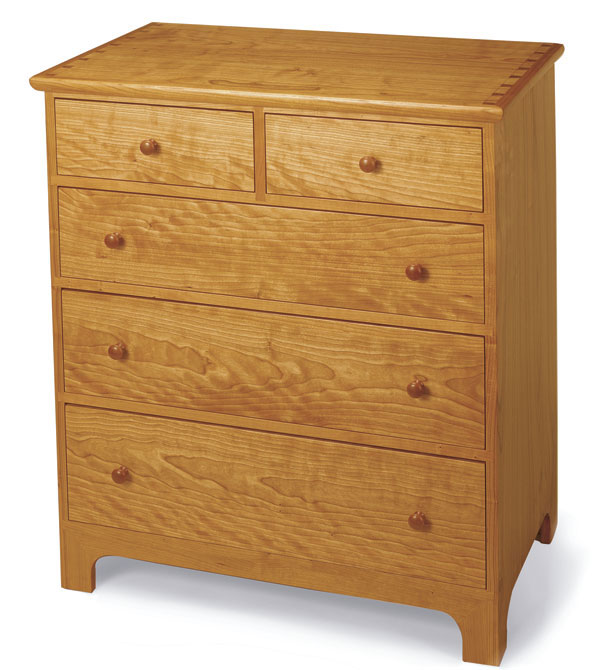

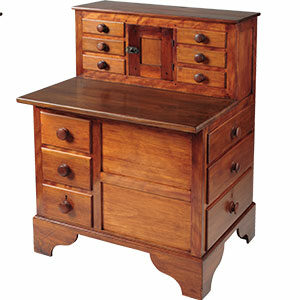
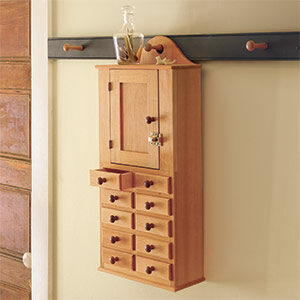
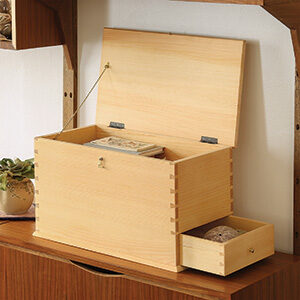
Shaker furniture never goes out of style. That’s because the Shakers’ dedication to simple, clean lines, utility, and good proportion allowed them to create furniture with enduring beauty. The understated elegance of their work evokes our collective memory of a simpler time, when life moved more slowly, people were less cynical, and craftsmen built furniture one piece at a time in a quiet shop. But that’s just nostalgia, or a longing to simplify our own lives. The Shakers themselves, had no qualms about adopting new technology, especially in the woodshop.
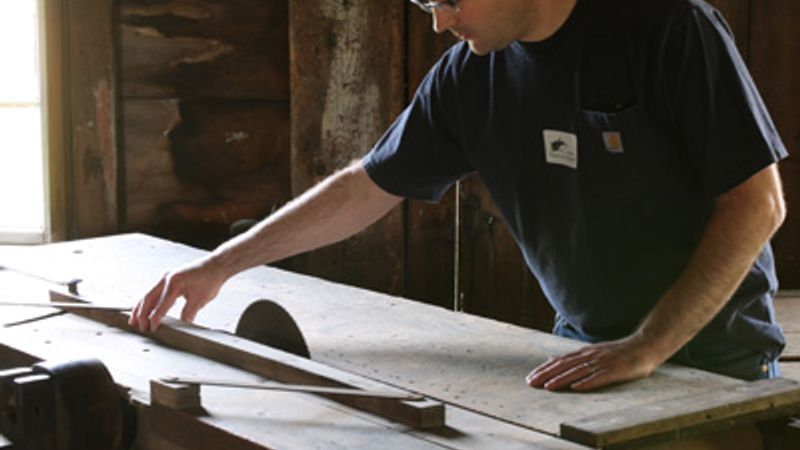
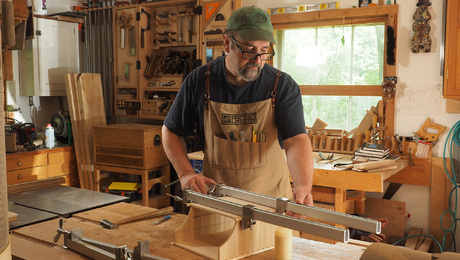
The woodshop at Hancock Shaker Village is a great example of how quickly the Shakers adapted to changing technology in the woodworking industry. From the state-of-the-art water turbine that powered the machines to the machines themselves, when it came time to add a tool to the shop, the Shakers always obtained the latest and greatest. Despite all the engineering marvels on display at Hancock Shaker Village however, a trip to the workshop still serves as a great reminder that what matters is what you make, and not the tools used to make it.




Comments
Thanks for singing some light. On this, Matt. I too find that people seem to equate the Amish mentality with the shakers. When I visited the Hancock and Canterbury Shaker Villages I too was taken by their complete embrace of modern machinery in their craft. In my research (which is less than comprehensive) I have not been able to find evidence that the Shakers ever used a mechanical dovetailing device, which began to be available in the 1860's. My guide at Hancock put it best - the Shakers seemed to embrace machinery in their work as long as it didn't detract from the "craft" of the piece. I think that's a philosophy I can live with.
Great report, Matt!
I was fortunate to live only 20 miles or so from Hancock Shaker Village for 2 years, and always enjoyed my visits there. There is something for everyone besides us woodworkers - the Round Barn and animals for the kids etc.
http://hancockshakervillage.org/
Pittsfield is really an easy shot from anywhere in lower New England. And Fall is a great time for a visit.
Keep in mind it does close for the Winter at the end of October..
Interesting piece; thanks for putting it together. It's not surprising that the Shakers used table saws, as the following quote from inventors.about.com indicates:
"In 1777, Samuel Miller invented the circular saw in England, the round metal disk type of saw that cuts by spinning and is used hand-held or table-mounted. Large circular saws are found in saw mills and are used to produce lumber. In 1813, Shaker-Sister, Tabitha Babbitt (1784-1854) invented the first circular saw used in a saw mill. Babbitt was working in the spinning house at the Harvard Shaker community in Massachusetts, when she decided to invent an improvement to the two-man pit saws that were being used for lumber production. Tabitha Babbitt is also credited with inventing an improved version of cut nails, a new method of making false teeth, and an improved spinning wheel head."
In spite of her last name, I could find no evidence that she might have also been involved in the development of babbitt bearings, which I suspect all of the machinery shown in the film clip would have used.
When I was building furniture full-time in the 80's and early 90's, my shop equipment included a 14" jointer, a 24" planer, and a 30" bandsaw, all cast iron monsters running on babbitt bearings, and all working to extremely tight tolerances. (They were electrically powered.) It hurt to sell them when I closed the shop, but they all required a 3-ton (minimum) crane to move, so they had to go.
I am very familiar with this shop as I worked at the village during High School. At that time (circa 1980) there was a cabinet maker there named Joel who produced Shaker furniture in the shop using these very tools.
If someone is still doing this, watching the water powered lathe and tablesaw at work is worth the trip alone.
Thanks for the interesting insight into the Shaker world
I've always been of the opinion that all the great cabinet makers of Europe and America would have used whatever methods which were available to take the backbreak out of the preparation of lumber. The Shakers were obviously no exception.
I wish I had the opporunity to visit Hancock; your pictures are a good second best to the real thing.
Great video! My family farm in Vermont, known as the Adams Farm, has a woodworking shop where my ancestors made patented storage vessels for maple sap. The shop has the same belting and overhead pulleys as the Hancock shop, but was originally powered by a horse on a treadmill. A patch in the building's siding still shows where the jackshaft originally went through the wall to the outside treadmill. One horsepower drove a 12" tablesaw, a 24" bandsaw that must weigh about 1000 pounds, and lots of one-of-a-kind equipment.
Would have been nice to see an actual video!
Thank you Mr. Kenney, for the most enjoyable video article in a long time! I really loved it...
Hi Matthew,
I learned that Tabitha Babbit, a shaker woman invented the circular saw blade- It would be more complete if you included her in your his/her/story of Shaker woodworking-
Log in or create an account to post a comment.
Sign up Log in