workbench
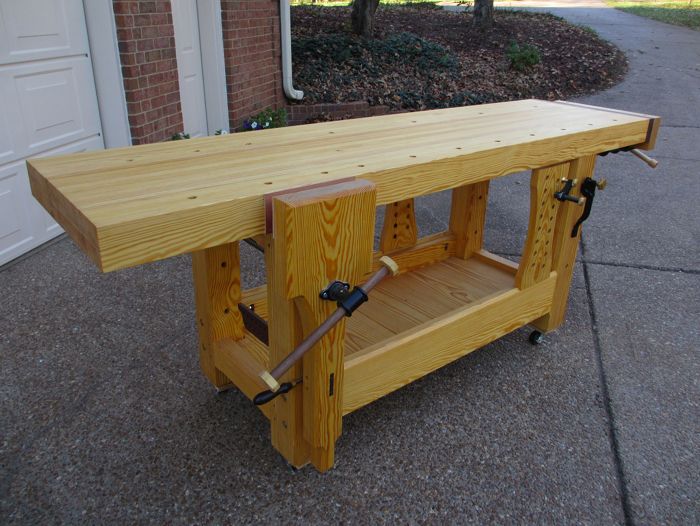
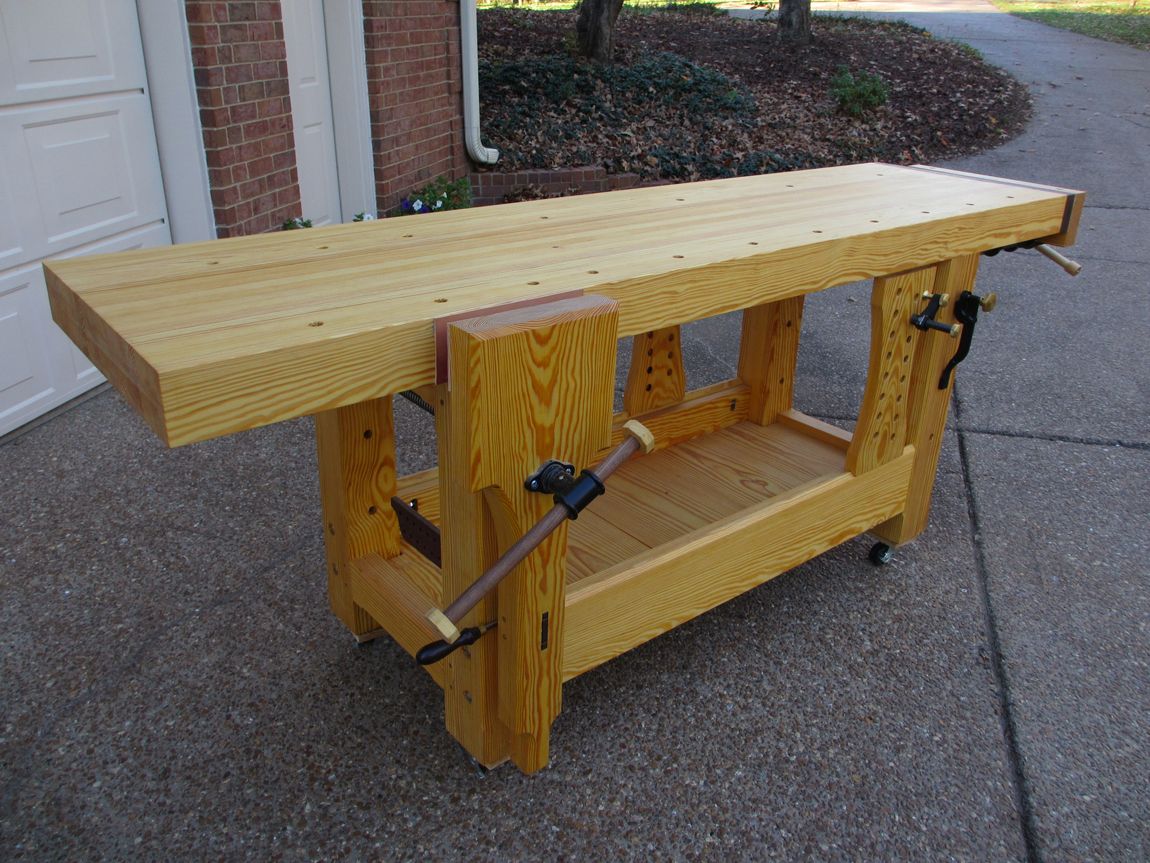
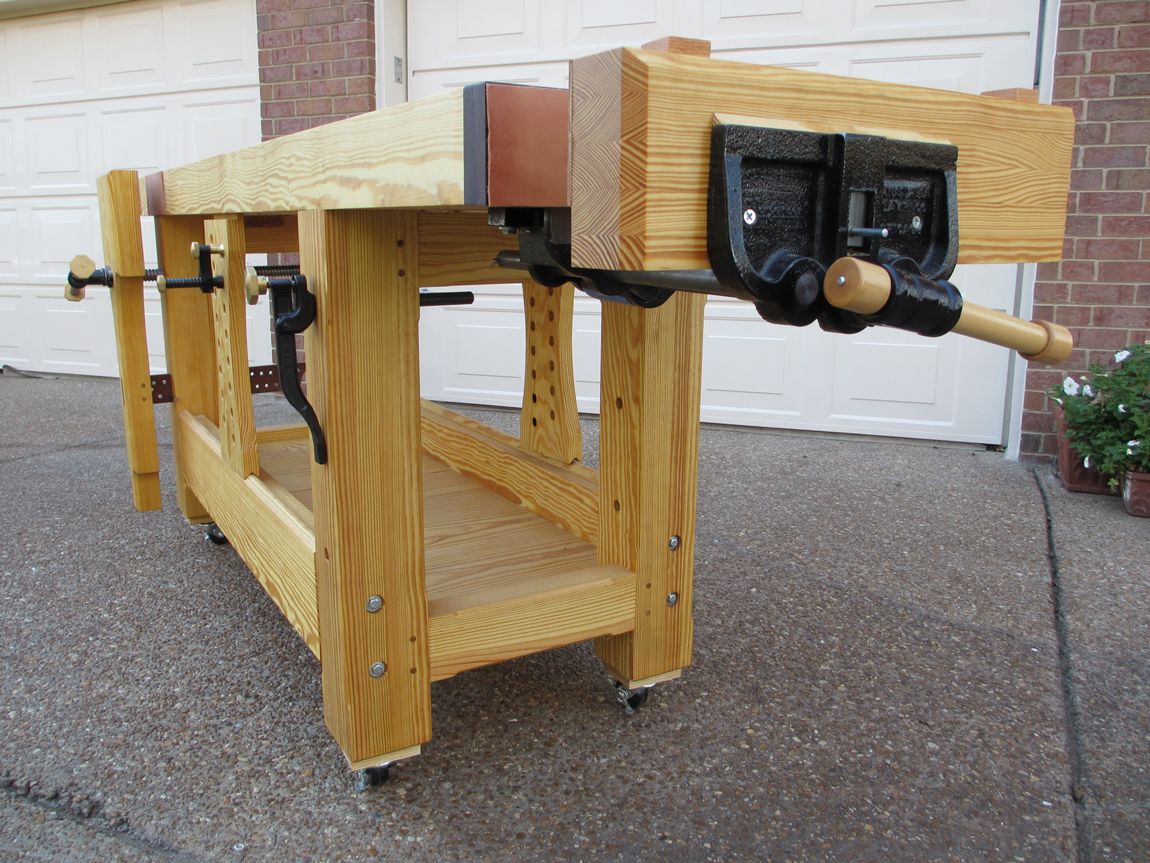
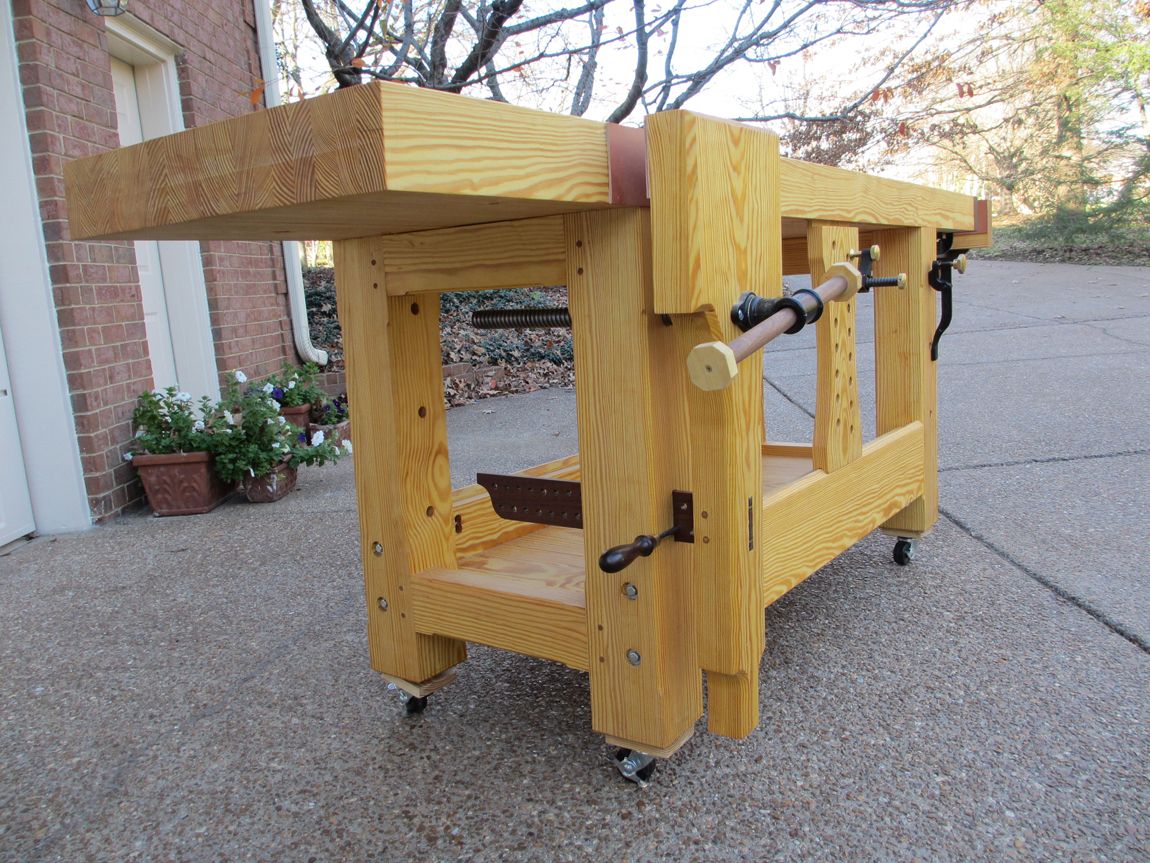
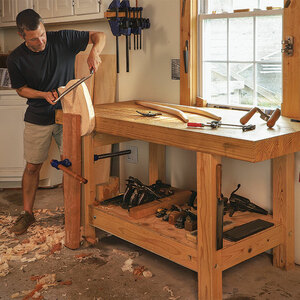
Front view of bench showing arrangement of leg vise, sliding deadmen( front and back), end vise, and bottom shelf
This bench is 25 inches wide by 8 feet long. The legs are 5 inches square and are laminated from 1 1/2 inch stock. The top is 4 inches thick. I special ordered southern yellow pine #1 grade , 12″ X 12′ from the local Lowes store. The boards were very straight and with virtually no knots. The price was only a few cents higher per board foot above the in stock #2 grade.
I ripped the parts slightly oversized and after allowing to acclimate a few days, I jointed and planed the parts before glue up.
The completed bench weighs in at 550 pounds with no propensity to move around.
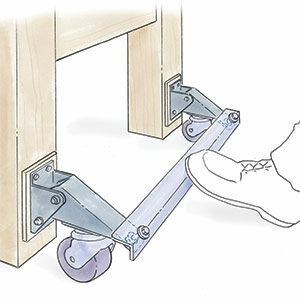
I mounted four casters to 4″ square boards and a 3/4 ” dowel which slips into shallow round holes in the bottom of each leg. This allows easy moving of the bench if necessary. I install the casters by jacking up one end at a time. I can also move it short distances by lifting each end and sliding.
The bench is collapsible with the end frames bed bolted to the bottom stringers. The top fits on top of 1″ dowels intalled in the top of each leg. The top stringers of the end frames are lag bolted into the bottom of the top.
Final finish is two coats of danish oil
-
Front view of bench showing arrangement of leg vise, sliding deadmen( front and back), end vise, and bottom shelf
-
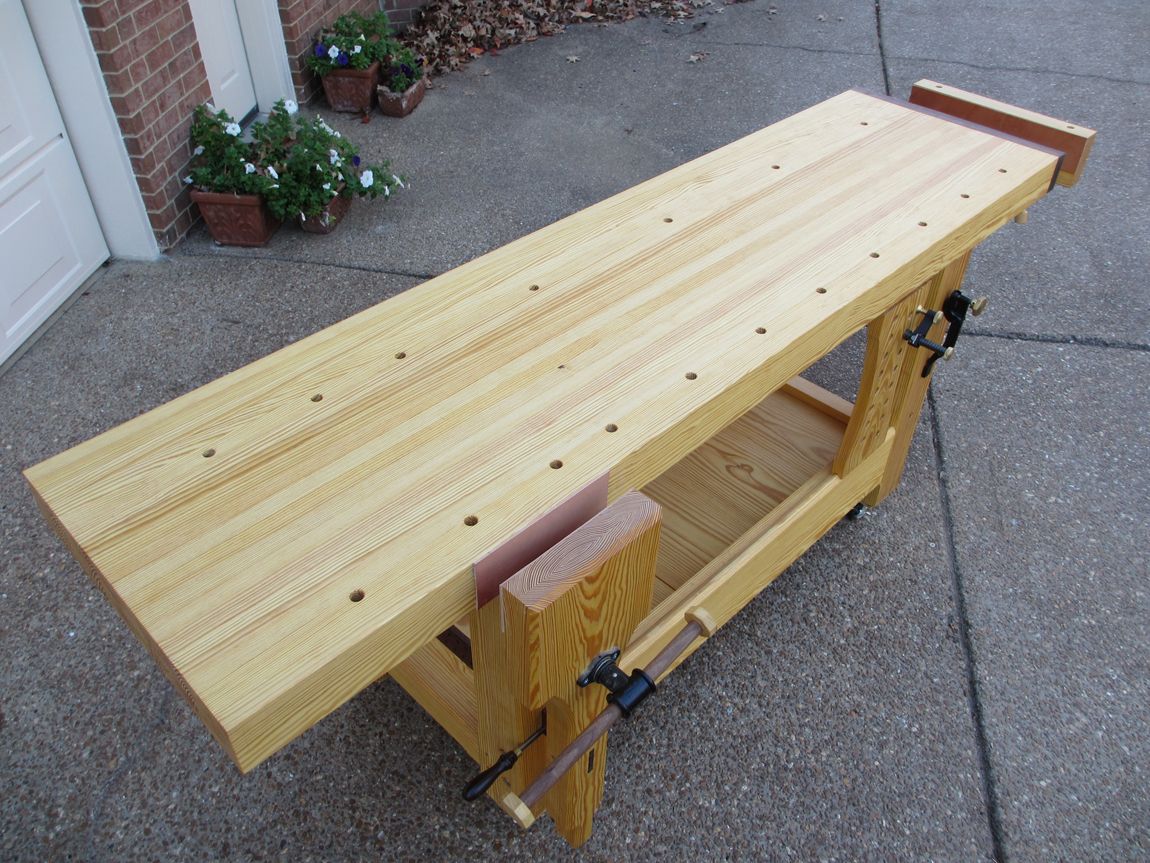
Top view shows the top which is made from 1 1/2 inch thick by 4 inch deep jointed and planed boards glued into one assembly
-
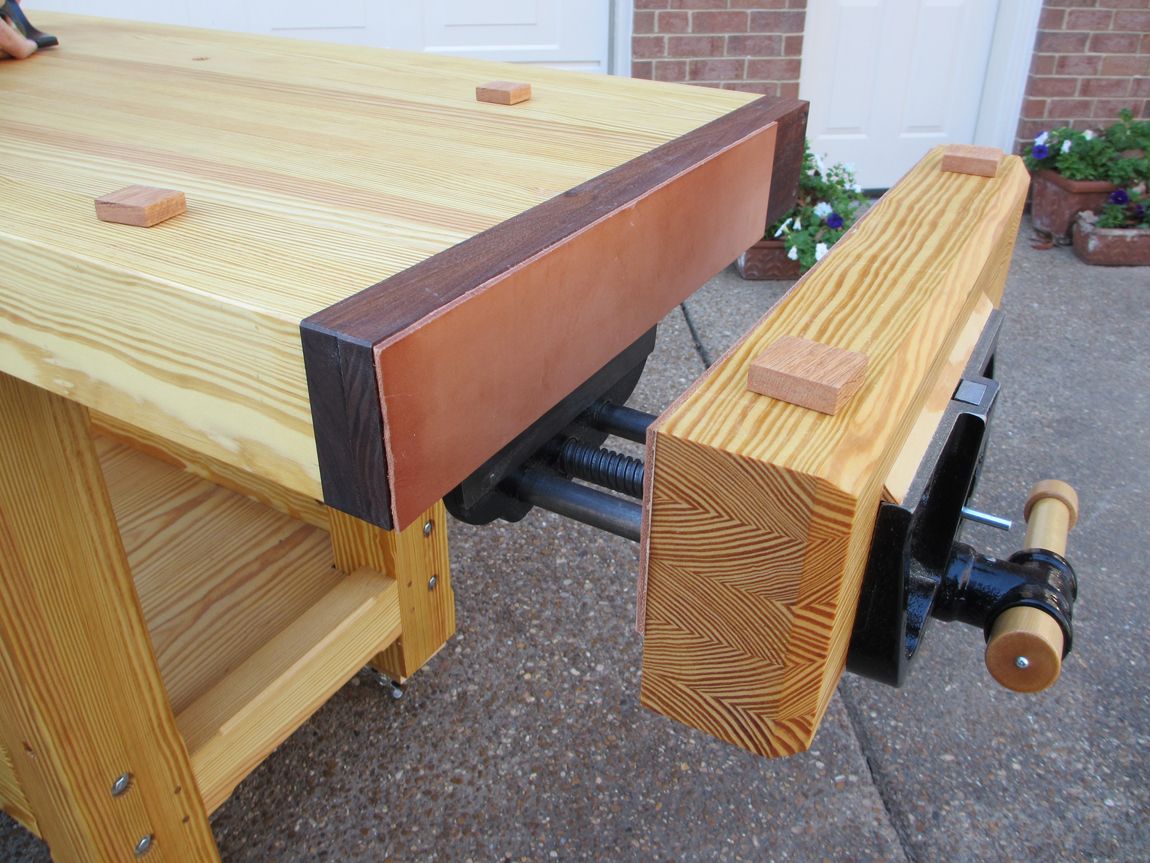
End vise is made from a Jorgensen 10" quick release vise with 3" thick chop. The front chop is laminated walnut. Both faces are covered with saddle leather. The dogs are made from red oak and dowels.
-
View shows sliding deadmen on both sides of bench. Also, the temporary casters and the stringer bed bolts are shown
-
View shows details of the leg vise. I made the chop from two 1 1/2 inch boards laminated together for strength and to resist warpage. The screw is a 1 1/2 inch german screw. The bottom steel rod is a burnisher.




Comments
Nice bench rcj. I'm about to start building a new one myself based on the Robuea(sp?) design too (Chris Swartz's Bench book). I'd like to ask some questions. Why do you have a sliding deadman on the opposite side as well? Also, can you tell me what kind of wheels you used? I was planning on adding those or the new bench casters that Rockler sells. I believe a harder type wheel will roll better. I'm glad you pointed out that Lowes can order #1 grade wood. I didn't know that.
Did you use leather on the vises? What type of glue did you use if you did?
Is there any reason you used long grain for the end of the bench on the vice?
Again, great looking bench.
Art
Answer to questions from artagain.
I put a deadman on the back side so that that side surface can also be uded to hold boards, or panels for edge work. I drilled dog holes in the face of the legs which with a dog clam can easily hold a large piece in conjunction with the sliding deadman.
I used 2 1/2 swivel casters from Lowes. They each have 150 pound capacity.
I attached thick saddle leather to the faces of all vises with double stick carpet tape. This makes it easily removable and replaceable.
I mortised the back face of the vise into the end board and lag bolted to the bench. The long grain gives a stronger attachment than bolting into the end grain. After mortising the metal back face into the first piece of walnut, I then covered it with another piece of walnut for a smooth surface to mount the leather.
I used both books by Chris Schwarz as well as others to design the bench. I like the SYP since it is as dense and stiff as maple and other hardwoods.
bench looks great! didn't realize you could special order southern yellow pine from Lowes . approximately how many boards did you need.
Answer to Tincup.
I ordered 15 #1 grade southern yellow pine boards from Lowes.
I recall that the price was about $13.50 each.
The boards were 2"x12" and were 12 feet in length. This length allowed me to make the 1 1/2 " by 8 foot boards for the top and still have enough out of the remainder to make the laminated legs, stiles for the end frames, and chops for the vises.
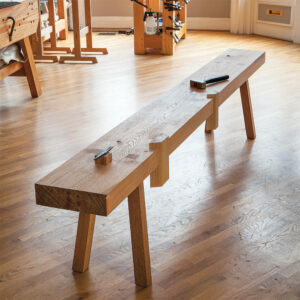
I had two boards left which I used to make a clamp on bench 14 " tall , 5 feet long and one board wide to put on top of the bench for close up work such as fine chisel work, sanding, routing, etc. This allows me to do this type work without stooping to the level of the main bench. I also plan to build a Moxon vise out of the remaining wood. I had very little waste due to the quality of the #1 grade boards.
I also cut a piece of masonite to fit the top of the bench complete with dog holes to match those of the bench top. It is kept in place by placing two dogs in matching holes. I use this to protect the bench top when doing rough work.
very nice
This is appreciable
I like this
Log in or create an account to post a comment.
Sign up Log in