Seen at Colonial Williamsburg: Japanese tools force a new stance on woodworking
 Jan 17, 2011
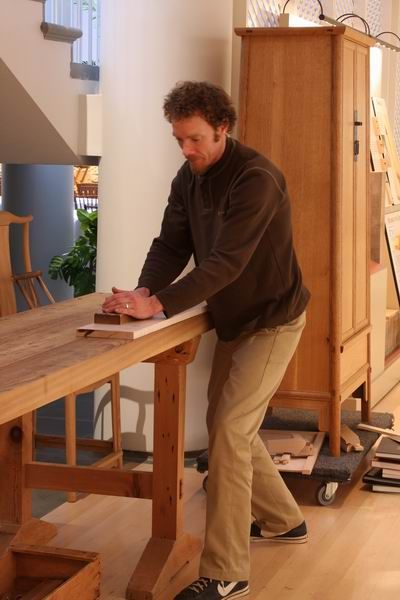
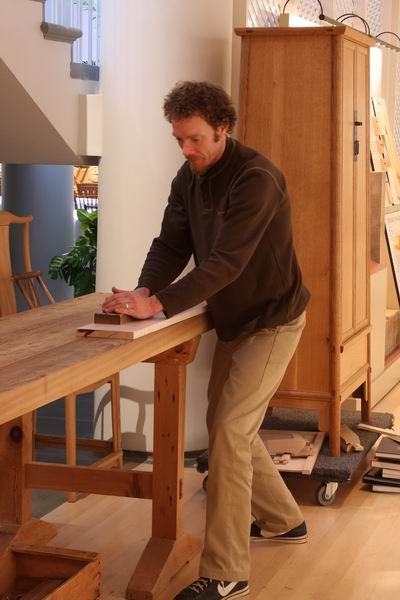
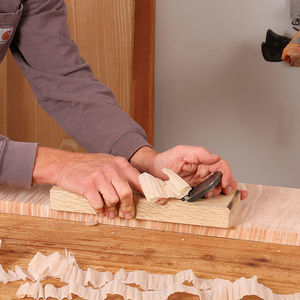
Pull plane. I use a similar setup, pusing against a stop. Hunter pulls against one. Notice the dowels on the underside that hold beam in place.
First, let me say that the conference is fantastic. I don’t do period work (I have in the past) and I am still being held rapt by the presenters. It has been absolutely wonderful. If you ever get a chance to attend, do it. You won’t be disappointed.
Now, on to what struck me most when watching Andrew Hunter working today. I always knew that Japanese woodworkers and carpenters worked differently than their counterparts in the West. Their benches are different; they use the ground quite a bit; bench vises are no where to be seen. But I’d never seen anyone work that way in person. A picture is one thing. A living person who is moving and working is another. Just by using the weight of his body and its position, Andrew is able to control the workpiece while he saws, chisels, and planes. I took a few pictures to show what I’m talking about.
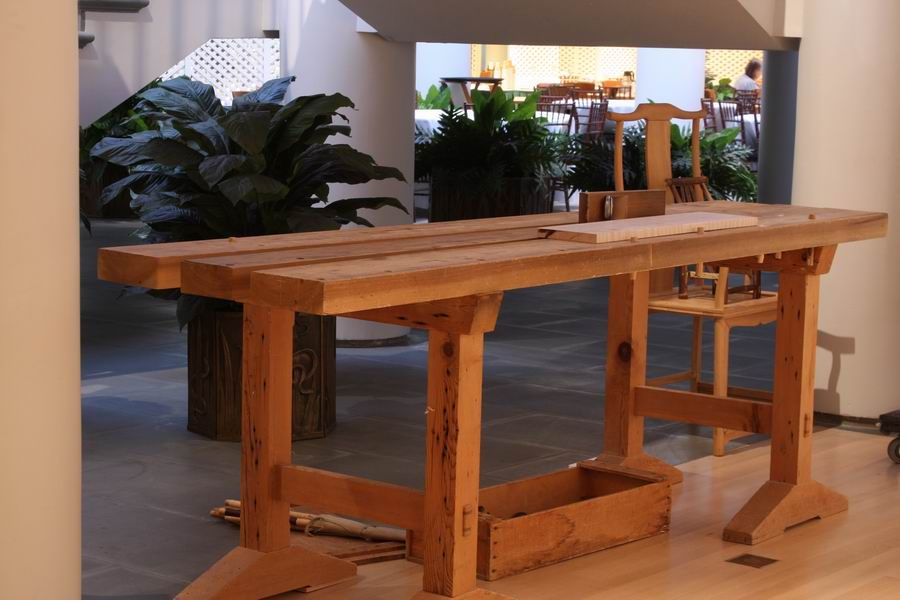
Another thing that was cool about his setup. His bench is three large softwood beams set across two meaty sawhorses. You can pull them apart, slide them, etc. You would think that would be very unstable, but it’s not. Why? Because Andrew knows how to position his body to hold the beams in place and his tools are insanely sharp. I wasn’t too surpised by this, though. The top of my bench isn’t attached to the trestle legs and the top never moves, at least not when my tools are sharp. Andrew and I were talking after he was done presenting and we both agreed that if your bench is moving, your doing something wrong. You shouldn’t need a lot of brute force to work your tools if they’re sharp. Dull ones are another story all together. So don’t use them.
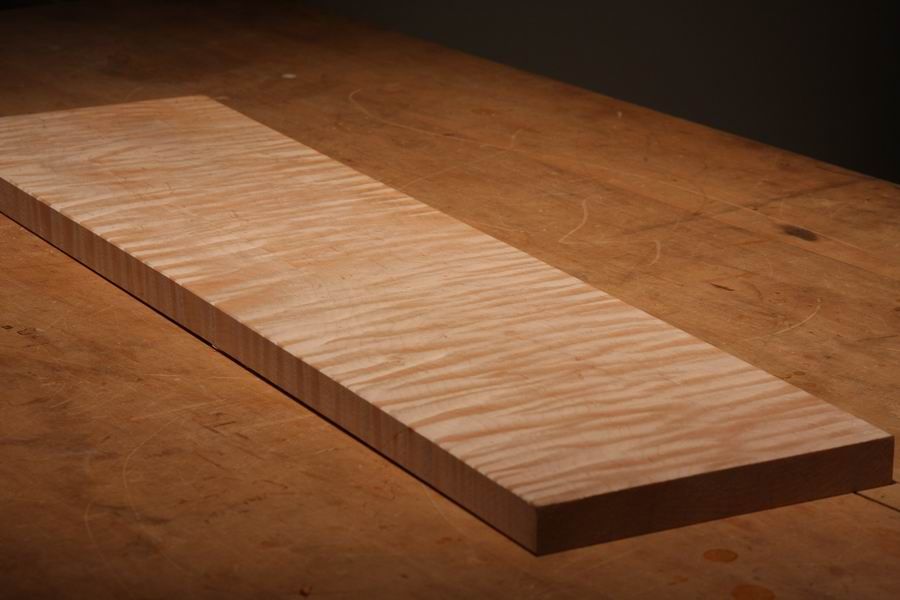
Finally, I took a picture of a piece of curly maple that Andrew was planing. It is very curly and the surface is unbelievable. Smoother than glass. It’s like he already put down shellac and polished it out. But it’s just a handplane finish. That tells me that he really knows how to sharpen his plane. Truly, it was the best bare surface I have ever felt. I hope to get him to write a short article about Japanese smoothing planes for the Handwork section of the magazine.
So, take a look at the photos to see what I’m talking about. And tune in for more tomorrow. I plan on taking photos of all of the benches here at Williamsburg. They’re cool and it would be fun to see them all in one place. I also plan on taking some photos of the cabinetshop.

-
Pull plane. I use a similar setup, pusing against a stop. Hunter pulls against one. Notice the dowels on the underside that hold beam in place.
-
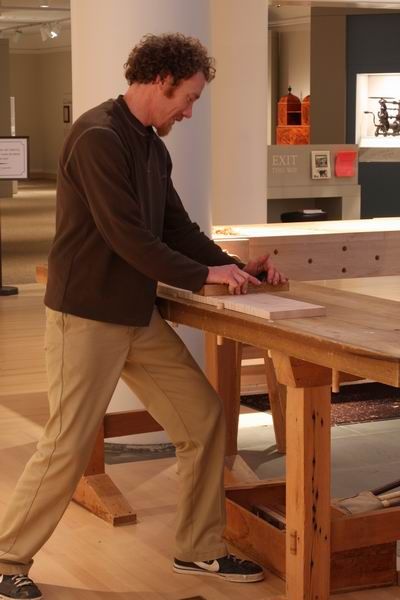
Planing across grain. To flatten a board, Hunter goes across the grain first. Here is pulling into his body. That keeps the beams in place. A few dogs keep the board steady.
-
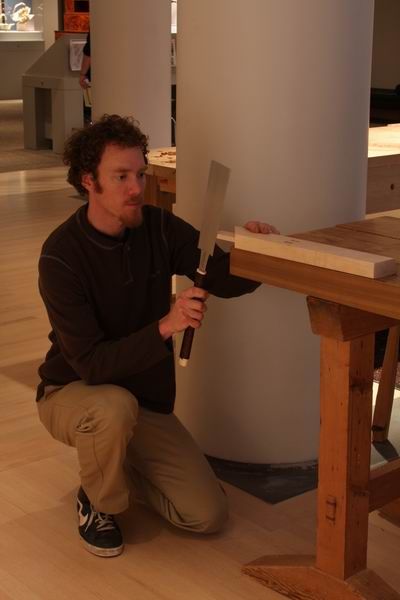
Kneel to rip. Hunter is making some rip cuts here. He uses the downward force of the pull saw to pull the workpiece onto the bench. The bench's resistance holds the piece in place.
-
Bench for a man on the go. Hunter's bench isn't like traditional Western benches. The top is three seperate softwood beams. The legs? Just some sawhorses. And no vise. Also, not the dowels on the underside. When Hunter is planing, the push agains the sawhorses, keeping the beam still.
-
Better than glass. This piece of curly maple has be handplaned, but there's not finish on it. Words can't describe how smooth it is. It is one of the smoothest surfaces I've ever felt.





Comments
Great post. I am jealous I am not there. I have wanted to go for several years now. Keep the news coming.
Jim
Nice job, Matt. Killer post and pics! Glad you are having fun. It's hard not to!
Dear, FWW - Please consider an issue (or several) dedicated to Japanese woodworking. From their pull-saws, to their planes, to their benches, to the metal used for their blades, to the "how-tos" of using these tools, we could all learn a lot, and there is not much dedicated to the subject in this country. I am VERY interested in learning more on the subject. I had the oppertunity to try a Japanese style plane recently at a woodworking show, and I still rember the feeling of "this is MUCH more natural of a feeling than my bench planes." I want to know more... much more.
From what I glean in the article, a woodworker just starting out would do well to consider this style of woodworking since it is implied that the bench in question could be built rather inexpensively, allowing the starting woodworker to dedicate more time and money to quality hand tools, and lessons.
Joe,
Thanks for the request. As I mentioned in the blog, we'll work with Andrew to get some of his approach into the magazine. My first intention is to cover Japanese smoothing planes.
You guys are capturing some great stuff. Why aren't you putting up some Flip video? Then you'd really have us hooked. John
Great post, Matt. I'll definitely be interested in knowing what Andrew can recommend regarding tuning up my wide (45mm) smoothing kanna. I also have a lower-end but reliable smaller smoothing plane--I think it could be a potential gem, as it is a real workhorse, but I'd love to know how to get more out of it.
Way to go Andrew!
Log in or create an account to post a comment.
Sign up Log in