Health problems associated with spalted wood, and debunking myths
Everyone seems to be concerned with mold in their homes, and a lot of hysteria has swept through about the relationship between fungal spores and their association with respiratory conditions. Apr 26, 2009
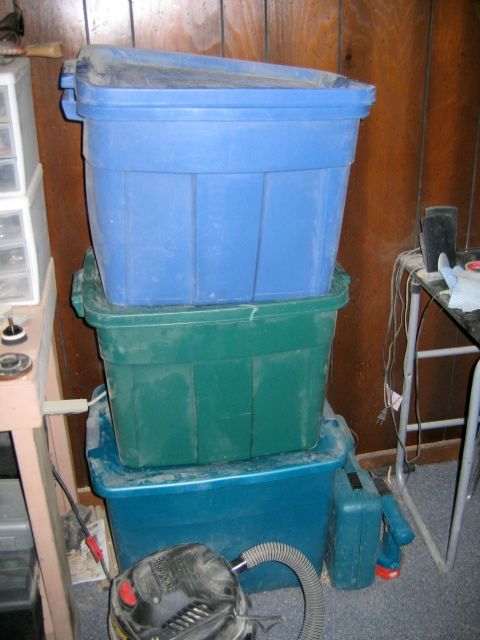
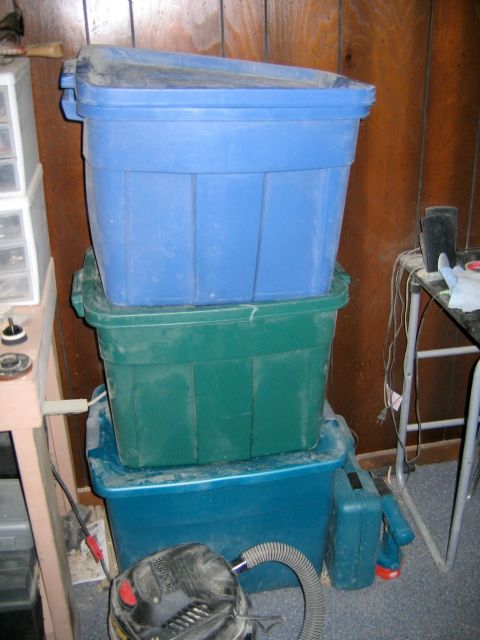
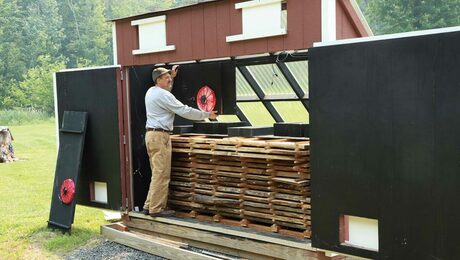
Bin it! These tubs provide everything the fungi need while keeping spore circulation at a minimum.
Concerns about fungal spores are at the forefront of the American mind these days. Everyone seems to be concerned with mold in their homes, and a lot of hysteria has swept through about the relationship between fungal spores and their association with respiratory conditions. In this post, I’d like to separate out the fact from the fiction, and offer some tips on how to safely manage spalted wood.
Fact or Fiction: all fungi release spores, and all fungal spores are dangerous
FICTION! While Stachybotrys species (black mold) can be harmful if constantly inhaled over a long period of time, most of the spalting fungi do not produce the mycotoxin necessary to cause human harm. There are exceptions, of course, but in general wood decaying fungi do not represent a threat to humans (there is a big difference between a mold fungus and a decay fungus).
Fact or Fiction: spalting wood at home could introduce toxic spores to your living area
FACT! But before you panic, note that the key word here is COULD not WILL. Those mold spores are in the air wherever you go, especially if you are walking in the woods; so that wood spalting in your bathroom should not be the only suspect if you are having air quality issues. And just because you have a few toxic spores thrown in with all the normal ones is no reason to panic either. Unless you have an incredibly dark, damp, warm area where they can grow, those suckers will never have a chance to get started.
Fact or Fiction: finished spalted wood products should not be placed in contact with food
Fiction! If you dried your bowl before you finished it, the fungus is dormant in the wood. That means that, while not dead, it is no longer reproducing or producing spores. Any current spores in your wood will be sealed in by your finish. There is absolutely nothing wrong with using spalted wood for food items, as long as it is properly dried and sealed.
Fact or Fiction: I need to have a dust mask and air filter when working with spalted wood
FACT! But this isn’t a fact because you’re working with spalted wood, its a fact because you’re working with wood in general. Always, ALWAYS wear a dust mask (OSHA approved) when working with wood, especially when sanding. If you don’t have good airflow (or its winter), make sure you have an air filter working as well. Wood dust is a carcinogen, like most fine particulate matter. Keep it out of your lungs, because the neither the wood dust nor the fungi need to be there.
Some handy tips for making, handling, and machining spalted wood:
- Protect: I can’t over state this. You must wear a dust mask and use an air filter. Why take chances?
- Keep it sealed: While spalting in your bathroom works well, make sure the wood is in a plastic tub or plastic bag that is sealed. It shouldn’t be air tight, but it should restrict air flow. The less air flow you have, the fewer spores are being circulated. Also, sealed containers will help cut down on that rotting wood smell.
- Double up: on protection when sanding spalted wood. That dust isn’t just wood, its also fungi. Make sure you are wearing goggles when you are reducing spalted wood into particulate. I wear goggles when sanding even clear wood, because I’m not a big fan of wood in my eyes.
- Don’t panic!: I realize that the prospect of mold in the lungs isn’t pretty, but the world is full of professional mycologists who have been working with fungi for years, and are perfectly healthy. However I’ve heard about several woodworkers who, after 20 or so years in the shop (and working with spalted wood), have horrible lung and eye problems. My first question is always did they wear a mask?, quickly followed by how often did they wear their mask? So before someone goes blaming fungi for respiratory problems, I always suggest that they take a quick look at how much wood they’ve inhaled along with those spores.
Remember:
- Dry wood can’t spalt
- Spalting is not inherently dangerous
- Wear proper protection, but don’t forget to enjoy yourself!
-
Bin it! These tubs provide everything the fungi need while keeping spore circulation at a minimum.
-
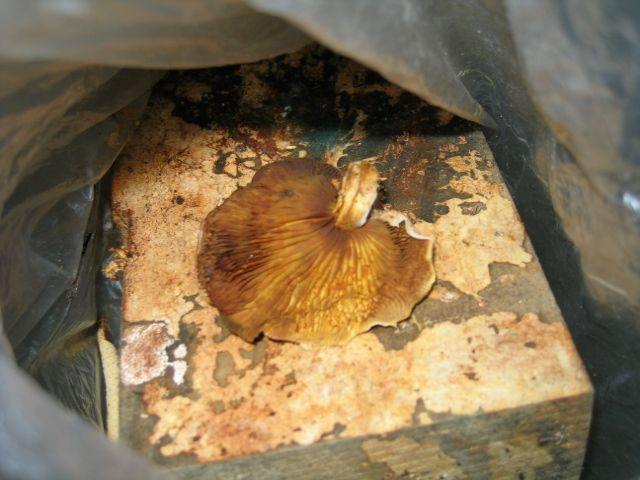
This spalted wood is producing mushrooms. Confinement via plastic bag helps keep the spores from the air (or your carpet).
-
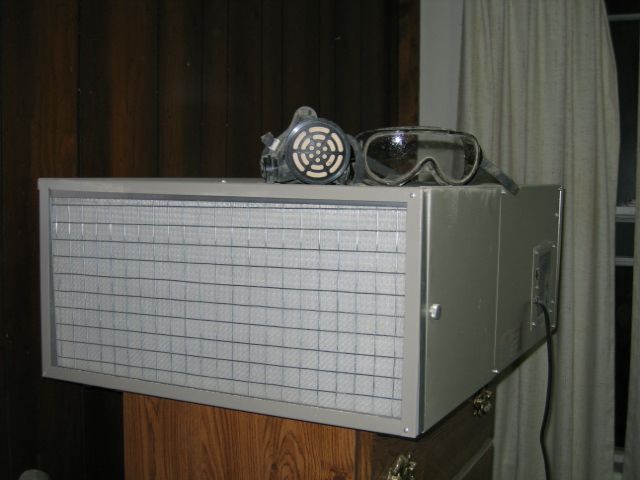
A winning combination: air filter, OSHA approved dust mask (respirator) and goggles.













Comments
That was very interesting! Thank you Sara.
You say Spalted Wood isn't dangerous but go on to state how much more dangerous it is over other woods and what extra care you need to take because it has "spores". I for one did have an allergic reaction to spalted wood and it wasn't after 20 years of working with it, and I did always wear a face mask and eyeglasses and a dust mask, but not a respirator. I had turned it for a couple years without problems or symptoms when I woke up one morning with my eyes glued shut. I was lucky to get in to see my eye Dr. and she had'nt heard of spalted wood, but told me she would educate herself on it. She couldn't diagnose it until she said it looked like a fungus of some kind and I thought immediately of the spalted wood I had turned the night before. I explained it to her, she prescribed some oral meds and eyedrops and a topical cream for the rash I had on my arms, and face. I agree that once it is covered with shellac or wipe on poly it is safe, but you are doing a diservice to tell people there is no extra danger in spalted wood. Ask any Doctor. Wurmm
wurmm:
I think you missed a lot of the main points in the article. The point I was trying to make was that spalted wood can be an issue, but the main cause of respiratory and eye problems in woodworkers is actually wood dust, not spalting. It is true that your spalted wood could have had some bad fungi on the surface that caused your eye condition. However those fungi were not DECAY fungi, the fungi that cause spalting. More than likely they were simply mold spores that landed on the wood from air circulation.
Not more than an hour ago I left a meeting with a top mycologist for the Forest Service. We discussed spalting and the possible toxic effects it could have. She brought to my attention that even those black mold spores were actually debunked as causes for the respiratory diseases that develop. In the end, the culprit was straight asthma and allergies, and nothing actually caused by the mold spores.
The issue with 'ask any doctor' is that doctors are not mycologists. Doctors are familiar with general practice, common conditions, and molds/fungi which cause diseases in humans. They are not familiar with wood-inhabiting fungi, which are the fungi we deal with when spalting. In this particular case, I would suggest that you 'ask any mycologist', especially those familiar with Basidiomycetes (wood decay fungi).
To everyone else who has concerns, I invite you to e-mail me at [email protected]. I've sent out several very detailed e-mails over the past several months that list common spalting fungi, and links to scholarly articles which discuss their toxicity towards humans (or lack thereof). I stand by my statement that there is no special danger in working with spalted wood unless you have a compromised immune system (this includes asthma and many allergies!). I am violently allergic to wood dust (and all fine particulate matter) and many fungal spores, but work with spalted wood with no ill effects.
For more information on the general toxicity of wood dust, I suggest this article by OSHA:
http://www.osha.gov/SLTC/wooddust/recognition.html
Wurmm, I appreciate your concern, and would be happy to address any other concerns you may have regarding spalted wood.
Sara Robinson
I concur with Dr.Spalting.
I've been a wood patternmaker for 34 years and admit I rarely use a dust mask. I acquired some spalted maple several weeks ago for my home shop and made a segmented bowl from it. I got the worse sinus infection I've had in years. Fortunately, I went to the doctor right off the bat and got a steroid shot and antibiotics and got better very quickly. After reading about it, I will wear a mask whenever sanding spalted maple again.
Log in or create an account to post a comment.
Sign up Log in