
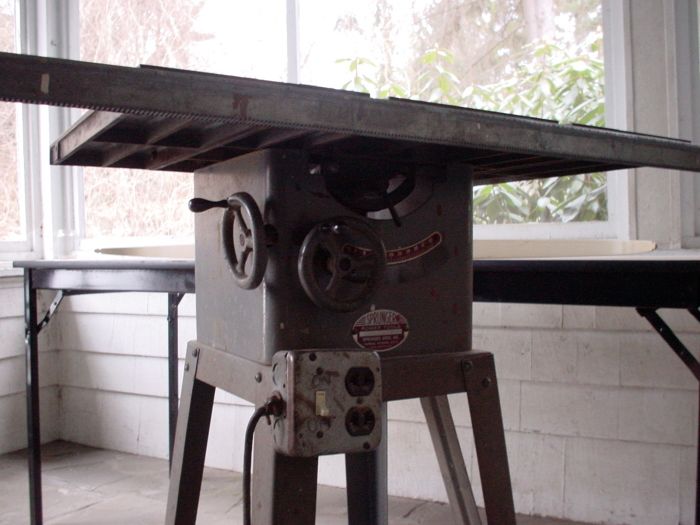
Attack of the tablesaw. I tripped and fell this weekend while moving my 1950s-era portable tablesaw. Scrapes and bruises abound.
It was as if my tablesaw jumped up and grabbed me, then tackled me to the ground with its sharp metal corners and edges. And believe me when I tell you no human can win a wrestling match like this against a tablesaw.
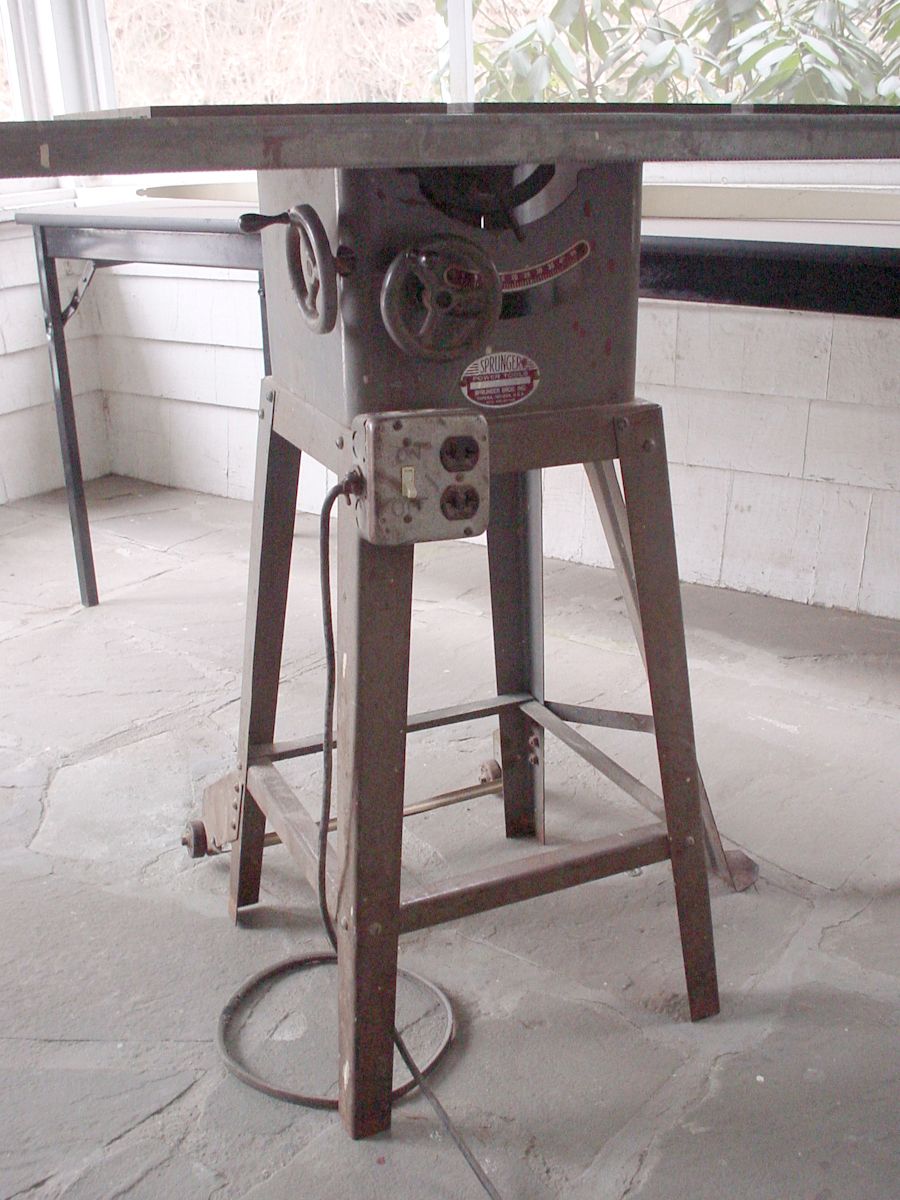
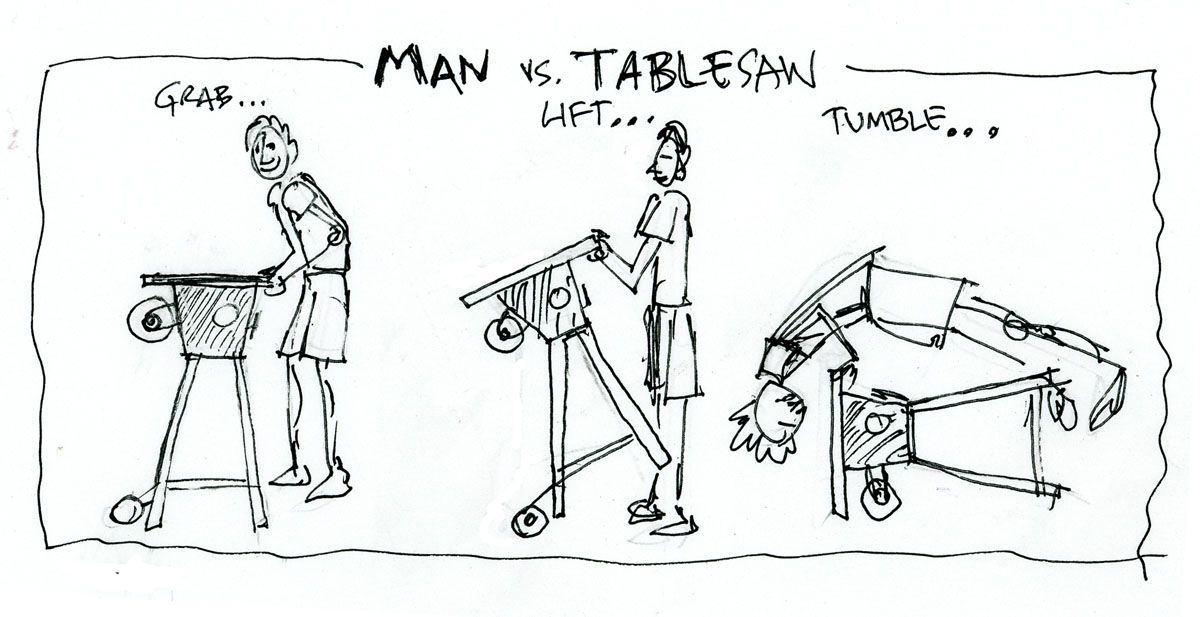
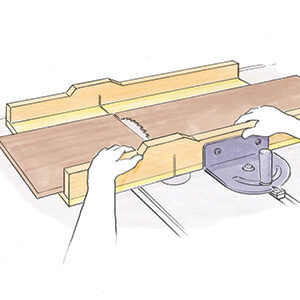
In actuality, my recent tablesaw accident went like this: I was moving my 1950s-era Sprunger tablesaw out from my basement, relying on the two small metal casters to roll it across the concrete floor, when the top-heavy weight of the motor took command causing the tablesaw to tip over and bring me crashing down with it (see illustration below). I was wearing shorts thanks to the exceptionally warm spring weather that blessed Western Connecticut this weekend, and ended up with a bloody scrape that extends from hip to toe.
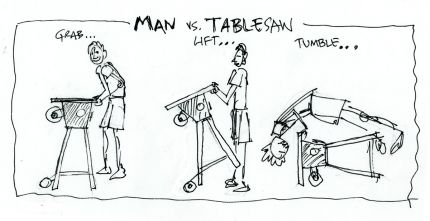
The moral of my story is that tablesaw accidents don’t have to involve a spinning blade. In fact, your tablesaw doesn’t even need to be plugged in to cause bodily harm. And there are countless other hidden dangers lurking in the woodshop that demand your constant focus, attention, and common sense.
-
Attack of the tablesaw. I tripped and fell this weekend while moving my 1950s-era portable tablesaw. Scrapes and bruises abound.
-
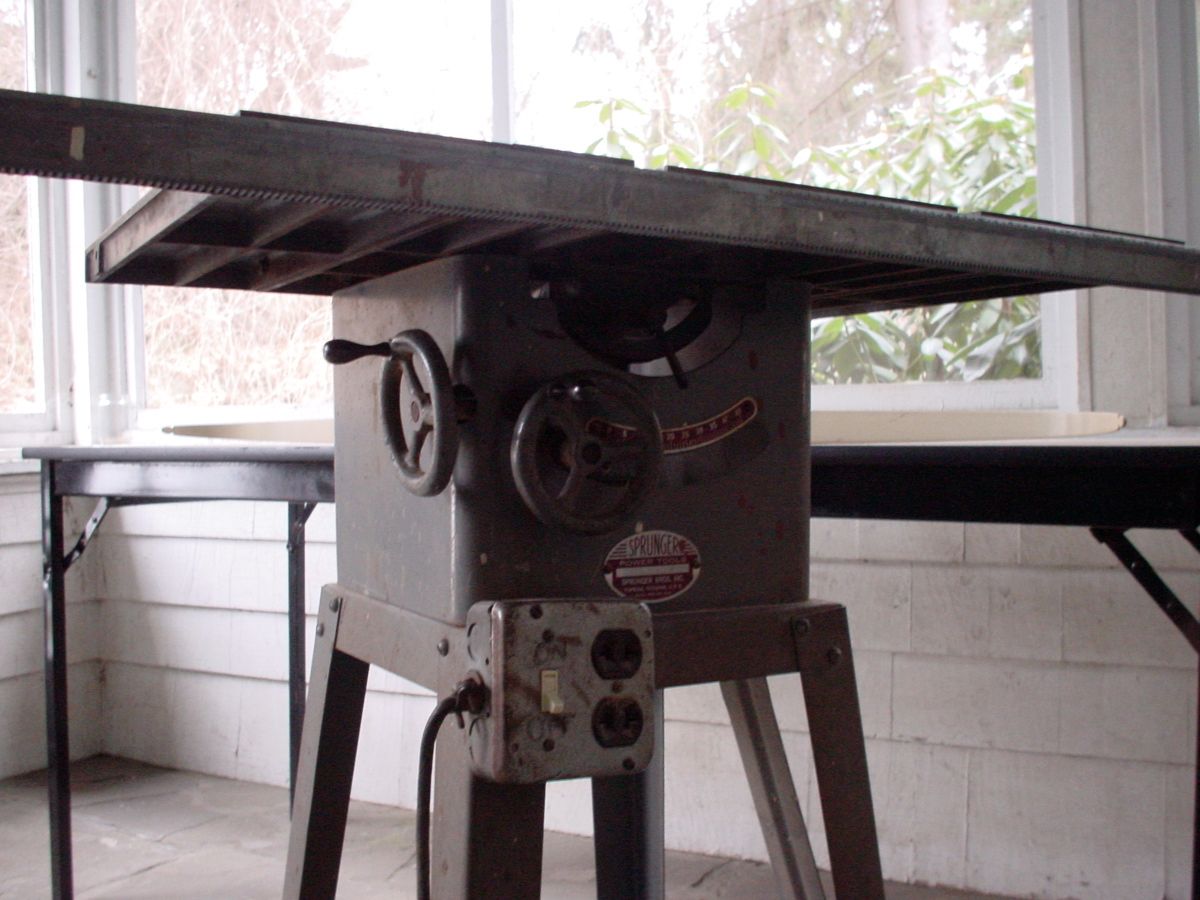
Think twice, act once: The two tiny casters on my saw don't measure up. I learned this the hard way after the saw tipped over during transport taking me to the ground with it.
-
Man vs. Tablesaw. An illustrated guide to my weekend tablesaw accident.










Comments
Ouch! :( Love the illustration though... :)
That's what you get for not having a blade guard attached ;)
I hope the only thing hurt was your pride! I roadie for a band weekends and watched the same thing happen to a buddy who was moving subs. He was pushing it, tipped back towards him, casters at the front and hit a small stone. Over he went, riding the sub to the bottom of the trucks loading ramp. He eventually saw the funnt side! The best way to move them (and anything else on casters that's top heavy for that matter) is to tip them back towards you and drag them. You won't ever go over the top of them but watch your toes!
I'm glad you wasn't hurt bad. I had an experence with a table saw , i was making wooden games for my Daughter's school, when a long sliver of wood got caught in the saw blade , i turn off the saw ,but was worried it was going to throw it out so I tried to push the stick out using my push stick ,before the blade has stop well the blade caught my push stick and brought my thumb in the blade the doctor said i was lucky it was a brand new blade , it made a clean cut. everything turn out alright they sewed the tip of my thumb on . I still do alot of wood working but i'm alot more patience now and don't get in a hurry .
Move your casters to the left side (facing the saw) If your rails are longer on the right. This is how most manufacturers set them up) This will take the motor weight off your forward side and put it more "in balance" Also, it allows you to use the rails as handles and allows you to negotiate doors easier because you do not have a wider (because of rails) machine going through the door.
One thing that needs to happen ASAP is for the DIY shows to deal with safety for tablesaws and tools in general. I watched a few seconds of a show last weekend and the idiot clearly had no clue about safely ripping lumber. He was pressing the wood into the fence, with his hand directly across from the blade, with no riving knife or fence. No eye or hearing protection, no outfeed table (he had a noticeably inexperienced person pulling the work through) and I'm certain that he'll have a major incident in the near future. I have seen and done many things with a tablesaw, but this really pizzed me off! This is the reason so many people mangle their hands with power tools- they see some nimrod on TV and figure, "That doesn't look difficult. Honey, I'm going to Home Depot for some power tools!" without a single thought about how they need to be respected.
If the attorneys used these videos in the cases that caused some of the most recent decisions to award huge settlements to plaintiffs, the networks should be on the hook for a large portion. This is bulls*&t! The manufacturers have been making these machines for decades and only bad practices/inattention/no or bad training cause accidents like these.
Sometimes you don't even need a tablesaw or other power tool. I have been woodworking for 30 years and have had exactly one accident - at Home Depot. I was making new kitchen cabinets and went to get some more 3/4" 4x8 birch veneer plywood sheets for the cabinet carcasses. While trying to get one of the sheets, it slipped and all 50 pounds hit my big toe directly, breaking it. I was in a cast for 6 months and 14 years later still have a permanent limp from it.
Log in or create an account to post a comment.
Sign up Log in