Workbench Medly
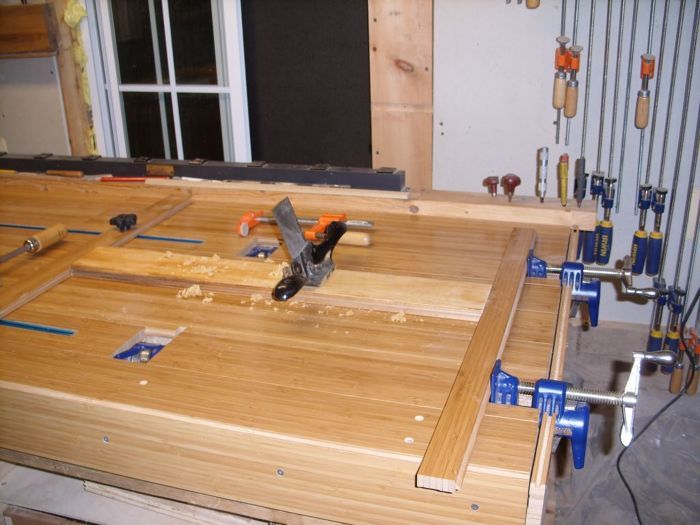
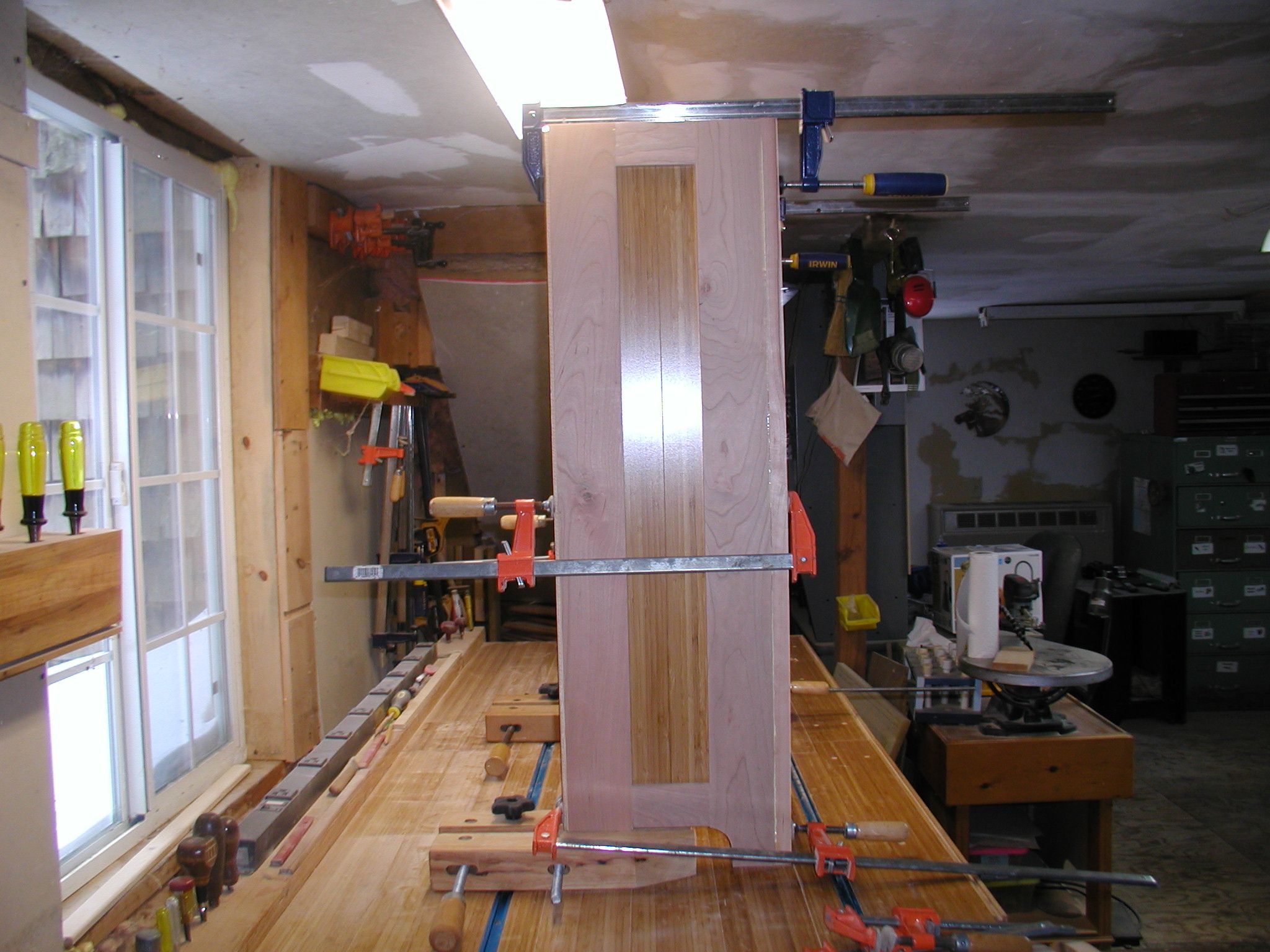
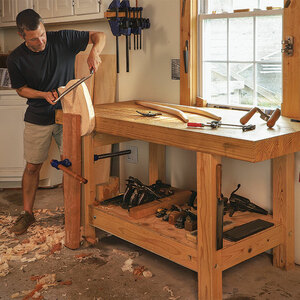
My original workbench was a solid core door on top a 2X4 frame that was anchored into the floor of my shop. It served me well for 12 years but was showing its’ age with many scars. I always wanted the versatility of a European bench but couldn’t finance the cost. Picture #1 is what I came up with. The original bench is covered with bamboo flooring from a big box store. First, I cut 2 chanells into the old bench so I could lay my pipe clamps in and cover them with the new flooring. I left the pipe clamp ends open so I can remofe them. That also gives me the option of placing short bar clamps into the cavity so I can secure a board to overhang the bench top.
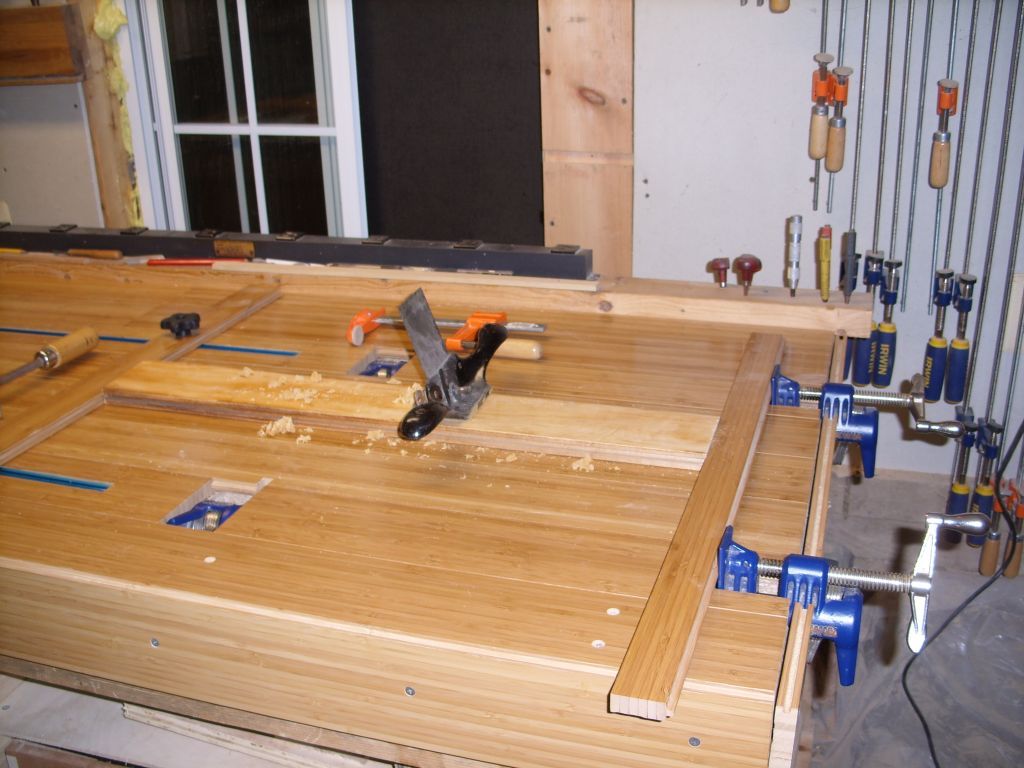
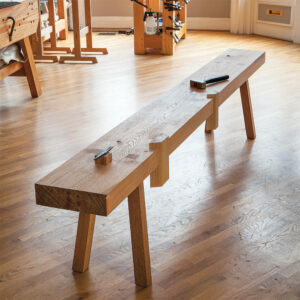
European benches have face vises and a suport system built into the legs. My support devise is clamped into the t-tracks and floats to lock down in any position along the t-tracks. I can remove it when not in use, as you can see in picture #2
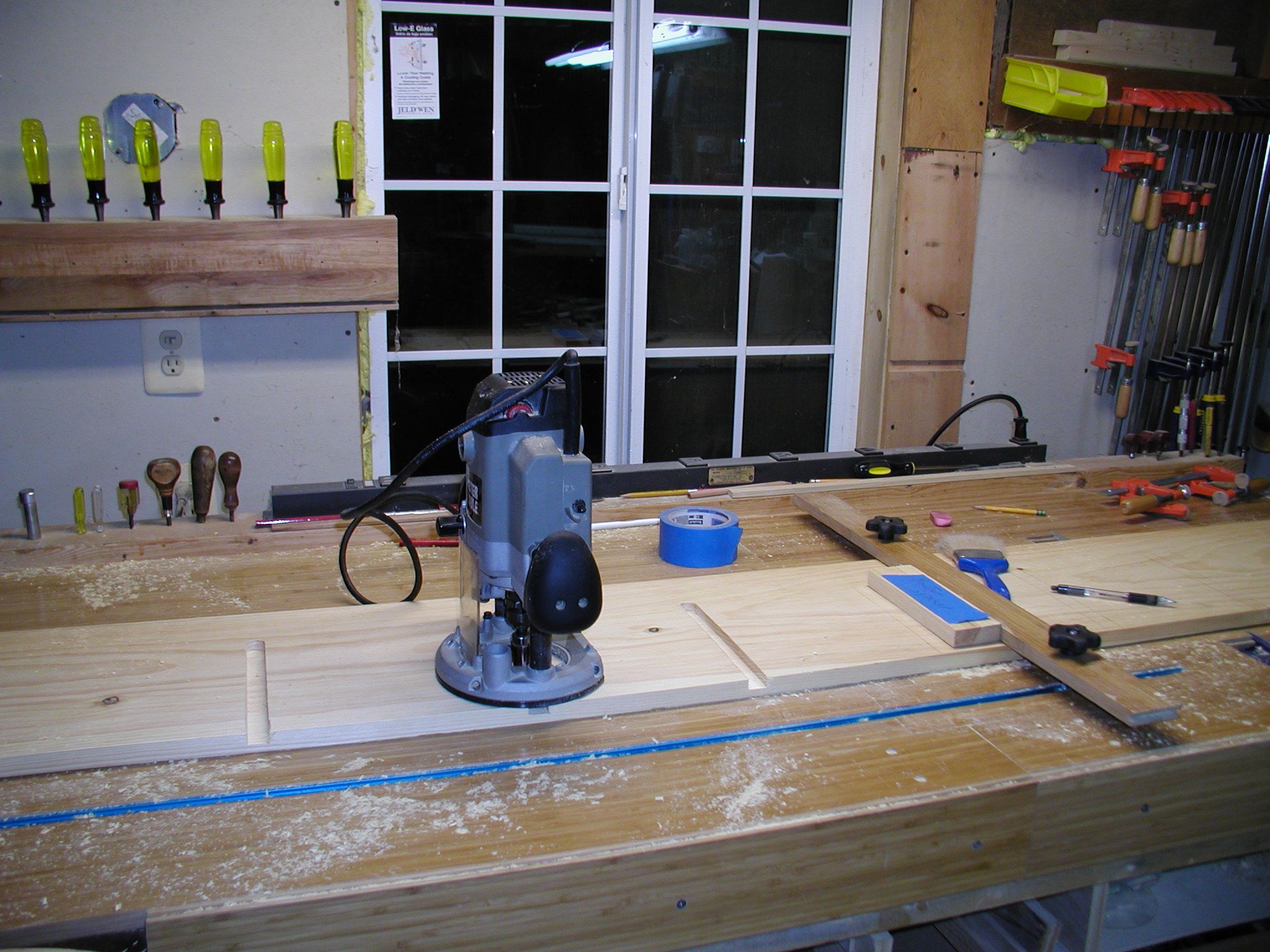
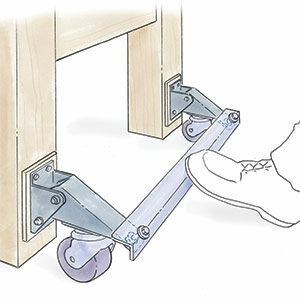
My bamboo fence is 1/2 inch thick so I can plane 3/4 inch thick wood and not bump the fence on the board ends as seen in picture #1. In picture #3, I use the fence to pinch my workpiece to the bench top. I was cutting blind dados and after marking my boards, I simply place a spacer block (blue taped wood the width of the router base edge and the router bit ) on the edge of my desired dado cut, butt the fence against it and the fence is my guide.
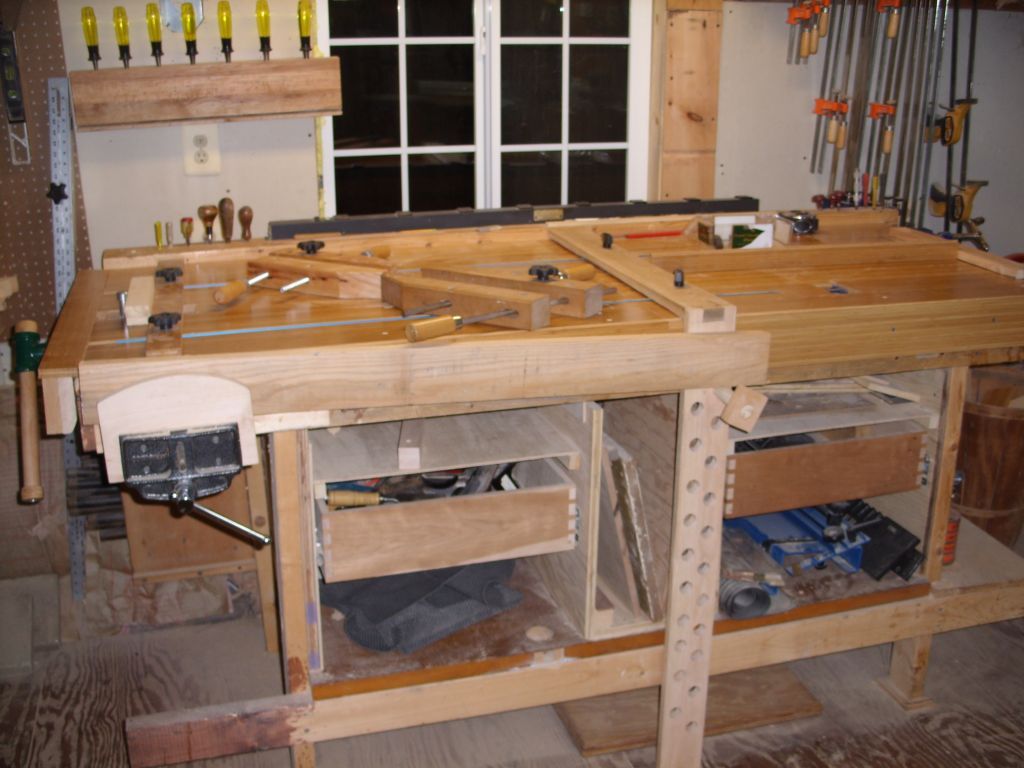
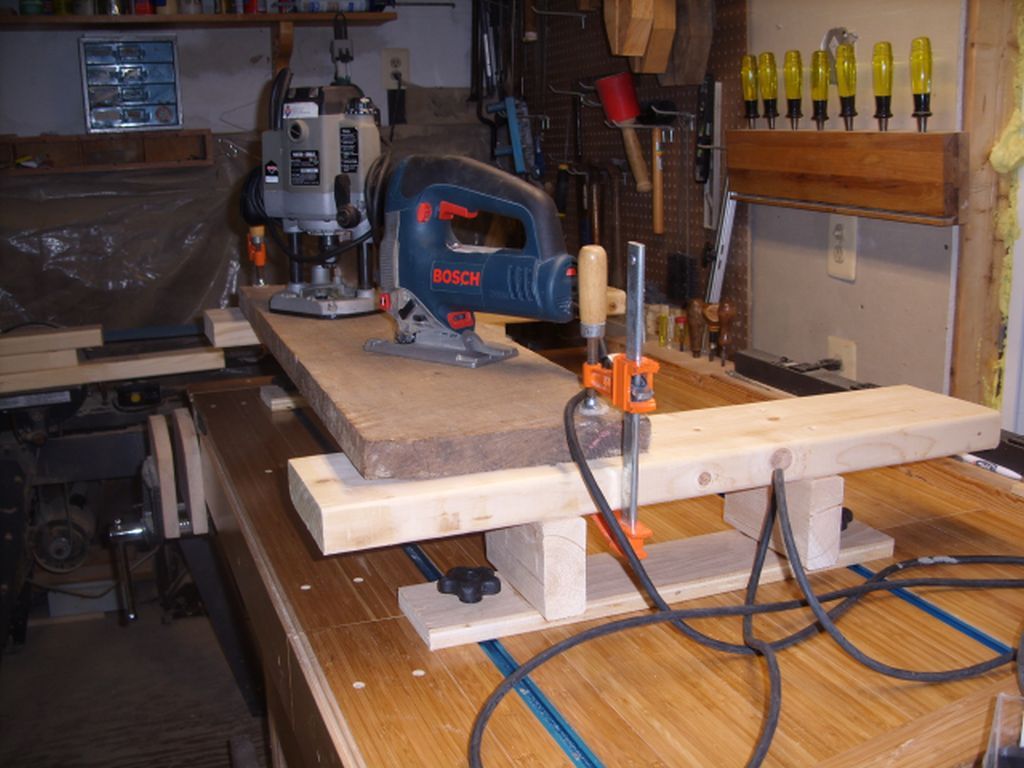
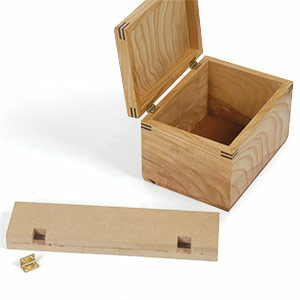
The bench is very versatile. All my benchtop tools and jigs are secured to their own plywood platforms that are easily bolted down to the bench’s t-tracks. I have a swivel base vise, dovetail jig, hand screws, and as in picture #4, benchtop sawhorses so I can drill, cut, rout boards without damaging the bench top.
Assembly is always easier when we have an extra pair of hands. My extra hands are my handscrews as seen in picture #5. I drilled holes in the handscrews and lock them down on the t-bolts.
An extra feature of my versatile bench is the bamboo flooring. It took about $30 worth to cover my bench which is 79″ x 30″. I can glue up my projects on the bench and any excess glue that ends up drying on the bench is very easily removed with a chisel without damaging the benchtop. I have even stained and painted on the bench and the excess stain and paint is removed the same way.



Comments
I really like the idea of the two t-tracks. Clever. Two cross tracks might make the bench even more useful.
Ikeson - I have a small end vise at the other end to hold small pieces but your cross tracks idea would have solved that problem... good idea
Nice work Bernie!
One of my favorite parts of woodworking is coming up with and reading others simple, elegant solutions. I am sure it is a joy to work with your bench!
Nice.
Log in or create an account to post a comment.
Sign up Log in