18th-Century Desk
Woodworker: Ben Hobbs
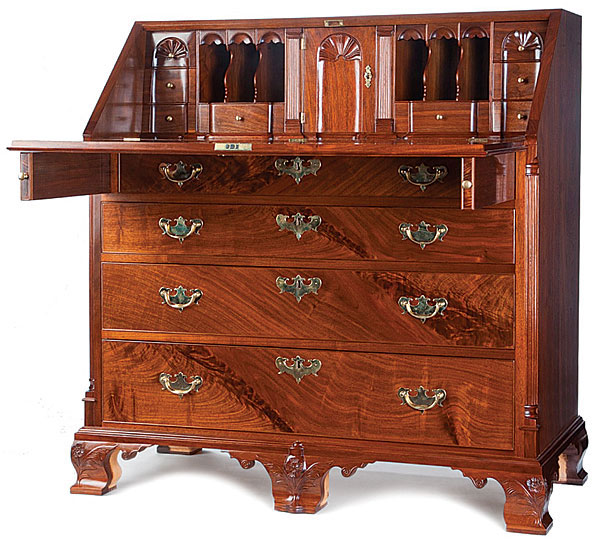
Each year, Ben Hobbs and his three sons, Calvin, Matthew, and Ernie, get together to work in Ben’s shop in what they call “sons’ week.” Ben, the 2011 recipient of the Society of American Period Furniture’s Cartouche Award for excellence in period furniture making, has been making 18th-centurystyle furniture for over 30 years. He and his sons started these desks, which are reproductions of an original by Thomas White (1765) during sons’ week, then took them home to complete the job. The desks (21-in. deep by 39-1/2 in. wide by 42-in. tall) are black walnut with bald cypress as the secondary wood. The finish is aniline dye, shellac, and wax. They took between 300 and 450 hours to complete (Ben was the fastest, they say, and Ernie is still working on his). Photo: Jeremy Groves





Log in or create an account to post a comment.
Sign up Log in