-
Router Jig for Perfectly Aligned Dadoes -
Buying and Using Trim Routers -
3 Steps to Great Glue-Ups: Sliding Dovetail Joints -
Tablesaw Tapering Jig is Safer and Faster -
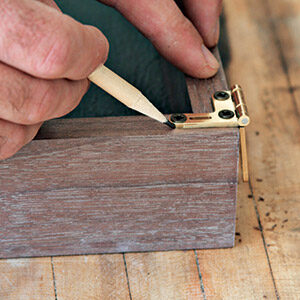
How to Make a Simple Jig for Offset Knife Hinges -
Five Minute Guide: Glue-Ups -
Upgrade Your Jointer with a Segmented Cutterhead -
Best Tabletop Finish -
How to Cut Sliding Dovetail Joints -
Box Making Tips and Tricks -
Dedicated Sled Delivers Perfect Finger Joints -
How to Apply an Aerosol Finish -
Fixing Woodworking Mistakes -
T-Track is a Smart Workbench Accessory -
Five Minute Guide: How to Use a Tablesaw -
How to Drill Windsor Chair Mortises -
How to Sharpen a Card Scraper
Reader's Gallery
FWW Magazine Gallery, member
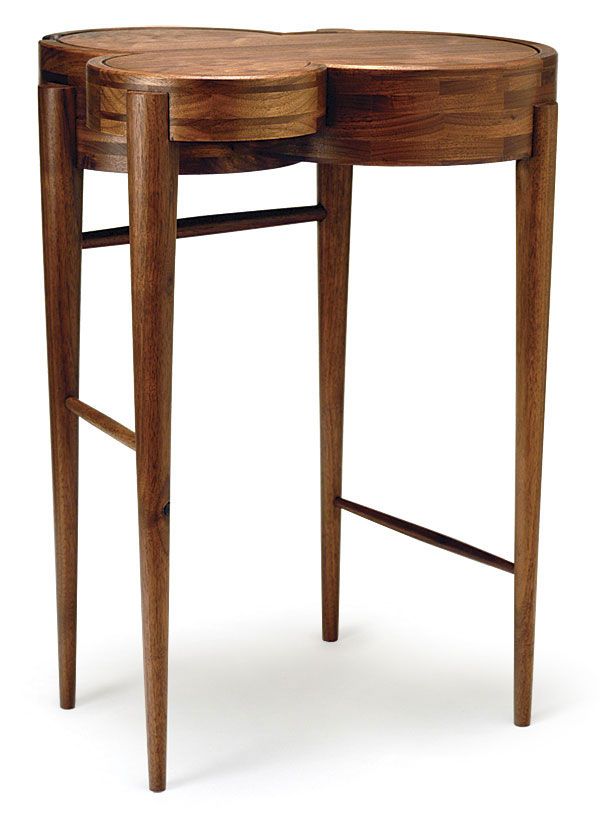
Part of a series by Hutton exploring layers, multiples, and curves, this table is 25 in. deep by 19 in. wide by 19 in. tall. The core of the construction is the brick-laid layers of the tabletop frame. Hutton varied the thickness of the layers and used a router to cut a rabbet for the top to rest in. The walnut table has an oil finish. From Fine Woodworking #220
Design or Plan used: Not specified
posted in: Reader's Gallery, walnut, oil
Curvy Layered Table
comments (0) October 24th, 2012 in Reader's Gallery
Part of a series by Hutton exploring layers, multiples, and curves, this table is 25 in. deep by 19 in. wide by 19 in. tall. The core of the construction is the brick-laid layers of the tabletop frame. Hutton varied the thickness of the layers and used a router to cut a rabbet for the top to rest in. The walnut table has an oil finish. From Fine Woodworking #220
Design or Plan used: Not specified
posted in: Reader's Gallery, walnut, oil


Comments (0)
You must be logged in to post comments. Log in.