
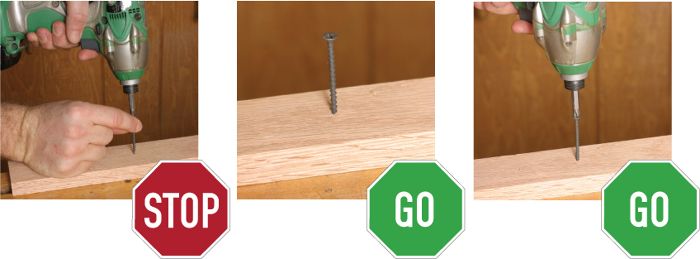
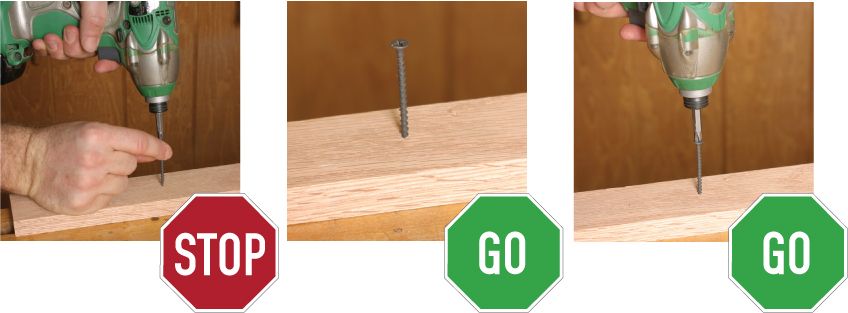
Wrong Way, Right Way: Predrill a hole before driving a screw.
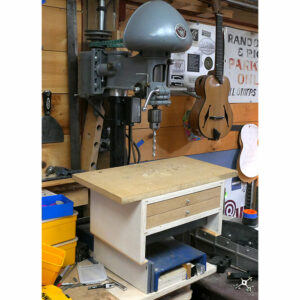
Sometimes it is easier to bring the drill to the workpiece; and other times, the workpiece to the drill press.
The cordless drill, with its increasing power and go-anywhere convenience, has replaced the corded electric drill in most shops. The impact driver is a new type of handheld drill. Its continuous staccato of tiny impacts allows a small drill to produce hundreds of lbs. of torque without hurting the user or stripping the screw head.
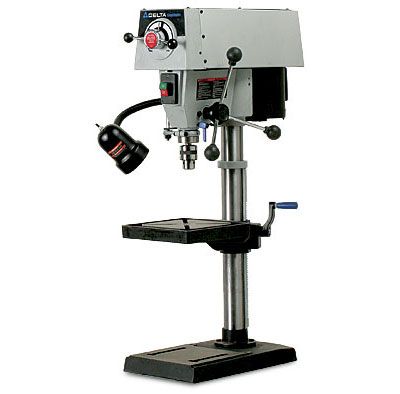
Drill presses, on the other hand, have remained relatively unchanged, offering controlled plunge action for more precise holes, with an adjustable table for solid workpiece support. Most woodworkers add a larger, auxiliary table and an adjustable fence for repetitive tasks.
The following is a list of safety precautions to consider when operating a handheld drill or drill press:
1. Follow the manufacturers’ instructions when choosing and a bit or attachment, and selecting the proper speed.
2. Use eye protection.
3. Roll up sleeves and tie back long hair.
4. Ensure that the bit or attachments are properly seated and tightened in the chuck, and turn the chuck by hand to see if the bit is running true.
5. Be sure to remove the chuck key before turning on the drill.
| See how Fine Woodworking‘s editors rated Drill Presses in the Tool Guide. Compare models and post your own ratings too. |
6. Always cut with sharp drill bits.
7. Keep all cords clear of the cutting area during use. Inspect for frays or damage before each use.
8. Secure the workpiece being drilled to prevent movement, such as twisting or spinning
9. Slow the rate of feed just before breaking through the bottom or back of a workpiece.
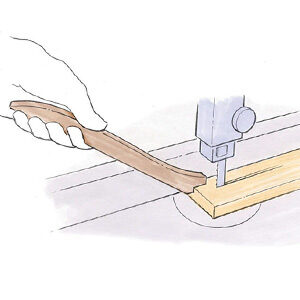
10. Do not drill with one hand while holding the material with the other.
11. Do not use a hole saw cutter without the pilot drill installed in it.
12. Do not reach under or around stock being drilled.
13. Do not use excessive force to drill into hard material such as metel. Reduce drill speed instead.
Do you have additional safety advice to share about the drill or drill press? Post a comment below and help keep your fellow woodworkers safe.
-
Wrong Way, Right Way: Predrill a hole before driving a screw.
-







Comments
Use the chuck key, do not attempt to run the dril press and tighten the chuck by hand.
If a person is careful (uses clamps and sharp bits) and uses common sense, is a drill press reasonably safe?
How seriously do you folks take #10 Do not drill with one hand while holding the material with the other.)?
Do you really clamp down your work piece every time or even a large percentage of the time?
If you always do (or nearly always) clamp your work down, what sort of clamp or device do you use that isn't cumbersome and awkward to deal with and feel like more trouble than it's worth?
Yes, it is safe, just be careful to the belt area, don't wear any dresses that have too loose to avoid touching with the belt.
Log in or create an account to post a comment.
Sign up Log in