Turning Gouge Primer
Why are there so many different gouges?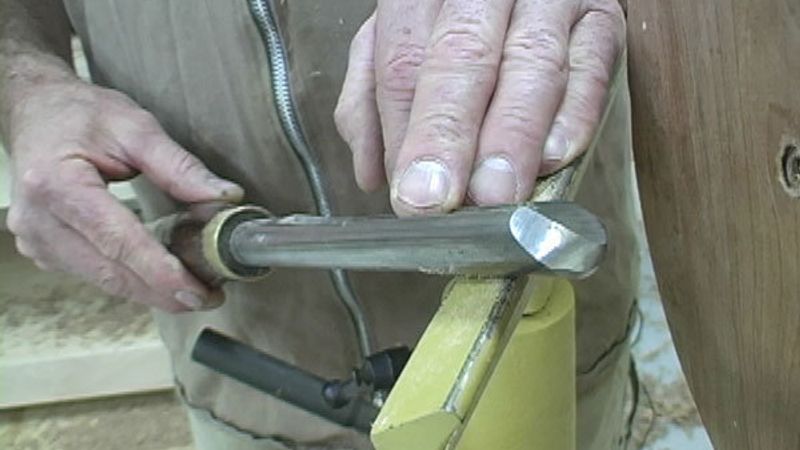
Turners use a variety of gouges for different purposes. Mahoney shares some basic lessons on differentiating them in this short video.
Spindle-roughing gouges should never be used for bowl turning. They have a thin tang and a traditional grind that can grab into end-grain fibers.
Bowl gouges can take a lot of abuse. They feature a deep flute and a heavier shank.
Spindle gouges, on the other hand, are designed for tight turnings like beads or coves. They feature a shallow flute, a long bevel, and a very long cutting sweep.
Mike Mahoney
Orem, Utah
Teacher, author, and wood turner Mike Mahoney answers eight reader questions about tools and techniques for turning bowls.
| QUESTIONS |
|
1 |
 |
Why are there so many different gouges? |
|
2 |
|
What’s the difference between shear scraping, scraping, and cutting? |
|
3 |
|
What’s the right way to position a gouge? |
|
4 |
|
How can I avoid tearout when turning end-grain fiber? |
|
5 |
|
What’s the best way to handle difficult grain? |
|
6 |
|
How can I prevent green wood from cracking? |
|
7 |
|
What’s the best way to cut a tenon for a scroll chuck? |
|
8 |
|
What’s the proper lathe speed? |






Log in or create an account to post a comment.
Sign up Log in