
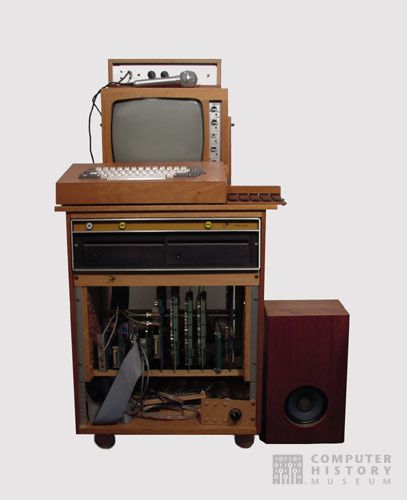
To see Bob's machine at the Computer History Museum, follow this link.
Last week I was handling some entries for our Methods of Work department when I came across a contributor who mentioned that he made a computer in his shop. My first thought was that he built a model, but he was talking about the real deal. In the mid-1970s, Bob Belleville built a personal computer housed in a wood shell. That computer is on display at the Computer History Museum in Mountain View, California. Here’s the story, as Bob tells it:
“The computer was actually started in 1975 and I continued to work on it until the early eighties. This was in the very early days of the personal computer and some people actually built their own from early computer chips. It took a lot of them. (The IBM pc was introduced in 1981 – to give you an idea of the time frame.)
My machine is in a mahogany case. Note that the keyboard housing is also in wood. It was built out of 1/8 inch mahogany, probably what used to be called a ‘door skin’ (I was really poor in those days). We called these ‘homebrew’ machines. The display is a closed circuit tv monitor in a mahogany case sitting on R2D2 like feet so I could tilt it. You can see a wing nut sticking out of the side of the monitor to fix the angle.
The microphone, box above the monitor, and speaker enclosure were all of my own design and construction. This computer could speak and record a short bit of sound. The machine had a total of 12,000 bytes of memory. The machine I’m using now has 2,000,000,000 bytes (2GBytes). I wrote all the software for this machine including the
operating system. The museum took the machine in the ’90s. (My wife essentially banished it from the garage.)
The funny thing to the right of the keyboard is a keyset. It is a single handed keyboard invented by Doug Engelbart. He actually invented the mouse. Doug later hired me to work at Stanford Research Institute (now SRI International), then I moved to the famous Xerox Palo Alto Research Center (PARC), where I helped build the Xerox Star.
No more wood–only plastic from then on.
From there I was hired by Steve Jobs and directed engineering for the original Macintosh. (Both the Star and the Macintosh are in the Smithsonian in D.C.)”
Bob retired in 1998, and now spends much of his time pursuing more serious woodworking. Look for his tip in an upcoming issue.
-
To see Bob's machine at the Computer History Museum, follow this link.
-
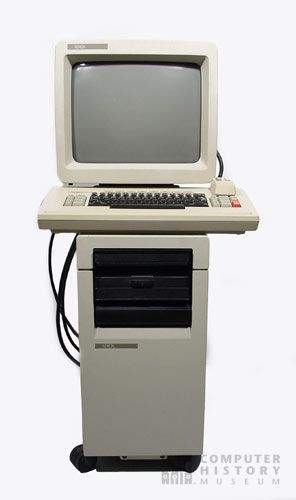
The Xerox Star, which Bob helped build and design, has a slight resemblance to his homebrew computer. To see the Xerox, follow this link.
-
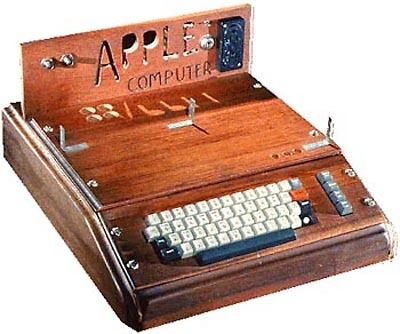
Did you know Apple co-founder Steve Wozniak made the first Apple computers out of wood? Read more...






Comments
Fantastic! I know that Matt Berger, of Getting Started in Woodworking fame, (http://www.taunton.com/finewoodworking/getting-started/) was going to make a wooden iPod case this weekend... I wonder how far he got...
Anyone else out there embedding technology in hardwood?
-Gina, FineWoodworking.com
Thanks for the shoutout Gina. I haven't made one yet, but this article changes the game entirely!
I just noticed this bubinga joystick for Playstation 3 in our gallery: http://finewoodworking.taunton.com/item/7904/bubinga-joystick
The maker blogged about it here:
http://kaytrimskustoms.wordpress.com/2009/01/21/introducing-the-artistic-series/
Okay, I can probably go on like this forever--posting links to cool wooden/electronic stuff.
I just was forwareded another one:
http://www.treehugger.com/galleries/2009/02/15-awesome-wooden-computers-slideshow.php?page=1
It's a slideshow of 15 wooden computers. -Gina
Log in or create an account to post a comment.
Sign up Log in