
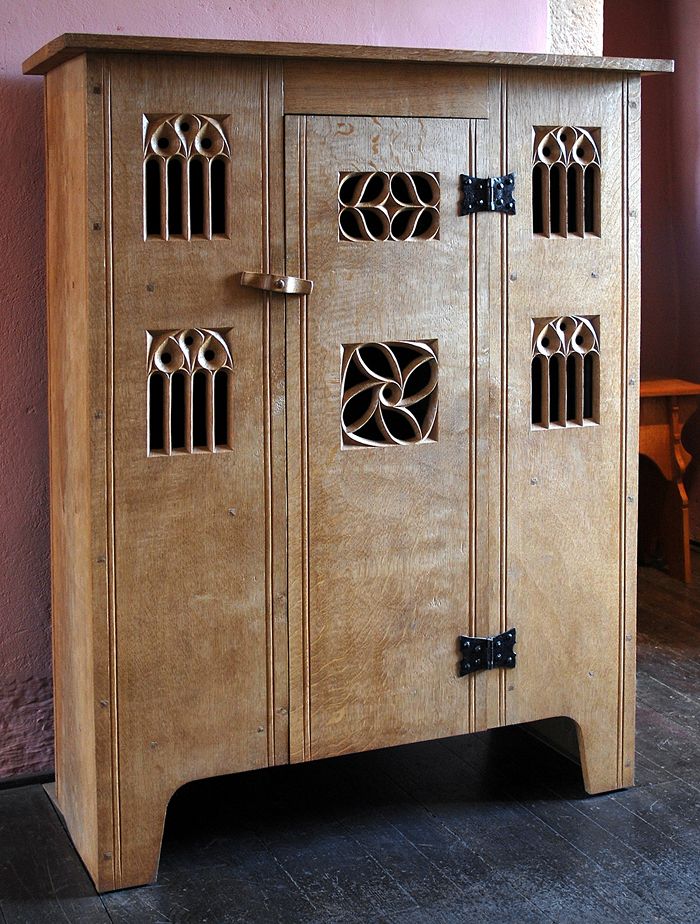
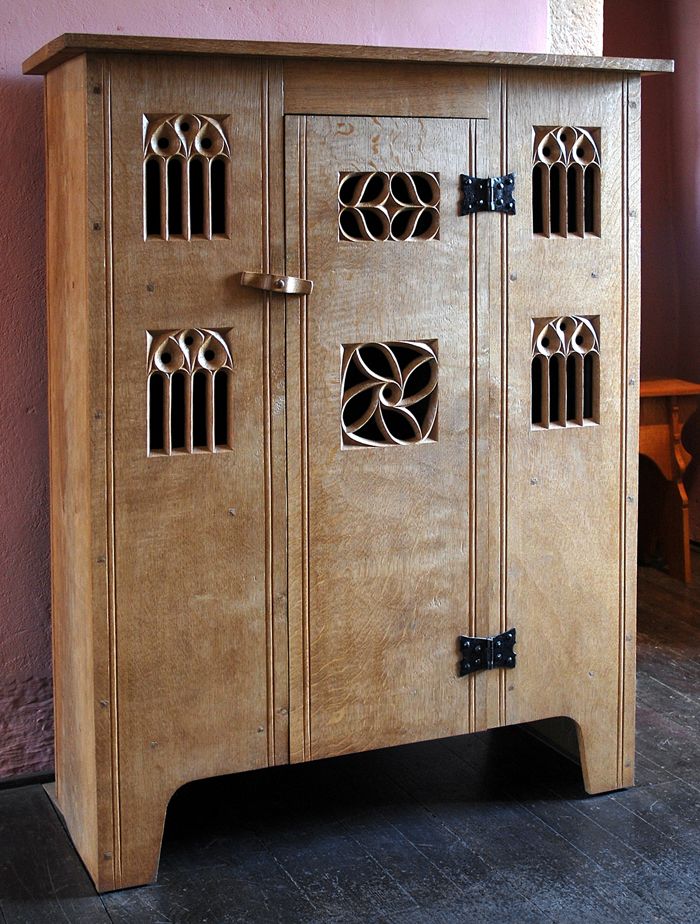
Adrian McCurdy's replica of a 15th-century cupboard inspired me to break out my carving tools recently.
The biggest thing I took away from my high school geometry class, aside from the D my parents never saw, was an understanding of the power of the straightedge and compass. With just those simple tools, I learned I could create incredibly precise, complex designs.
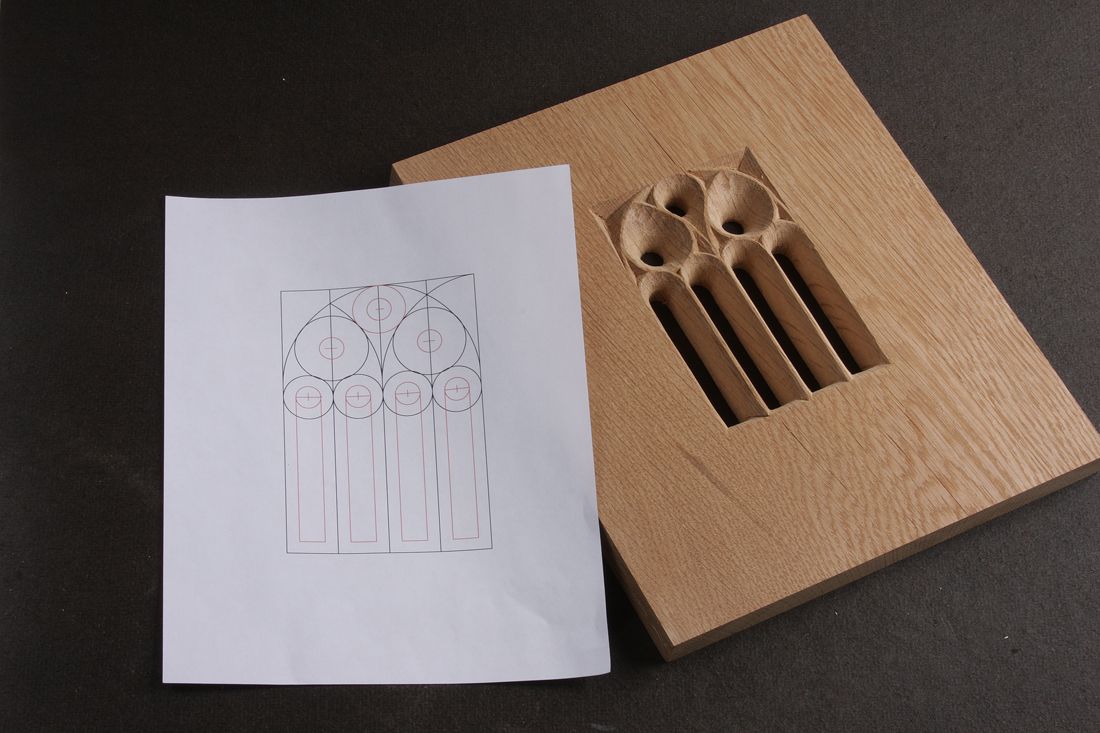
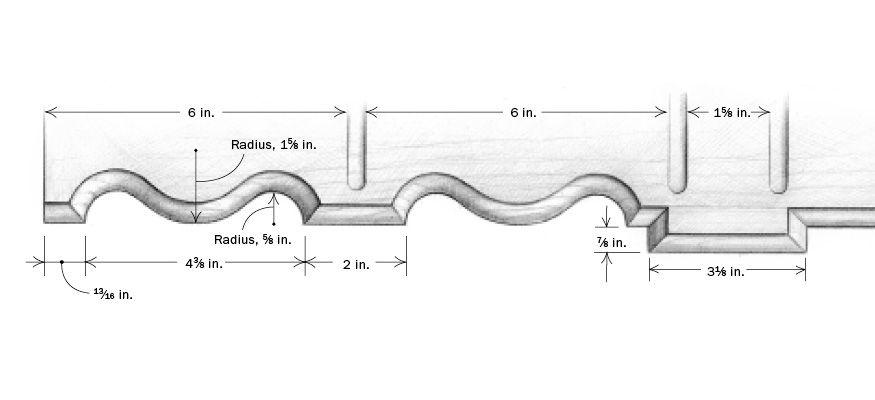
I was reminded of that recently when laying out a simple carving exercise. I was blown away by Adrian McCurdy’s work on the back cover of FW223 and I wanted to try my hand at a medieval-style carving detail from one of his pieces. The design looked organic at first glance, but as I started laying out the basic form with a ruler and compass, I realized that the entire design could be rendered that way. I was amazed that simple geometry could yield such a free-flowing design.
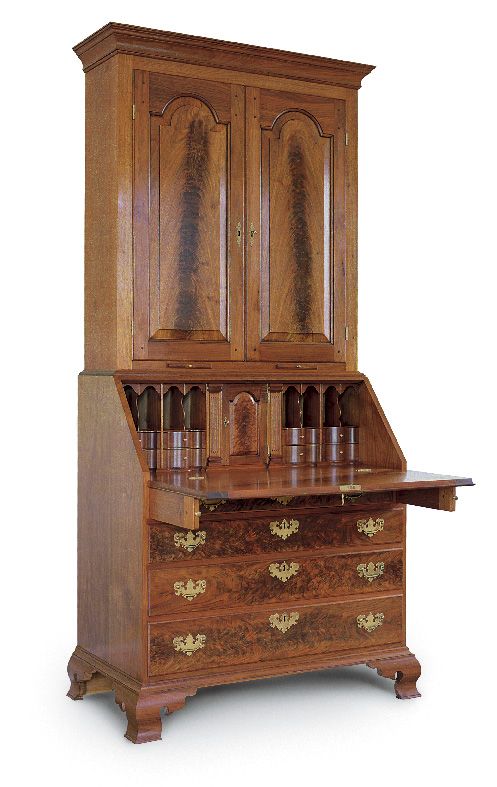
It reminded me of the ornate gallery in Lonnie Bird’s Pennsylvania secretary (FW154), where I was surprised to learn that all of the intricate curves and moldings could also be described in simple geometric shapes.
I guess it’s not that surprising that a basic understanding of geometry was at the heart of all of these designs. After all we’ve been designing with these same basic concepts for thousands of years. What is fascinating to me, though, is how the same basic forms can be used to create designs with very different and distinct styles, from medieval cathedrals to Queen Anne furniture to contemporary designs. Like the music notes wielded by a composer, the simple geometric shapes are our basic building blocks which can be used to create designs of infinite variety. Pretty cool.
-
Adrian McCurdy's replica of a 15th-century cupboard inspired me to break out my carving tools recently.
-
When laying out a sample carving, I realized that the entire design could be created using a straightedge and compass (by way of a computer drawing program!)
-
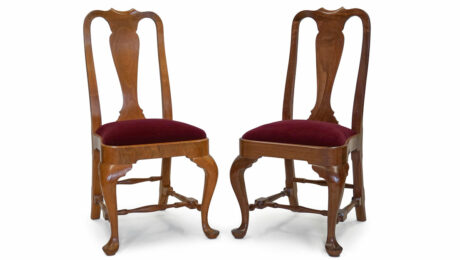
Most of the decorative elements of Queen Anne-style furniture can also be laid out with a compass and straightedge. A Pennsylvania secretary by Lonnie Bird is a good example.
-
The gallery is a much simpler design that it appears at first glance.




Comments
Very nice designs on this piece. Not overly done as many carved pieces can be. I have avoided any type of carving in my work but this makes me want to rethink it. Well done!
Ninja, I know what you mean about carving. It's something I typically shy away from except on the odd period piece I make. I do a lot of work in the arts and crafts style which isn't known for carved details, but I think this style of carving could fit really well within style and add a unique flair.
Mike
Beautiful designs!
Nice write up Mike.
Log in or create an account to post a comment.
Sign up Log in