
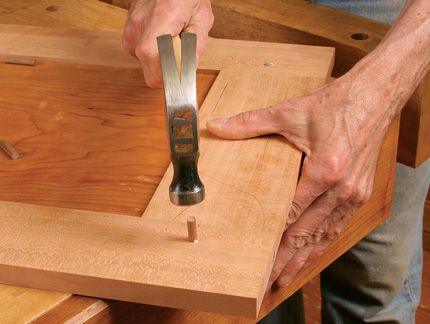
Follow furniture maker Christian Becksvoort's tips for dead-flat frame-and-panel doors.
When frame-and-panel cabinet doors wind up twisted after glue-up, the cause can be traced back to one of three culprits: stock, joinery, or clamping.
More on Building Doors
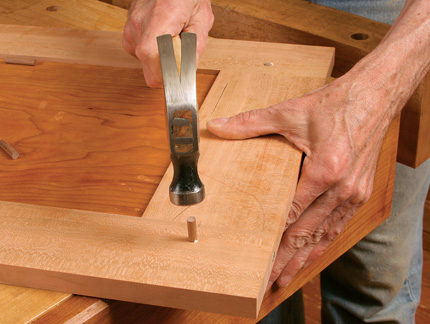
Easier Frame-and-Panel Doors

Simple Cope and Stick Doors
3 Ways to Make Cabinet Doors
Start by choosing stock for the frames that has reasonably straight grain, and make sure you let it acclimate to the humidity in your shop for a few days before milling it. Properly dimensioned and seasoned stock is critical to making straight frames for doors, so be sure the workpieces have faces that are parallel and edges that are square.
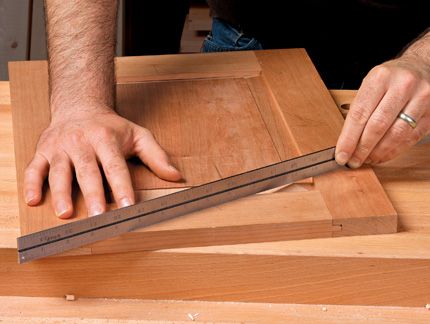
Miscut joinery also causes doors to twist. The tenon cheeks must be parallel with the rails, and the mortise walls must be parallel with the stiles for a door to be flat, so check that your machinery and fences are properly set. Once you’ve cut the mortises and tenons, you can check for twist by dry-fitting the door and laying a ruler or straightedge on edge across the door in a couple of spots. Or you can lay the door on a tablesaw to see if opposite corners rock. If a corner is high, you can adjust the fit by shaving a bit from the tenon cheek on the side of the frame opposite to the high spot. That should bring the corner of the stile down a little and flatten out the door.
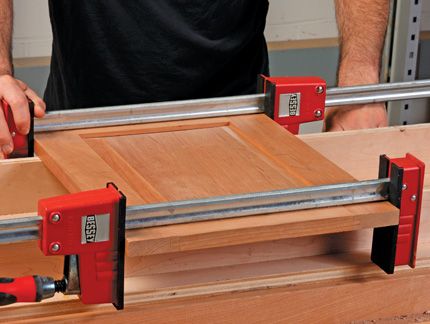
If the joinery and the dry-fit are OK, then your clamps could be pulling the frame out of square. Make sure you keep the clamps parallel and try resting them on a flat surface, like a tablesaw, during glue-up.
If you’ve checked all of those things and the doors still rock slightly after glue-up, consider planing the high corners from the show side of the door until the whole front of the frame is dead-flat.
 |
Solid Tips for Dead-Flat Doors
|
-
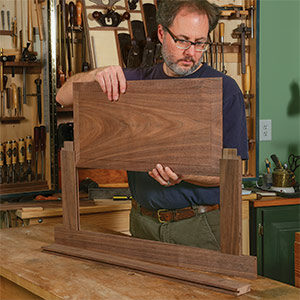
Follow furniture maker Christian Becksvoort's tips for dead-flat frame-and-panel doors.
-
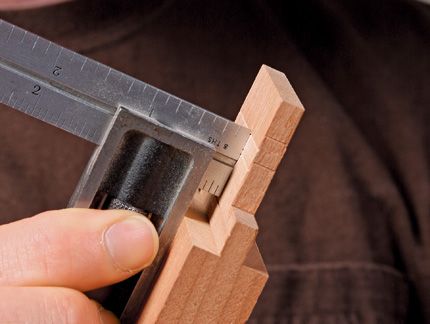
Check it with a square. Tenon cheeks must be straight and parallel with the faces, or the whole door frame can twist.
-
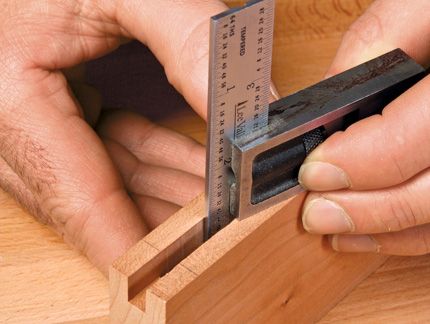
Don't forget to check your mortises. Mortise walls must also be perfectly straight and square.
-
And a rule. Dry-fit the door and lay a straightedge over the surface to look for warping in the frame. Check it diagonally as well as across the joints.
-
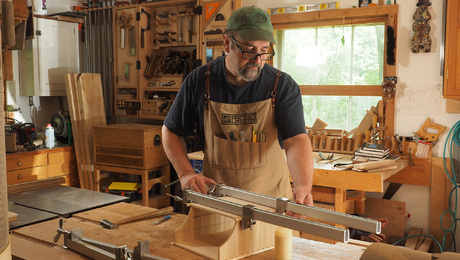
Clamp from above. Use the clamp bars like winding sticks to help you look for twist in the door frame. It's easier to see high spots under the bars.




Comments
My first proyect was to build a four door closet for my daughter. I chose cedar because termite plague is very common here. With zero experience i began to build it using frame construction like method. The doors were 96 inches tall, to long for softwood and hardwood too. They got twisted a little. After several months looking for the reasons,i understood what you explain here but also about a well structure desing is key in succesfull building furniture. Thanks and nice magazine finewoodworking team!!. A Friend from Culiacan, Mexico.
And then sometimes no matter what it seems, wood just goes ahead and does what it wants to…like my teenage son. At least you throw the door away.
I have, well my wife has an old "gun cabinet" that I believe started life as a side board. I think it was retasked for guns and fishing rods, possibly when whoever ordered the original failed to pay up. We moved the piece from southern California to northern California and within about a year the doors were twisted like pretzels. The material is good looking mahogany and the door panels are nicely cut tongue and groove multi-piece assemblies that were unfortunately glued together and then glued into the door assembly. So, not only did the doors twist madly, the tongues on some of the subpanel elements have ripped right off. It is quite a restoration project, but I think it will be in better shape when done than it was when new.
Log in or create an account to post a comment.
Sign up Log in