
This is a cool video from Bob Taylor, co-founder of Taylor Guitars. He discusses a subject that’s close to my heart: Ebony. I learned quite a bit about the wood watching this video. You should watch it, too. I didn’t know, for example, that Cameroon is the only place where Ebony can be legally harvested. And I didn’t know that 10 ebony trees were being cut down to get just 1 that is pure black in color, and the other 9 are left to rot on the jungle floor.
I also find it interesting (and a bit worrisome) that Taylor Guitars (or at least Bob Taylor) is now part owner of the company that provides 75% of the legal ebony to other instrument makers. On the one hand, he’s done something I admire. He’s decided that every ebony tree cut down will be harvested for lumber, so there’s no waste and the supply of ebony goes up. However, he is part-owner of an instrument making company. And now he has significant control over an important resource that his competitors need (or at least want). If he is as good intentioned and caring as he seems, I suspect there will be no problems. But you never know.
What I’d like to know is whether the ebony I buy from lumber dealers comes to the US through these same channels. I don’t use a lot of it and I save every scrap, but I’d like to know where it comes from, whether it will still be available in the near future and whether or not I should start practicing my ebonizing skills.
EDIT (6/11/12)
Wow. I didn’t expect this much response. And I certainly did’t expect Bob Taylor to respond. Some of you might miss his response, because it’s now burried in the middle of the comment stream, so I’m copying it here. Please read it. Also, one commenter thought I was implying that Mr. Taylor would somehow take evil advantage of his position with respect to ebony. I’m sorry to have given that impression, because I actually got the opposite impression from him. He strikes me as honest, caring and as doing this for the very reasons he says.
Here’s what he wrote:
Hi All, I’ve been a woodworker for a long long time. I make a lot of furniture and love the community. I thought I’d add a few comments to help your discussion. I’m not a hype guy, although i’ve found in my forum experiences in the past that whatever I say, there are people who agree and people who think I’m lying. Well, I’m not lying, I’ll start with that.
Here’s a few things I thought i’d share after reading comments.
1. We, nor I, don’t give to the Obama campaign. It’s amazing how people post things like that who think they know. Blows my mind.
2. There are other legal places to get ebony, but they’re not practical for a number of reasons. That ebony rarely makes it to the market.
3. There are many times the amount of legal wood that leaves Cameroon illegally, that is not permitted, rather bribed, out of the country. This is just a fact. Even the “legal” wood was bribed in the past to lower costs! We don’t pay bribes. But this may answer where all that other wood you’re wondering about comes from.
4. Find the film, “Madagasgar, Lemurs, and Spies” if you want to see a good inside look at the Madagascar ebony situation.
5. We have been granted 75% of the permits in Cameroon because we have real sawmills, with real locations, with real employees. 75 employees now, in two sawmills. You can find us, tax us, inspect us. The permitting board respects that and rewarded it. Other operations are mostly invisible.
6. Yes, I do want to “control” the ebony, but not in the way it’s insinuated or feared. I want my ebony to be legal, and I want clients who share the same goal, and my promise to them is legal and ethical wood.
7. I have a Spanish partner named Madinter Trade, and they’re a very good company with super high ethics and skills. They sell wood internationally to guitar factories. They’re young and follow the current world rules naturally.
8. We have discovered for ourselves that the business model of the past required much illegal or unethical activity to lower costs. As we operate legally we have found it loses money. We’ll correct that with improving the business over time, and eventually we will make a good business of it.
9. We can’t really control our competitors with ebony, don’t worry about that. We need clients. It’s a business! It’s not a toy to play games with, as some people worry about.
10. We seek to bring further transformation of the wood into the country of Cameroon. We’ll invest in the factory and teach their people how to make semi finished parts that will have more value that can stay in Cameroon.
11. People want to know about reforestation. That is a very complex subject. Briefly, you have to start with legality. Think about it. We have to insure all the wood is legal. In the case of Cameroon we actually have to help fix the contradictions in their forestry laws. We’ve been invited by them to help with that. That will set the stage. Next, is to get an inventory so we know how much ebony there is. There are ways to do this, and there is motion on that project already. And then. replanting could occur, but the best way to replant is to simply not kill the forest, then it takes care of itself. That’s what FSC methods ensure. We do not have a concession of land, but have to work within other’s land. That’s the law. I could say we planted tress and people would feel good, but the real work is what i just mentioned. I’ve learned a lot about it and we have very astute professionals working with us. Someday I hope to have very specific reports on the true, actual, health of the species in Cameroon.
To wrap it up, I enjoy your conversation here, and I hope this helps you have a good discussion. Wish us luck, if you have it in you to do so. We need it, it’s hard job to be done.
Bob Taylor
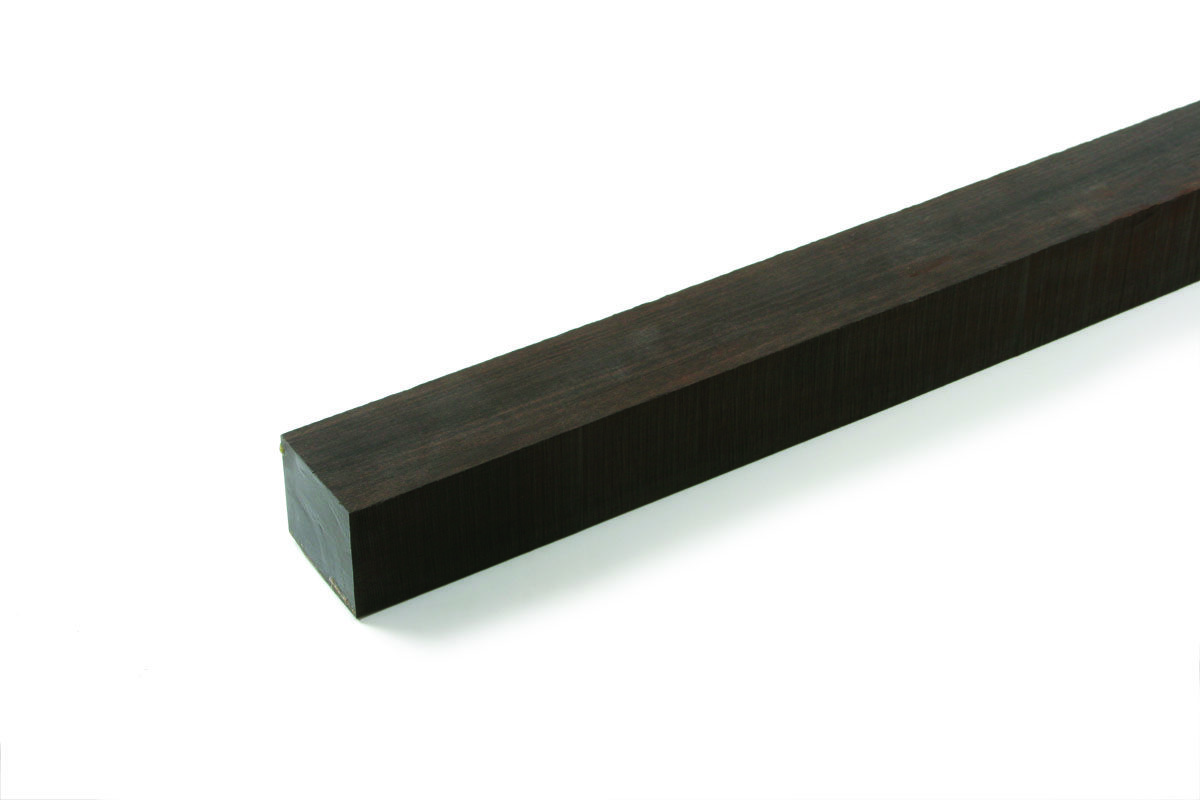
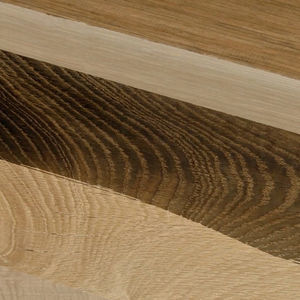
Gaboon Ebony. Beautiful, dark, rare and expensive. But a great detail and accent wood.





Comments
I've been a huge fan of Taylor Guitars and Bob Taylor for 20+ years. I'm certain that there will be no supply issues that would be caused by something Bob has control of. Bob is very commited to sustainable lumber and keeping exotic instrument grade woods in supply. Yes, for Taylor Guitars first, but I believe that he does make some of his lumber to other builders.
What's being done to plant new ebony trees?
What Bob does not say in this video is that the Ebony from Cameroon that is not perfectly black can be dyed. Miscolored Ebony is not a new thing and the use of dye for fingerboards, bridges, faceplates, etc. has been commonplace in Lutherie for quite some time.
So, in other words, Taylor will be selling B-grade Cameroon Ebony for the same price as A-grade. Since A-grade according to Bob is 10 times rarer than B-grade, we can expect to pay $1000/bf for black ebony? And then, to be told this to me like I'm some kind of 12-year-old? I hate to say, this is horrible....
I think he's probably trying to avoid the government destroying his business as they're trying to do with Gibson
http://reason.com/blog/2012/02/23/the-great-gibson-guitar-raid-months-late
I completely agree with JD Maher. There was no mention of re-foresting new trees, either ebony or spruce, for that matter. And this goes, I would guess, for all other tropical trees. Why are there not plantations of mahogany for example?
This was informative and I get his message that the Cameroon wood is all we have. But JDMaher (above) hits on the REAL issue. What about sustainabiliy? Is Ebony a farmable wood? Gibson fails to address this. Evidently the net havest volume is greater than the volume being grown naturally. Eventually, the wood will run out, even with Gibson's 10X longer scenerio. So what he failed to address is the sustainability question. Is he planting trees? Is anyone? Is Ebony farming feasible? These are the questions that need to be answered, not the "we have 10X longer before the wood runs out" message.
The simple answer is that we need to find other alternatives to ebony (and most other woods from the rainforests). Stop using it!
-Norwegian guitarplayer and woodworker-
I bought 2 violins recently and wanted different strings than what they came with so I visited a local shop that deals in violins, violas, cellos, and bass fiddles. They came highly recommended to me as the owner plays solo concert violin and is a luthier. I didn't have the two instruments with me but gave him a description. His statement was "It all depends on whether the fingerboards and pegs are made from ebony. I thought it odd that his initial assessment was the type of wood used being ebony. I've owned several expensive guitars in my life and just assumed that all fretboards were ebony. Not so, I guess. Anyhow on my next trip over I took my fiddles and they are ebony and he gave me a fair to good assessment of them. I keep small ebony blanks in my woodshop for inlay work when it comes up.
I think a lot of you are missing the big picture here. This is a man who has just done great things for the "shelf-life" of Ebony, yet you are still going to try to chastise him for "not doing enough"?
He's not owned the company more than a year, yet has already made great strides in expanding the useable stock in the forest. I think that alone deserves some praise.
Myself, I've always liked the ebony that has color. I have several blocks in my shop. I like the jet-black ebony too, but not quite as much.
But, one thing that struck me as being odd, was that while it is illegal to cut Gaboon Ebony, or Madagascar Ebony, or the others that were mentioned, I still see it sold in many places. To be honest, I think that only my colored Ebony is from Cameroon. Most of my stock of black is Gaboon, with some Madagascan as well as others.
I only buy from well known dealers, at least when it comes to ebony, and I am going to be pissed off in a bad way if I find out I'm being supplied with illegally cut, or "poached" ebony!
I'm not planning to stop using it (the legal variety), as I use very little in my work and I do love working with it. But I don't want to be using illegally harvested ebony either.
As for others looking for an alternative, it's already here, though I don't know if it's suitable as a "tone-wood". But "African Blackwood" has many of the same properties, and is just as jet-black as most ebony, not to mention being much cheaper to purchase! It does come in several shades of brown too, so there are some options for those who want the same dense wood in a different color.
Katalox is another wood with similar properties. It's very dense and takes a fine polish, and is a joy to turn. Again, it's also much cheaper to purchase than ebony.
If you look hard enough, you can find options right under your nose!
I think a lot of you are missing the big picture here. This is a man who has just done great things for the "shelf-life" of Ebony, yet you are still going to try to chastise him for "not doing enough"?
He's not owned the company more than a year, yet has already made great strides in expanding the useable stock in the forest. I think that alone deserves some praise.
Myself, I've always liked the ebony that has color. I have several blocks in my shop. I like the jet-black ebony too, but not quite as much.
But, one thing that struck me as being odd, was that while it is illegal to cut Gaboon Ebony, or Madagascar Ebony, or the others that were mentioned, I still see it sold in many places. To be honest, I think that only my colored Ebony is from Cameroon. Most of my stock of black is Gaboon, with some Madagascan as well as others.
I only buy from well known dealers, at least when it comes to ebony, and I am going to be pissed off in a bad way if I find out I'm being supplied with illegally cut, or "poached" ebony!
I'm not planning to stop using it (the legal variety), as I use very little in my work and I do love working with it. But I don't want to be using illegally harvested ebony either.
As for others looking for an alternative, it's already here, though I don't know if it's suitable as a "tone-wood". But "African Blackwood" has many of the same properties, and is just as jet-black as most ebony, not to mention being much cheaper to purchase! It does come in several shades of brown too, so there are some options for those who want the same dense wood in a different color.
Katalox is another wood with similar properties. It's very dense and takes a fine polish, and is a joy to turn. Again, it's also much cheaper to purchase than ebony.
If you look hard enough, you can find options right under your nose!
It's a charming speech but I agree with others here - sustainability is the real problem and I'd like to hear first and foremost what he, as controller of 75 per cent of the world's legal ebony, is doing about replanting this scarce, slow-growing species.
People have stopped using ivory to make musical instruments - it's time to use something else in place of ebony.
He does mention practicing good forest husbandry. This would include planting, right?
Taylor is a huge contributor to the current admin. That's why Gibson was raided and not he. Think in sandbox terms.
Thank you.
If what is said is true than great what a good idea.
If the wood is of a equal hardness and stability than super.
Me, I found a great little source for small bits of ebony and ivory. Both antique.
Just look in your area and find a shop that deals in pianos. Ask them to contact you when they are scrapping an old one. You can get all of the ebony and ivory. Also you would be amazed at all of the high quality hard wood that is in one of those old upright pianos. So I get all of those ebony keys and all of the ivory pads plus some of the old hard wood that is of useful dimension. It is great recycling and you get some cool loot.
Hey, Offcut,
Cut the guy some slack will you? Here he is doing something admirable and you're panning him for not going the final mile and planting the trees himself! I've got a suggestion for you: buy yourself a plane ticket from the UK to Camaroon, go into the forest and harvest the seeds from the living trees then plant them yourself. Return there every few months to check on them.
Sorry for offering such a ridiculous suggestion, but I think you get the point. "The longest journey begins with the first step." I'd be interested in a personal exchange with you on this issue, and to that end have provided my personal email address. Hope to hear from you soon.
[email protected]
As Executive Director of ASIA (Association of Stringed Instrument Artisans) and Editor of Guitarmaker magazine, I've been involved with the difficulty of luthiers being able to obtain legal wood for use in building musical instruments. The CITIES legislation that resulted in the ban on Brazilian rosewood was compounded by the Lacy Act amendments, which put extreme penalties on harvesting of organic imports. To use any imported wood, animal or mineral products, these must be legally harvested, and have paperwork that varifies to customs that they came from a country or region that allows legal harvesting. Customs can, and will, confiscate entire shipments, levy monetary fines in the thousands, and imprison you for illegal trading. What Bob Taylor is doing is to use all, not just the best ebony, and document the legal importing to prevent confiscation and legal problems. The Lacy Act stipulates that anything illegally harvested cannot ever be a legal product. So Bob Taylor is actually protecting harvested wood from confiscation. He has been a leader in using alternate species for musical instruments, and is a believer in using sustainable species, whenever possible. For those who must have ebony, his actions will prevent the waste associated with using a small amount of harvested wood. His efforts over the years have made luthiers, and industry conscious of the problems with cutting rainforests. This goes back years to when he and others in the Rainforest Alliance began buying miles of rainforest to protect it from use. Their efforts still previal to that end. So this is only the latest chapter in Bob Taylor's efforts to save and sustain what the world has, and hopefully will always have in their resources. He has built a successful business while caring for the world. I've always been impressed with his efforts in aligning the luthier community to action. His efforts are commendable.
Alton "Bear" Acker, Executive Director, ASIA
Editor, Guitarmaker
I'm hoping the author is just looking to gin up a lively discussion. Personally, I don't think ebony is particularly critical to guitars. I'll take rosewood, maple, and even walnut fingerboards rather than ebony. Even for mandolin bridges, I've long preferred maples and various other hardwoods for their tone rather than ebony.
And little real ebony is uniform black so it ends up being stained anyway.
And frankly, if you look at the larger commercial makers and some of the composite materials and designs they're using, you get the distinct impression that preserving the use of traditional materials is not particularly high on their priority list anyway.
If anyone thinks a buyer is going to choose a Taylor instrument simply because it uses ebony, I respectfully disagree.
When you consider all the things wealthy people dedicate their cash to, I think Taylor deserves credit here.
I don't know about others, but I read Fine Woodworking to get away from the suffocating politicization of absolutely every damn aspect of our lives. Let's hope it stays that way.
Bob didn't say this was a cure for the problem, just a first step. By extending the "shelf life" of available stock it gives time for regrowth of new and possibly more consistent Ebony. Does one of you Nay Sayers know how Ebony is propagated, how long it takes to maturity, even if previously cut trees can be salvaged, in situ or at plant? I don't but before I jumped on the "are they replanting" bandwagon I'd want to know these factors.
"B grade" is simply a color issue, not a quality issue and IF quality of the sound and consistancy of tone production are the primary concerns when using Ebony and appearance is secondary then "Grade B" should be of no or little concern. Those who "have" to have solid black (which often has to be touched up at final finish) then they may have to she'll out some extra cash, but so does someone who buys a Cadillac instead of a Chevy. The Chevy will get you to the same place as the Caddy and often the nameplate is the onlu difference.
I think it's interesting that we prize tiger or curly maple, figured Rosewood, even bird peck hickory but demand our Ebony to look like plastic!
Bob didn't say this was a cure for the problem, just a first step. By extending the "shelf life" of available stock it gives time for regrowth of new and possibly more consistent Ebony. Does one of you Nay Sayers know how Ebony is propagated, how long it takes to maturity, even if previously cut trees can be salvaged, in situ or at plant? I don't but before I jumped on the "are they replanting" bandwagon I'd want to know these factors.
"B grade" is simply a color issue, not a quality issue and IF quality of the sound and consistancy of tone production are the primary concerns when using Ebony and appearance is secondary then "Grade B" should be of no or little concern. Those who "have" to have solid black (which often has to be touched up at final finish) then they may have to she'll out some extra cash, but so does someone who buys a Cadillac instead of a Chevy. The Chevy will get you to the same place as the Caddy and often the nameplate is the onlu difference.
I think it's interesting that we prize tiger or curly maple, figured Rosewood, even bird peck hickory but demand our Ebony to look like plastic!
Somebody that smart and commited to rare woods is probably looking into the replanting idea right now. If he isn't tell him to complete the package and replant.
When DeBeers purchased a new mine that produced a large supply of off color/not white diamonds they started advertising the unique beauty of not-white diamonds, exactly the opposite of over 100 years of the diamond industry preaching. The public is now demanding to purchase the worst diamonds ever mined called "black diamonds" or one step above coal. See what a little education will do.
The idea of accepting lower grade wood in smaller dimensions
has been occuring for over a century. My 1880 home is constructed with 2" X 4" and fully 1" lumber. Those dimensions went by the wayside many years. Even the tongue and groove decking I put in 20 years ago must be replaced with new material that is 1/16" thinner now.
More demand, less supply has changed the lumber industry for over 200 years in this country and it will continue around the world until we either conserve or lose forever the chance to keep using rare woods.
Kudos to Bob Taylor! Not only does he make exceptional guitars, he is taking an exceptionally responsible position with respect to the sustainable harvesting of ebony.
Yes, there are other woods that can and are used for luthurie, but ebony is particularly good for all it properties and appearance. Yes, it is a concern that one organization controls 75% of anything, however, it is doubtful that you could have organized say dozens of individual harvesters to adopt a single unified harvesting protocol that would have produced the same outcome. Any protocol for the marketing of all trees cut would have produced differential rates of remuneration based on the perceived quality and marketability of the product, and would in all likelihood still condemned the harvesters to a continuing subsistence existence. Here is a case where a virtual monopoly was able to make a decision of conscience that would have been nigh on impossible in a rambling free and open market.
Not all monopolies are to be feared, or at least some are to be tolerated. The vast majority of us are served by monopolies in the supply of our electricity, and they are kept in check by a combination of regulation and the fact that other energy sources moderate the price that can be charged. In many cases, efficiency demands a monopoly. We wouldn't want multiple power companies each having the own set of distribution cables cluttering the landscape or being buried under our roads. The cost of multiple distribution systems would drive up the costs dramatically and so we reasonably tolerate the existence of their monopoly, or get off the grid.
The virtual monopoly for ebony will be kept in check by virtue of the fact that there are other woods that can be used as a substitute for ebony so the price to be paid for the lumber can only go as high as there are people willing to pay it. And let's face it, the real price of a Taylor guitar, or a Larivee or Martin is not determined simply by the cost of the wood that goes into it, or the manufactured components of truss rods, tuners, strings, pick guards, inlay, banding, strap buttons, finish, etc. the real value is the labour, even in a factory situation. Building quality musical instruments, fine furniture or other wooden items of value and quality are among the most labour intensive activities in human existence, and always will be. But we love what we do and what we are capable of producing, from what was once a tree, and that's why we subscribe to Fine Woodworking in the first place. We revel in what we do and we want to be able to do it better!
Bob's video didn't talk about reforesting, so we don't know what is happening in that regard. His video suggests he is licensed to produce lumber from trees grown on public and/or private lands. There is no suggestion he owns the land on which the trees are grown and therefore, it is unlikely his company is responsible for reforestation. Having said that, it would certainly be in his interest to promote and support reforestation practices. And with the new policy that all trees cut now have value, it is in the interests of the Cameroon government to work with private land holders, and for their own lands, to initiate a reforestation program if one does not exist, or tune up whatever program does exist, as the value of their standing forests, and therefore the positive long term impact on employment and their foreign exchange, just went up ten fold as a result of one man's decision.
With the decision that all trees cut will be sold, it may well be that other countries might find it in their interest to plant ebony in their forests for future harvest. I doubt that ebony plantations make sense, as most hardwoods are dependent on the diversity of other species for the health of the forest, but I may be wrong. Regardless, with the instant marketability of coloured ebony as a result of Bob's decision, as the acceptance of the wood sets in, my bet is that other suppliers, might well come to the fore as market acceptance creates a demand for wood not previously thought marketable. Additionally, market acceptance of 'colour' in fret boards and other applications will result in the expansion of other species put into service, likely garnering higher returns than was previously the case, which will act as further moderation on ebony monopoly.
So, for those who want to continue to use ebony, this is as good and outcome as one could hope for, given the historical devastation of forests elsewhere. For those who want to use other woods and either celebrate whatever natural look those other woods have and/or dye the wood to mimic ebony, good on you as well. The important thing is that good stewardship is being promoted and practiced and we woodworkers, whether as luthiers or otherwise, have a responsibility to support those enlightened practices.
On any sense of overall balance Bob Taylor's decision is a good one!
So let me end with how I started, kudos to Bob Taylor. You sure make fine guitars!
Jef Keighley,
Halfmoon Bay, B.C.
Gardentiger, in the lead comment, hit the nail right on the head when he wrote that "Taylor is a huge contributor to the Obama administration" while his competitor, Gibson Guitars, refuses to knuckle under to Obama's Justice Department extortion.
Under the current administration it is acceptable to dismiss charges against club-wielding New Black Panther Party thugs threatening voters at polling sites in Philadelphia while staging Gestapo raids against an honest and respected American manufacturer, seizing more than one million dollars in lumber and guitars. Moreover Gibson Guitars is a manufuacturer who has not moved his business to China and still employs Americans. It’s the same administration that bans drilling in the Gulf but subsidizes, with U.S. taxpayer money, ocean drilling by the Brazilian government.
Taylor sounds like Obama. Taylor's products, while good quality, are nowhere near the quality of Gibson. (I probably should not be getting into passing judgment on guitars as I am neither a luthier nor string instrument player) So, Taylor goes to Africa and reaches a deal with a notoriously corrupt government to monopolize the last legal ebony available in the world and then produces a video bullshitting the world about what a great guy, what a self-sacrificing ecologist he is when actually what he has done, through his agreement with Cameroon, is to seize the entire market. Where does this leave his competitors? Now that he has a total monopoly we will watch him sell off what used to be junk wood left to rot in the forrest, as he claims in his video (wrongfully, I realize) for probably the same price that we used to be pay for top quality ebony. He is a smart businessman but a total bullshitter .
I think most woodworkers are smart enough to recognize a "snow job." They realize that the reality is that we are dealing with a tragic situation of world-wide deforestation over which we, the end users, have no control. The countries where these woods grow are corrupt. Their politicians are going after the money no matter how many laws naïve Westerners enact. Passing some silly law in the U.S. and creating a bunch of so-called non-profits to monitor, “certify” and rule on what is good and what is bad lumber is silly and is doomed to fail. There is little probability that third-world government will ever do anything to stop deforestation. Get used to it! That’s the way the world is. Woodworkers will adapt. On a personal level I’ve been ebonizing where I would have used the real thing and almost no one sees the difference. Of course, I realize this is not the case for luthiers who look for properties other than color in the wood they use.
What is really rotten is to use the power of the federal government to stage Swat-team raids by Federal agents, in complete battle regalia and drawn automatic weapons, on an American manufacturer whose only “crime” was to employ Americans in an American business and to use only lumber certified by one of these so-called non-profit guardians who, by the way, are just in forrest certification to make a buck for themselves. Non-profits make a lot of money, do pay taxes, and pay the people who run them salaries. Not hard to see through that.
The Feds first raid on Martin was in 2009. Neither the President of Gibson, nor the company itself, have been charged as of this date, June, 2012 and the government is still holding more than a million dollars of this company's property which they refuse to return.
Meanwhile Taylor, an Obama contributor, is free to create a monopoly. Is this the "Hope and Change" we were promised or is this unparalleled government corruption? You decide?
The notion that "Taylor's products, while good quality, are nowhere near the quality of Gibson" is fallacious. I think a huge amount of working musicians would disagree with that statement.
Having gotten the basic premise wrong, the argument is then built into a conspiracy theory with no substance.
Listen to Bear Acker in his post. There are very few people in the industry more knowledgeable than him.
CITES and its ramifications are very real issues that must be dealt with. To blame it on an Obama conspiracy shows ignorance of the history and facts involved.
By the way, the vast majority of Gibson Guitars sold are made in China. It is the Taylor guitars that are made in America.
Which begs the questions: Where do the Chinese branches of guitar making companies get their wood? Do they respect sustainable resources in their Chinese operations?
@joebleau absolutely correct!
Jeez, Enough with politicizing everything and automatically going into conspiracy mode. I guess that gardentiger's and joeBleau's "free market" approach would be to simply continue to cut down any and every ebony tree until none are left, without any pesky government to interfere with their god-given rights.
I think it's sad that Humans feel they can move into any area and believe they have the exclusive right to rape and plunder that area. When America was first founded, We felt it was cool to target practice on Buffalo. We didn't use the meat, we just thought it cool to shoot them. Like Bob stated in this video, 20 trees wasted to find one black one. No one seemed to care about the waste, and the workers only complain about making a living.
It was once said that the human race is nothing more than a cancer. We move into an area, we multiply, consume every natural resource, kill anything that gets in our way, then spread to the next area.
Why is american politics coming into this conversation??
Bob Taylor is a bad a$$....
The guy has a successful guitar company that he's built from the ground up,
great leadership skills in that, and now he's changing how everyone will consider ebony.
He has eliminated a very wasteful thing by including all harvested ebony trees.
Sure, there some issues with him owning 75% of the legal source, maybe in a short period of time he can partner up with some of the other guitar/violin companies. Maybe he's already explored that avenue.
And yes, we need to replant, and I'm sure that is something at the top of his list as well, he just has not verbalized that yet.
I'm a guitar guy, nut, and woodworker. I make my own instruments.
I really applaud what he's done here, and a little black dye, will go a long, long way.
Let's keep the politics out of it...
joe m
I rarely post comments on any blog, but I feel compelled to do so after watching this video. It is this kind of foward thinking that should be applied to all of our natural resources. Having spent 30+ years in the field of wildlife conservation, I know only too well how irresponsible we have become toward our natural environment. As I begin to enjoy retirement and my woodshop I can only hope that more people like Mr. Taylor come to the realization that sustainability in all things natural should be our number one goal.
Why is it that there are people that have to relate everything to to "horrible" Obama? This is a question of sustainability, and here is just one person who can do something about it. If you think he is wrong, go do something yourself! But don't go all Ted Nugent, just because you don't like the current administration. And NO Chinese wood does not go through the same control of anything human rights or sustainability, so yea, if you buy Chinese, you ARE helping to destroy the remaining trees, JUST LIKR GIBSON!
Bravo to Taylor for having the vision and the forward thinking necessary to protect our precious resources. We cannot continue our path of destruction on this planet if we expect to survive, much less make guitars. We should all support this kind of forest stewardship.
JoeBleau,
I'm writing this with a smile. I find it interesting that someone would take such a political spin on Gibson. The laws that were used, were put in place years before the present administration.
To put something like this on this forum is very telling of your wild imagination.
Dave
Monopolies are evil. That said, if I had to pick one guy to "own" the world's supply of legal ebony, Bob Taylor would be a pretty good choice. It's pretty rare to see companies helping their competitors, but it has happened (e.g. HP and Tektronix). I'd say Microsoft and Apple, but the Justice Dept motivated that. I expect Bob will eventually sell the company to a jointly-owned consortium of instrument makers. Or, he'll squeeze the other makers until they establish their own sustainable ebony farms!
Hi All, I've been a woodworker for a long long time. I make a lot of furniture and love the community. I thought I'd add a few comments to help your discussion. I'm not a hype guy, although i've found in my forum experiences in the past that whatever I say, there are people who agree and people who think I'm lying. Well, I'm not lying, I'll start with that.
Here's a few things I thought i'd share after reading comments.
1. We, nor I, don't give to the Obama campaign. It's amazing how people post things like that who think they know. Blows my mind.
2. There are other legal places to get ebony, but they're not practical for a number of reasons. That ebony rarely makes it to the market.
3. There are many times the amount of legal wood that leaves Cameroon illegally, that is not permitted, rather bribed, out of the country. This is just a fact. Even the "legal" wood was bribed in the past to lower costs! We don't pay bribes. But this may answer where all that other wood you're wondering about comes from.
4. Find the film, "Madagasgar, Lemurs, and Spies" if you want to see a good inside look at the Madagascar ebony situation.
5. We have been granted 75% of the permits in Cameroon because we have real sawmills, with real locations, with real employees. 75 employees now, in two sawmills. You can find us, tax us, inspect us. The permitting board respects that and rewarded it. Other operations are mostly invisible.
6. Yes, I do want to "control" the ebony, but not in the way it's insinuated or feared. I want my ebony to be legal, and I want clients who share the same goal, and my promise to them is legal and ethical wood.
7. I have a Spanish partner named Madinter Trade, and they're a very good company with super high ethics and skills. They sell wood internationally to guitar factories. They're young and follow the current world rules naturally.
8. We have discovered for ourselves that the business model of the past required much illegal or unethical activity to lower costs. As we operate legally we have found it loses money. We'll correct that with improving the business over time, and eventually we will make a good business of it.
9. We can't really control our competitors with ebony, don't worry about that. We need clients. It's a business! It's not a toy to play games with, as some people worry about.
10. We seek to bring further transformation of the wood into the country of Cameroon. We'll invest in the factory and teach their people how to make semi finished parts that will have more value that can stay in Cameroon.
11. People want to know about reforestation. That is a very complex subject. Briefly, you have to start with legality. Think about it. We have to insure all the wood is legal. In the case of Cameroon we actually have to help fix the contradictions in their forestry laws. We've been invited by them to help with that. That will set the stage. Next, is to get an inventory so we know how much ebony there is. There are ways to do this, and there is motion on that project already. And then. replanting could occur, but the best way to replant is to simply not kill the forest, then it takes care of itself. That's what FSC methods ensure. We do not have a concession of land, but have to work within other's land. That's the law. I could say we planted tress and people would feel good, but the real work is what i just mentioned. I've learned a lot about it and we have very astute professionals working with us. Someday I hope to have very specific reports on the true, actual, health of the species in Cameroon.
To wrap it up, I enjoy your conversation here, and I hope this helps you have a good discussion. Wish us luck, if you have it in you to do so. We need it, it's hard job to be done.
Bob Taylor
The only way to make the market accept the "truth of the forest" (spotted ebony) is to have majority control over the supply. That is, if Taylor only controlled, say, 30%, and only cut 1 for 1, that ebony would be relegated to B grade and other suppliers would continue to chop down most of the forest at 10 for 1. So while monopolies are bad in general, in this case, it's a good thing. (Of course, making spotted ebony A grade will make all-black AA grade, but that will be short lived after the other suppliers exhaust their access to ebony.)
As for Bob Taylor's relationship with his competitors, he helped Martin setup CNC in their factory.
On Gibson:
- I don't know any luthiers that would say Gibson quality outranks Taylor or Martin. The reverse would be the typical view.
- Gibson has actually had a factory in China for 10 years: http://www.epiphone.com/News-Features/News/2007/Gibson-Qingdao-Factory-All-Epiphone-All-The-Time.aspx
- Gibson was ranked as the worst company to work for in 2009: http://www.glassdoor.com/blog/glassdoor-reveals-lowest-rated-companies-united-stays-grounded-gibson-guitar-strikes-cord-employees/
With that work environment, it's not hard to guess who tipped off the Feds about their black-market Madagascar wood.
I forgot to say, shame on Matt Kenney for suggesting that Bob Taylor is a bad guy. Would you rather the company was owned by any one of the million greedy bastards in the world? If *I* had bought it, I'd be charging Bob a pretty penny for his ebony -- black, yellow, or otherwise! :-) We're lucky Bob bought it in time!
This is utterly and completely admirable. It is admirable from an ethical perspective. It is admirable from a business perspective. It is admirable from an environmental perspective. And it is admirable from a human perspective. I am in the market for a new mandolin and I actually hope it has colored ebony on it. The color won't affect the tonal qualities, just the appearance and I think it will give each instrument an individual character.
Now, what is he going to do about spruce, hard rock maple, and mahogany?
The fact is that Gibson was closed down for using Ebony from Madagascar. It has nothing to do with politics, it was the law. Somehow the spin is that Obama closed down Gibson because it was an American Company, but the truth is, those laws were in place long before Obama came into office. It makes just as much sense to say that Clinton, or Bush closed down Gibson. A LOT of guitar companies are outsourcing to China, Gibson is just one of them. Even Fender has some Asian products, but most don't say Made in America, just because they were assembled here. If you are concerned about sustainability and the accord agreed on concerning sustainability, DO NOT buy your guitars or wood from China. They have a horrible Human Rights record, and a horrible record for supporting any sustainable growth. I salute Bob for going to look at what he was buying, instead of just buying the cheapest stuff he could find. It takes judgment like that to keep these woods in the world and NOTHING to do with politics. And as a member of the Accord on sustainable growth, Bob is required to plant, what he cuts.
About re-planting. Plantation grown wood is generally pretty crappy compared to natural. What they should probably do is to re-plant two or three trees where they cut one, then come back in a few years and select the best of them to allow to mature. Something like that. Do what grows the healthiest trees and the best wood, not what grows the most.
Thank You Bob, Foe what you have done in the guitar community and for what you are doing for sustainability! It is fantastic that you are taking the time to read out little discourse on woodworking and commenting on it. It shows a real concern with wood and wood working. I do have one complaint about your guitars however. Every one of them sounds perfect! There is little to no searching when you go out to buy a Tayor guitar. When I look for a Fender, it can take me years to find the right one. If I want a Taylor, I just go buy one, it's perfect! No journey to find the right one, You just go to the music store and pick it up.
JoeBleau says: "Taylor sounds like Obama. Taylor's products, while good quality, are nowhere near the quality of Gibson. (I probably should not be getting into passing judgment on guitars as I am neither a luthier nor string instrument player) "
You are right on only one count here JoeBleau: You should not be passing judgement if you are neither a player or builder. You misunderstand the issue. I work in this industry and the story about Gibson is deeper than the public knows. It will come out in time. This is not a Republican VS Democrats debate and that issue is a smoke screen.
The real issue (and Bob is addressing it) is the pressure we have put on our planet and our forests to obtain these woods. In true Bob fashion, he has traced the issue right back to the source, the place where the tree is cut and he is asking good and hard questions. And coming up with solutions. Good for him. I am a guitar builder and have known Bob over 30 years and respect him tremendously. The only thing not addressed -which I think is worth discussing - do we need factories pumping out hundreds of new guitars every day with these woods? Comments?
These kinds of actions indicate sound business decision-making in the 21st century: securing sources of supply while mitigating the impact on the ecosystem(s) that are affected. Taylor Guitar is to be commended for good business practices.
I wish we could get people to wake up to what is happening to U.S. forests, too. Here in central New York, loggers are cutting, stuffing whole logs into shipping containers and sending them to Chinese mills. This includes veneer-quality black cherry. In Pennsylvania, I have seen excellent quality oak, maple, and even black walnut sawn and reassembled into wood pallets. I passed another pallet mill in central New York, where gorgeous, 18-24" maple was stacked up, ready for assembly into more pallets. Loggers are now taking nearly everything 10" and up, with the smaller diameters going into air-polluting firewood. It looks like our goal here at home doesn't differ much from the 3rd world countries: Plunder 'til it's gone...sadly...
He summed up when he said he desired control. That is the nature of the nuts that try to exert influence in our lives. Why not allow us to purchase ebony and replant the forest? I understand that the period of growth is long, but that makes more sense than government "control". As it is this smells of too much influence. Also, it goes with the fact that some people run around and yell the sky is falling to get us to knuckle under to more "control". For that matter, just make the guitar out of plastics.
Then there is the concept of taking wood from the poor countries. I live in the South and the Japanese take our pines everyday. That is called business. We just replant the pines and oaks and anything else that it harvested.
At this point we have too much control, government interference, rules, regulations, taxes and everything you can name. So I can not be sympathetic to this cause.
GOOD job Bob Taylor. As for all those nitpicking about replanting, no one is stopping you from starting an organization/charity to replant the ebony forests. Being a critic is easy. Walking the walk is admirable. Kudos to Taylor for effecting and affecting what they can.
What I do not understand is what is so special about luthiers? The rest of the woodworking world has learned to adapt, we book match, we tint, we cut the pieces we have to make them fit a particular look. These people are complaining about a bit of brown or white on their ebony? What arrogance.
I get that there my might be some special resonance between ebony and the box, but frankly I doubt it. Is ebony specially adept to withstand the compression of the strings? Well for crying out loud, wood engineering has been around for at least 200 years, find a species of wood that is plentiful, has the same modulus of elasticity as ebony and use that!
I don't use ebony, nor care to waste time and money looking for it, if I want a piece of black wood for accent I simply tint the wood with a solution of ferric acetate and cathecol. The wood comes out looking black as night with the grain clearly apparent. Even the lowly pine.
If the stumble block for reforesting is the land, well then BUY SOME! I am sure we are not talking fifth avenue prices in Cameroon. Hell, don't go so far, you can come to Mexico and buy acres of land for the same amount that would cost you to buy a Cadillac. And if you are gong to do this to create and industry and jobs, the government might even give it to you free. Work out a deal with the Cameroon government, isn't this why they were given the permits?
Are there no other places in the entire world were ebony might be able to grow?
The honest truth is that luthiers and guitar makers are now with their ass against the wall and are thinking "jeeezz, maybe we should do something about it," as far as I am concerned too little, too late.
So, is the solution to all this to say "well now, I am willing to accept a bit of brown in my ebony?" To this I say, welcome to the real world bubba, we have been doing it for years.
On the sustainability issue, if the ebony logs on those trucks in the video are typical of what Bob Taylor is routinely taking out of the forest, Cameroon ebony will go the way of the rest, no question. Ebony (presumably Diospyros crassiflora? No one here has mentioned the actual species...) is very slow growing and those trees were probably around 200 years old.
It takes a very long time for an ebony tree to produce a commercially viable volume of the prized dark heartwood - even if Bob Taylor began planting today he wouldn't grow enough heartwood to make a fretboard for a banjo before his days were up, I fear, never mind sustain however-many guitar-making businesses he supplies, though I personally wish Bob a long and happy life!
Bob's point 11 suggests he isn't doing any replanting, anyway, because he's swamped by bureaucracy. Sure, the way for a forest to sustain itself is not to kill it, Bob, as you say, because when a tree falls naturally it creates a gap in the canopy and self-seeded saplings grow into the gap. But this is a process that works over hundreds of years if a forest is left to its own devices, not when you have a commercial logging operation going on - ebony growth can't keep up with what you're taking out.
Planearound:
The first step with the long journey of growing a tree is planting the seed, not felling the tree.
The movie: Jeff Goldblum to play Bob Taylor!
I've owned a Gibson B25-12N since 1965. I own a Taylor 314 and, until recently, it's been my 'main' guitar. I'm new to guitar building, so where do I find this "B" grade ebony? I'll use it. Why not? I've used Rosewood fretboards and they seem to work just fine and look great too.
Since I'm what you'd call a low production shop (work at it when I feel like it) I can build with whatever materials I feel like (and can afford). I even know someone who has built a guitar out of OSB. Not a choice I would have made, but it does minimize the use of scarce resources.
So, again, where do I find this "B" grade ebony?
I have always thought that the "imperfect" wood is always the best wood. The most figured the most streaked, the most color, it has a personality 100 time more powerful than a piece of plain boring black wood. Give me the figured , the streaked the color and the personality of the tree that grew that wood and I will make something to honor that tree just as beautiful or almost as beautiful as the tree was before it was cut down. The idea that we have to have solid black wood is a joke. As far as I am concerned the ebony with character is the grade "A" wood and the solid black is the "B" grade, B-for boring, no life, no story, nothing special about a plain black piece of wood. I love Black walnut that has both light and dark mixed in, instead of adding maple to contrast the piece I try cut what I have to accent itself no gluing, and no extra work needed. I build guitars and I don't even use ebony, I like bubinga and some of the other interesting colored species.
Thanks Bob-for bringing the true Ebony to market!!!!
excellent story. thanks very much for being brave enough to tell it,
I have always loved the sound of Tayor Guitars.. and Now.. I am very happy with Bob Taylor. Kudos to Mr. Taylor for doing this. Ebony is Ebony... the color does not change the species. I love it.. and like a previous comment.. I also like the streaks of color and will be happy with an occassional piece of all black if it is available. but will live within the means of the forest.
I am not a guitar maker, I have never used Ebony but I DO take my hat off to Bob Taylor for making a decision to do the right thing, to save Ebony, to reward the people of Cameroon and to make a true difference in the world. Thank you Bob!
So, if things get so bad that ebony is banned outright, does that mean that ebony and ivory will go on living in perfect harmony?
I know nothing about guitar or violin making. So please someone educate me as to why is ebony so important in the construction of string instruments?
If it is a matter of colour as it seems to be, because only black ebony has been used; why not dye some other available wood, let alone dying the B grade as some one else has suggested. If it is a matter of strength or resistance to humidity changes, so the instrument stays tuned, then perhaps it is time to make guitar necks out of carbon fiber composites. They would be pitch black and plenty strong, with zero reaction to humidity. I understand the sound (tonality) is really dependant of the "soundboard" the spruce wood that is also apparently harder to come by. But, what is so magic about ebony that it cant be replaced by some other functuional material? As Mr Taylor said, suppose we are 5 or 10 years in the future and there is no "legal" ebony any more. Do we really believe that all string instruments making will stop?
Instrument makers worldwide should league together today to ban ebony use. Then, the "poaching problem" will cure itself. as there will be virtually no more demand for the black wood.
But as I said, I know nothing about making the string instruments.
Thank you, Mr. Taylor, for making a difficult choice that will ultimately benefit everyone. As a woodworker, luthier and guitar player I would like to apologize for the posts here from those who would use this forum as a mouthpiece for their conspiracy- flavored political opinions. I am curious, however, as to why you felt a need to tell us who you don't support....
I think Mr. Taylor has got it right. Operating in harmony with the way of the Earth is what will keep us in ebony for the future. Having it black is just an aesthetic choice, just an opinion. The properties of the wood are what gives value to us as luthiers. If you want to experience the paradigm shift for yourself, stroll into a woodworking store (as I did yesterday at WoodCraft) and pick up a piece of the so-called "B" grade ebony. The stuff is gorgeous! Change the aesthetic? You'll get no arguments here!
Woodpapi and others, for guitars, use of ebony today is mostly driven by tradition and some buyer's expectations. It does have some great properties for a fretboard: it's very hard (doesn't wear) and dense (holds frets well). But it moves a lot with humidity and is prone to cracks, so it's not ideal. The bridge usually matches the fretboard for aesthetics; some luthiers find their guitars sound best with ebony bridges, most prefer a wood of less damping and density, especially for nylon string guitars. Most guitars today use EIR for fretboard and bridge. A few high (and low) end guitars do use carbon fiber (or phenolic), but most buyers want wood.
Pure black is often desired for the traditional look or for uniform contrast for inlays, especially complex ones. Some body wood colors like walnut look best when paired with a black fretboard and bridge, rather than rosewood. Many luthiers and factories do dye lower ebony grades and other woods to jet black. Some don't like dye, usually because they or their customers want "the best" (and consider dye imitation), or concerns on bleeding or color longevity (fretboards are usually just oiled as finish would wear away). On a guitar selling for $3k+, paying $5 more for all-black has been standard practice up to now, though A grade has been getting progressively less black as forests are depleted.
jeb1248, B and lower grade ebony is available from lmii.com and alliedlutherie.com.
I think Mr. Taylor has got it right. Operating in harmony with the way of the Earth is what will keep us in ebony for the future
What video did you watch, was it the same as the one posted? He is not operating in "harmony" with the way of the earth. He is simply saying "I worked out a deal where I will buy ebony that is not completely black, you better get used to the idea to using ebony that way."
Working in harmony with the way of the earth would be to set aside an area for preservation, replant 2 or 3 trees for every one cut, etc. Clearly currently the people from Cameroon are not finding old growth trees if they have to cut 20 to find one suitable and they have to go further into the forest to find them. Which begs the question, why aren't the loggers being trained. I am sure suitable ebony trees are of a certain circumference, the rest are too "young".
What Mr. Taylor has done, which I do not find in any way altruistic at all (since he will be making a profit) is to delay the inevitable. Without a reforestation program you will have to use ebony that is brown or even white, and eventually the time will come where there will be no more trees or the Cameroon government will ban the harvesting of Ebony as well if they give a damn about their resources.
Since I don't see any real intentions to preserve this wood, my advice to you luthiers is to learn and teach the next generation how to stain wood so that it looks like ebony, since eventually you will not have it.
I am stuggling with the opening off hand opening comment that "you can almost count the number of spruce trees left" no distinction of what species? white, black, norway, etc?
I spend more than a fair amount of time in the woods and white spruce is far from a rare species and I couldnt count the number per acre alone. How many guitars does Taylor make…? Norway is actually considered an invasive to some degree due to its importation to this country and its characteristics of faster growth. The biggest issue with white spruce is a fungus (cystospora) that occurs as a result of drought. If the spruce are challenged in my area, its not due to over harvesting.
I dont mean to disparage Mr Taylor as I believe he is well intentioned regarding the ebony. But frankly the issue with ebony and other desired species is in line with the same issues faced here in the US back in the late 1800's when the forests were stripped of their oak. Today, that oak is more abundant than ever, as mother nature has a tremendous ability to heal the wounds put upon it. As supply disappears, alternatives will be found.
Lets not all jump to knee jerk reactions and put our emotions ahead of well considered options.
I have been reading every comment on here, and as a guitar player and woodworker, let me make a few remarks myself.
First off, to whoever made the comment saying Bob was being condescending, I think the thing you need to realize is that this video is aimed at guitar players, not woodworkers. Bob is not being condescending to woodworkers, he is explaining the situation to those guitar players that are not as knowledgeable, informed, and (ok, I’ll say it) obsessive about wood as most woodworkers are.
Second: again, you people need to realize that you are approaching the issue of blemishes from the perspective of furniture makers, turners, or whatever. As woodworkers, we like to find the blemishes and figure out how to display them in a beautiful manner. Most guitar players on the other hand, including me, want the wood to be more or less uniform; flamed maple or whatever looks great, but it’s usually only on the back, and remains constant throughout the piece of wood. Now personally, I think a solid-body electric guitar with a nice burl in the middle of the body would look awesome. What you have to realize however, is that especially with acoustic guitars, you want to keep blemishes to a minimum, no matter how beautiful it may be; there is a lot of tension on that wood, and you don’t want to take that lightly.
There were a few things I noticed about the wood on the neck of the guitar that Bob was holding. It was kind of hard to tell from the video, but the first thing was that the blemishes made the neck look almost worn down, like it was dyed and has been played so long it has worn through. Personally, I think that might look kind of cool, and I’m sure lots of other guitarists will agree with me. On the other hand however, I think some others, including a different side of me want a uniform fretboard; after all, one of the joys of owning a guitar is breaking it in, so to speak, and giving it the character yourself from playing it.
You should not blame the luthiers for wanting only A-grade ebony. As with pretty much everything else, the manufacturers/craftsmen/whatever simply build what the clients want. Think of it as a client of yours who decides that they want all uniform wood, no character from burl. You may think it would look awesome, but that is not yours to decide; it is the person paying for the wood etc.
Lastly: @david7134 “For that matter, just make the guitar out of plastics”
You know what? You’re right! In fact, let’s not make any more furniture out of wood either. From now on it’s only plastic for me! No more burl turnings, we can make segmented turnings out of acrylic! We can melt different colors and swirl them around ourselves to make cool effects. Screw wood!
I would encourage you to look up Composite Acoustics guitars. They are made nearly completely out of carbon fiber. I have one, and they are great; you don’t have to worry about leaving them in the sun or snow. However, my dad also owns one, and you would be hard pressed to find any sound variation between them, or in fact any CA guitar made. That is not to say that they are not good, they are in fact extremely good, they just do not differ from each other. My point is that if you have ever met any guitar player, I am sure you have noticed that they own a lot of guitars. I myself own five, and there are approximately 15 in our household. The reason for this is that every wooden guitar sounds different, just like every piece of furniture looks different, even if it came from the same plan; because wood varies!
Hi
As a non-american I am bemused by some of the attitudes here but I suppose some turkeys do vote for christmas. The main audience was as MRiddickW pointed out, educating guitar players & purchasers. There are now 10 times more legal ebony logs available, with presumably more character than the dull uniform black, look at any Macasser Ebony furniture for how beautiful that character can look. In some ways vanilla and black streaks sounds like an even more characterful wood. And the quality is the same. How is any of this a bad thing?
AMEN
As stated, the only thing different here is the 'look' of the product. So you don't have an instrument totally black, so what? We've been a people who enjoy individuality and having a piece 'one of a kind' should be appealing. Imagine an instrument played in the Philharmonic with tell tale signs of unique woods. And the sound to be breath taking.
A piece which would stand out due to color and design by nature.
Well said, it is thinking like that & leadership from people of action and good thoughts that just may save woodworkers from their own demise.
God bless you sir
Thanks to Mr Taylor!!
being a wood butcher I always look for flaws in my wood, like blue pine, spalted woods.
Again, thanks for a manufacturer that cares for the raw product and the people earning a living OFF that product!
Sorry Bob it all sounds like the all mighty dollar to me,I'm sure your intentions are well meaning, but I feal it's all about the bottom line. Why not sell your guitars will a less quality fret board if you can convince the general purchasing guitar public.Good luck with the bottom line.
Thank you for a moment of sanity and facts. Listening to your video on ebony was enlightening. Someone who brings common sense and facts and not an alarmist. I make fine boxes and furniture and will gladly share your comments with my customers and embrace the beauty of what ebony offers. You are truely an asset to the world beyond woods, but all inclusive of how limited things are.
Dennis Ingrao
[email protected]
You mean that there has been figured ebony out there all this time and nobody was selling it? That is disappointing.
I'm sorry but a woodworker looking for "uniform" is in the wrong business, and that goes to guitar builders as well. Thats called plastic, or corian or epoxy or polyester or... Wood is natural and thats 100% of its appeal. Its not a matter of taste. If you prefer uniform, do us a favor and switch to other materials. Habits can be changed, even if they are hundreds of years old.
Bob - Im 100% behind you on this!
I don't make instruments so I can't comment on the different types of ebony and their suitability on a given project. I do wish Bob well in his attempt to keep a supply of this prized wood available into the future. Maybe the additional supply will drop the price enough so that I can actually afford to buy a piece.
Wow! It is great that someone with such a vested interest in a natural resource is willing to step up and do what is necessary, possibly in the face of resistance, to do what is right for our future generations, and our world. A sincere thank you and nod or respect for Mr. Taylor!
As ebony is so scarce and so expensive you may want to look into Solomon Island Queen Ebony, Xanthostemon melanoxylon is one very stunning exotic timber that only grows in the Solomon Islands. It is also known as Solomon Blackwood, Pacific blackwood or more commonly as Queen Ebony... the mother of all Ebonies
For the past couple of years I have used this for trim on some of my wood work projects as well as on a few guitars for fretboards. It is certified, considerably less expensive than African ebony and works and finishes just like the real thing.
Question: If in other places where black ebony was bought (and now we hear that there is colored ebony that is now accepted but for years was discarded) can you go back to the other places that were supposedly used up and go back now and get the colored ebony that was thought to be useless and disguarded? Is it(the colored ebony)still laying cut down out there in other countries waiting to be used because it was thought to be useless?
You can be sincere, caring, well-intentioned, dedicated to doing the right thing and still be wrong. Is Bob Taylor's model the wrong thing to do for Ebony? I honestly don't know. Is it the right thing to do for the guitar industry? Probably.
Mr. Taylor's present efforts will likely help in the short term and stop some of the hemorrhaging, which is sorely needed, but I suspect any sort of long-term solution will inherently conflict with what is right for the guitar industry among others.
Markets are what got us into this situation and for some bewildering reason we hold onto the twisted logic that trusts in those same markets as the solution. Faith is a funny thing isn't it?
I applaud Mr. Taylor. Bravo for his efforts. I wish he weren't such a rare bird. When you cook off all of the rhetoric it comes down to this, there are too darn many of us. The ebony market is a microcosmic example of our shared plight. We are using up resources faster than the planet can replenish. Slow growing trees can't be rushed and second growth lumber is inferior in almost every way. We need alternatives and we need to control the size of our families NOW if we are going to survive with any quality of life as a species. Much more than worrying about the supply of ebony for fingerboards.
Sorry to be a buzz kill.
Hear, hear!!
I am happy someone is supposely doing it right. The concern is that Taylor owns or operates in the selling of 75% of all ebony.... The 75% is where the concern comes from. In the end how much more money is ebony going to be sold for per bd. ft. How much does us furniture makers get to use it? Is it all for guitars? Where is the ebony going to be sold? What is the profit margin? Is the fish and game involved? I think we need more information.
I am support Taylor right now but, we shall see what the future holds.
Why do want pure black ebony because the guitar makers said it's the best and nothing else. I never had an issue with stripped ebony or grey streaks. I appreciate the material for what it is. I'd like to hear first and foremost what he, as controller of 75 per cent of the world's legal ebony, is doing about replanting this scarce, slow-growing species.
As an outsider looking in I think this will help Taylor make money. So how much is the company going to make? I don't want to be negative but, I think there should be more then just one person controlling this market. It's like the lignum viate years ago, one man bought the whole market on this lumber. It's like Domex selling Holly for way to high of a price. It's like Hearne selling lumber like its Gold. Give me a break. I rather go to Groff and Groff and Gilmer before buying from them.
Ebony sells from 50-100.00 per bd. ft. So how much is it going to be selling for now. We as the people and the craftsmen need to speak up and actually control this better. We need to unite and start an organization against this one person buying it all bull. The fish and game needs to change the rules and actually do something right versus picking on the small folks. I think the ebony market can excel or fail due to this.
FR
Good job Bob Taylor! And let's just leave politics out of the discussion please; this is woodworking and instrument-making after all.
Mr. Talor's actions seem to be rather short sighted and naive. His attempt to force other wood onto an economy that prefers Black Ebony will backfire on him. What he has created is an escalated demand for pure black ebony, not because it is rare in nature but because he has artifically created the demand. This in turn will have devastating effects on the people in the growing regions by promoting more illegal activity and worse living conditions. Is he so naive to think that he and his company can control an international open market. This is one dangerous situation his is creating and would emplore him to reconsider. I applaud his attempts to help the environment but in this case his actions will have devistating long term affects. This is a prime example of "when helping hurts". It only makes the initiator's pride enlarge with no positive effect on the problem.
Please Bob,
Don't take the blame entirely.
So many people seem to want to blame the consumers at present on the planet. The truth is a bit different. Just as culpable are our forefathers who, in their ignorance, harvested too much in their day, using solid wood, in ways we wouldn't dream of now. So it isn't ALL OUR fault. Let's hope we can think more clearly and use resources in a way that won't lead our descendents to say whatI just did about their forefathers; i.e., us.
Please Bob,
Don't take the blame entirely.
So many people seem to want to blame the consumers at present on the planet. The truth is a bit different. Just as culpable are our forefathers who, in their ignorance, harvested too much in their day, using solid wood, in ways we wouldn't dream of now. So it isn't ALL OUR fault. Let's hope we can think more clearly and use resources in a way that won't lead our descendents to say what I just did about their forefathers; i.e., us.
I'm with you Bob!!!
Where can we purchase the mixed color ebony?
I first want to say I applaud this businessman for taking the steps he has taken. I do not know all the particulars, and I would hazard a guess that nobody else here does either.
I've been in this industry since I could safely follow my father around the shop, like he did with his and I've seen many changes.
I can recall filling our truck with a dozen species of wood, hundreds of board feet of grade A stuff............for $50.
Those days are gone, primarily because we were not being good stewards of the land. Just like healthcare, etc., it takes somebody in a leadership position taking the first step to begin the process. It may not be THE perfect solution but it's a starting place we can build on. Thank you Bob.
I have great respect for the ethical approach that Taylor is taking on ebony. I think that if more companies had this type of foresight we would still have many ohter woods in abundance, like New Zealnd kauri for example.
I applaud Bob for doing what was needed. I hope that they can actually make a profit for doing the right thing. Because then they can afford to go the next step and pressure Cameroon to stop the poaching that is still rampant.
Thanks Bob.
To say that this is an interesting topic is the understatement of the year.
Wow.
First of all, thank you Mr Taylor for stepping up. I am in the clear majority when i say I appreciate your efforts. In my advanced years, I'm seeing far too many things slowly disappearing and far too few people willing to do something about it.
Second, I'm thinking that those who imagine you are out to control the world ebony market - which is such a vital natural resource - in your apparently insatiable drive for money and power :) might be breathing in a little too much wood dust in their shops. Dust masks, guys. Really the way to go.
Third, I didn't know that Mitt Romney was a woodworker. joeBleau eh? What an interesting choice by a politician for a moniker. Since this is a woodworking forum last I noticed, wouldn't it be nice if we checked our politics at the door?
I've known Bob Taylor, personally, since 1986. While I was in retail, I sold hundreds of his instruments. At one point, we sold 100+ new Taylors and 100+ new Martins in the same year [no mean feat 25 years ago]. I've been in Taylor's factory and those of several other MAJOR musical instrument makers. I know most of the rest.
Bob Taylor is one of the BEST people you'll ever meet. Besides being brilliant [a genius] at what he does, he's also one of the nicest, most honest, most generous and caring people on the planet. He's the real deal.
Bob is 100% sincere in what he's saying here: preserve what's left; use all of what IS chopped down so that fewer trees are cut; and waste nothing. ["Waste not, want not!"]
Someone had to take the lead to make a change in how things are done. Bob Taylor chose to be that person. It's his company and he's never been afraid to do what's right for the right reasons. And, he has the influence within the instrument business to get others to accept "not black" ebony.
The vast majority of the musical instrument makers who use ebony [some don't] are using "not black" ebony. It's been that way for quite some time. Some makers allow the colors to show, others dye the wood black. [Personally, I want to see the natural wood: it's gorgeous in all its forms.]
Bob has shared what he knows with the competition [anyone who asks] since the beginning, with the result that he has been at the forefront of "re-engineering" the musical instrument business to maximize consistent quality, increase efficiency and decrease waste at every step of the production process — starting with sourcing wood the right way. [He's been everywhere.] In many instances, the tools and processes that are currently in use in a significant number of instrument factories were designed/engineered by Bob Taylor or based on his suggestions.
FYI: I've worked in the musical instrument business for more than 30 years [retail, wholesale & manufacturing]. I currently work for one of Bob Taylor's competitors. And, yes, we use ebony.
No one in the instrument business wants to lose ebony entirely, especially for the best instruments, those that should be available to professional and extremely serious amateur players [who are willing to pay the price].
In most instances, student instruments do not have ebony parts — except in the violin family. This continues ONLY because of a set of specs, written about 60 years ago, that were recommendations for what school districts should buy.
Those recommendations were included in a book published by MENC [now NAME] when ebony was widely available and cheap: it was the new alternative to boxwood, which had all been cut down. Now, ebony is in essentially the same position that boxwood was in.
This book, which virtually no one has read, has not been updated since it was first published. It is a collection of several articles submitted by people with a variety of interests, including one particular instrument maker that does a lot of business with schools. There was NO effort to conform the dissenting opinions of the book's contributors. The ONLY part that most people are familiar with is the ONE page of specifications submitted by the aforementioned instrument supplier.
Most people assume those are the only appropriate specs for violin family instruments. They are not, nor have they ever been. In my opinion, student instruments that are NOT sold to school districts should NOT have ebony parts on them. Why? Because most kids quit playing after 2-4 years — LONG before they put enough wear on these parts to affect playability or require maintenance by a luthier. Hence, in my opinion, alternative materials should be used on the majority of student violin family instruments.
[The company I work for does both fretted and bowed instruments over a wide range of quality and price points. Our violin family instruments include wood/materials options.]
African Blackwood is used in select wind instruments like high end clarinets, piccolos, recorders and oboes. All of these used to be made of ebony, as were bassoons, until availability of ebony became an issue.
A few piccolo makers who have had ebony in stock a LONG time still use it for very expensive professional piccolos, though most professional grade wood piccolos are African Blackwood or another alternative [like rosewood].
Bassoons have often been made of rosewood [as an alternative to ebony], though availability has long since become an issue for rosewood as well. [I don't know what they're using now.] 40 years ago, a new ebony bassoon cost $10,000 — more than a fully loaded Cadillac. Now? Good luck finding one.
Student and intermediate grade wind instruments have NOT been made out of ebony for at least 50 years. Once plastics were developed that could be molded and worked properly, hold the mechanisms without cracking the body, etc., plastics became the ubiquitous for woodwinds [except at the professional level].
Quite interesting - Mr. Taylor has taken sustainability to a new practical level. Interestingly most folks posting comments are taking a rather micro view of the action. Realize that most of the comments or criticisms are probably, and I do say probably, unfounded.
For some one to take on majority ownership of ebony production, at 75% of all production is not an in substation action.
I am a woodworking hobbiest, and consider ebony out of my cost reach, simply due to not having to have a "true" black wood. Staining a wood "black" for my inlays is fine. I know others would or have to have ebony, fine.
As a business model, from what Mr. Taylor has posted and video'ed its clear that he has employed experts in the appropriate fields to not only execute on the sustainability of the ebony forest in Cameroon, and also to run a successful business.
I for one salute him for his actions and wish him the best success in balancing the production of ebony with the needs of the marketplace.
Amen to that! Pure black ebony is a little boring to look at when compared to ebony with varying color IMHO. Like Taylor said having ebony vs not having ebony pretty much leaves us with only one choice anyway.
The Feds who raided Gibson, swat-team style, charging into the factory in full combat regalia, unlawfully confiscating thousands of dollars of wood rightfully belonging to Gibson, have dropped charges against this company.
You can read about it at:
http://cnsnews.com/news/article/after-two-raids-doj-decides-no-criminal-charges-against-gibson-guitar-company
I am a bit upset when I see these Chicago-style tactics used against an honest manufacturer while the U.S. Justice Department dismisses charges against the New Black Panther Party who stationed themselves at a Philadelphia polling site with clubs to intimidate White voters. Obama and his entire crew are just a bunch of Chicago thugs. He (Obama) will probably win the election because you can be certain hundreds of thousands of dead people will be voting in the upcoming presidential elections. No wonder they are so much against voter having to show an ID to vote.
Wow, I found this page while searching for a possible tip or two on dying or "ebonizing" wood. I picked up a student violin to resell and in cleaning some gunk from the fingerboard found it's probably pearwood. Oops. I do have the proper black aniline dye here somewhere that I bought in the '70's for a similar issue with a mandolin.
I'd read the story before about Bob Taylor's acquisitions in Cameroon but hadn't seen the video. I was aware of his new policy on streaked ebony and I'm all for it. I think there's automatically going to be questions just as there'd be if Goodyear owned all the last rubber trees! I've been curious how the stuff will be graded. Maybe a client will have to buy five loads of streaked wood to get a load of black ebony? That would work. Then there's always dye and I suppose that's what the violin people will keep doing.
Kudos to Bob regardless for seeing what needed to be done and having the wherewithal to do it. Time will tell how the younger trees survive and develop amid the continuing threat of poachers.
Wow, I found this page while searching for a possible tip or two on dying or "ebonizing" wood. I picked up a student violin to resell and in cleaning some gunk from the fingerboard found it's probably pearwood. Oops. I do have the proper black aniline dye here somewhere that I bought in the '70's for a similar issue with a mandolin.
I'd read the story before about Bob Taylor's acquisitions in Cameroon but hadn't seen the video. I was aware of his new policy on streaked ebony and I'm all for it. I think there's automatically going to be questions just as there'd be if Goodyear owned all the last rubber trees! I've been curious how the stuff will be graded. Maybe a client will have to buy five loads of streaked wood to get a load of black ebony? That would work. Then there's always dye and I suppose that's what the violin people will keep doing.
Kudos to Bob regardless for seeing what needed to be done and having the wherewithal to do it. Time will tell how the younger trees survive and develop amid the continuing threat of poachers.
I commend you on your willingness to let your conscience make the economic decisions that are as far reaching as yours. I cannot afford to use Gabon ebony at its current $175.00/bd. ft. so I've been ebonizing walnut.
Does Ebony with the light streaks contain enough tannin to ebonize, and make it uniformly black?
Thank you again for living the courage of your conviction.
Thanks to Bob Taylor, I appreciate his efforts. Those who don't understand or believe, never will, so it's pointless to argue. It's like politics/religion; never bring those up! Brave of Bob to take this one when it was worse before he got involved.
I bought a small amount of Gabon ebony three years ago and am still using it. I use it sparingly, and I never throw away anything but the absolute tiniest pieces. Even doing that causes me a bit of anguish, as I may find a reason for one speck of precious ebony in a piece. But that $40 of wood has lasted three years and I imagine it will last another three as long as I am a good steward of it. We should consider this with ALL wood, as there is no reason to waste it.
Log in or create an account to post a comment.
Sign up Log in