Make perfect square pegs with real strength
 May 24, 2012
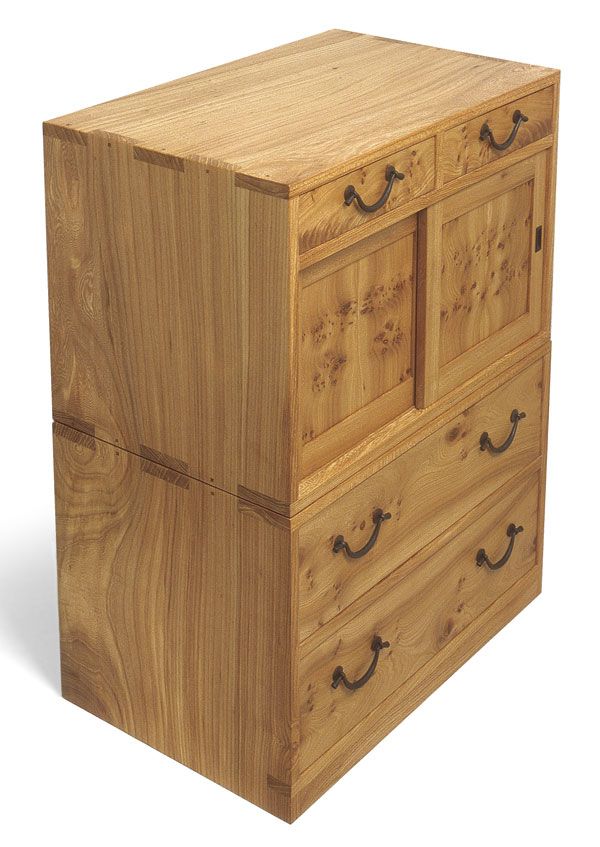
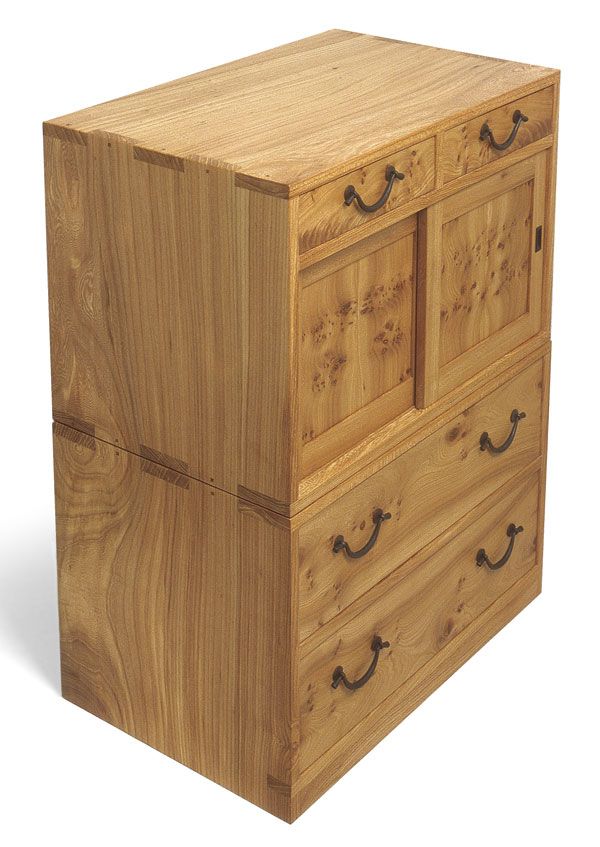
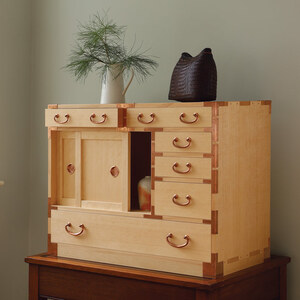
I am building Tansu cabinets much like these, by Seth Janofsky. They feature pegged box joints. Without a lot of long-grain glue surface, I figure these tabs really need the added strength of the pegs.
So here’s the conundrum, you want a square peg on the outside, but you want real strength inside. In other words, you want the peg to actually do its job. For that you would need a way to cut a very accurate square hole all the way through the joint.
That would be possible in a door frame, if you had a hollow-chisel mortiser that is, but I am making a set of four tansu cabinets, with large tab joints at the corners, and there is no way I’m going to be able to get those big boxes under the head of the mortiser!
More Square Peg Tricks
Square Peg in a Round Hole 
Video: Quick Tip for Making Square Holes
Make Your Own Dowels
How to Make Drawbored Pegs
I can, however, drill round holes with handheld drill. So I turned to the peg that transitions from square to round. I even have a cool way to square the round hole. I learned it from Brian Boggs, the famous chair maker. But how to do the peg? I had 80 to do(!) and all the advice I could find told me to whittle the transition and then whittle the entire round section. Now I love whittlin’ as much as the next guy, but I just can’t sit on my porch that long.
My brainstorm was to combine a dowel-making trick with just a smidgen of whittling. It worked amazingly, looks perfect, and saved me about 4 hours of work. On top of that, the all-important round section came out much better and more consistent that my pocket knife could have produced, for a better fit and a stronger joint.
-
I am building Tansu cabinets much like these, by Seth Janofsky. They feature pegged box joints. Without a lot of long-grain glue surface, I figure these tabs really need the added strength of the pegs.
-
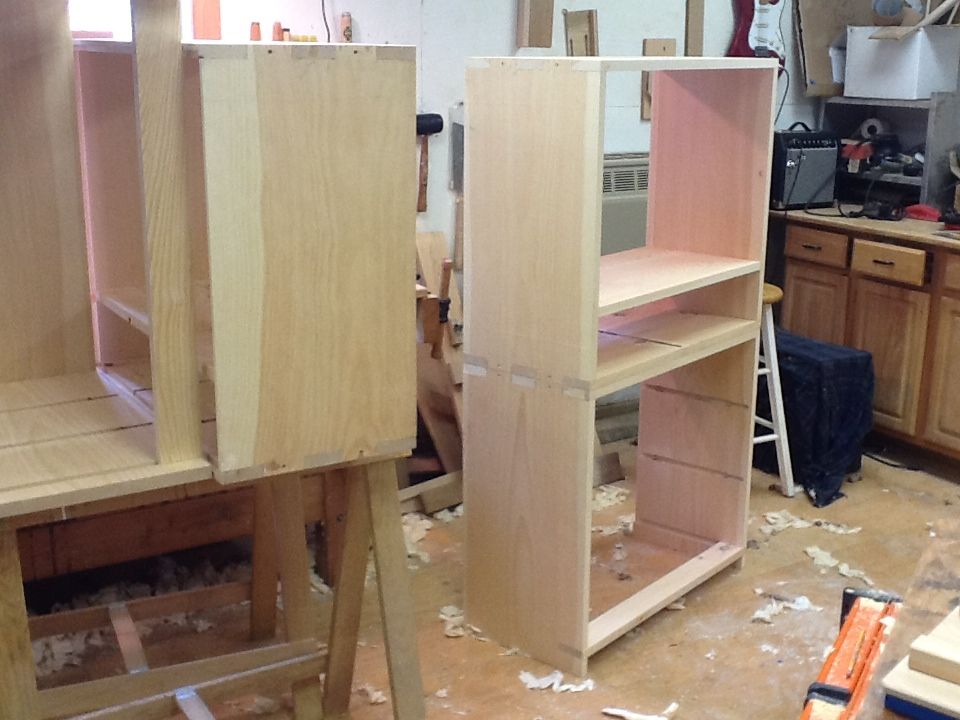
I'm actually making two stacked sets of tansu, from beautiful wide pine planks. That makes four cabinets total and 80 square pegs (!), which look better than round ones in this case.
-
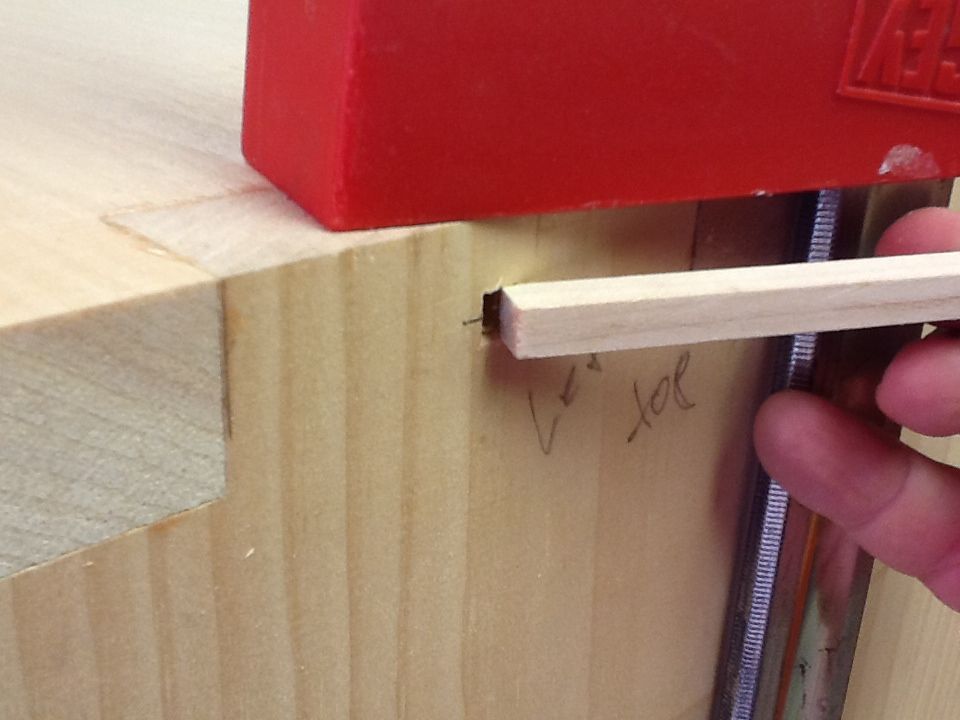
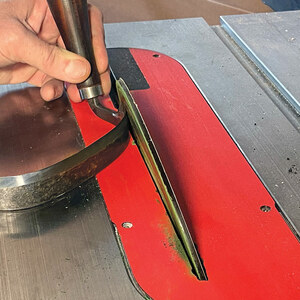
1. Here's the trick for giving the round holes a square opening! It's the tang of a small auger bit. I cut off the drill part, and honed the edges on a diamond plate. It matches up well with a 1/4-in. brad point bit, size wise.
-
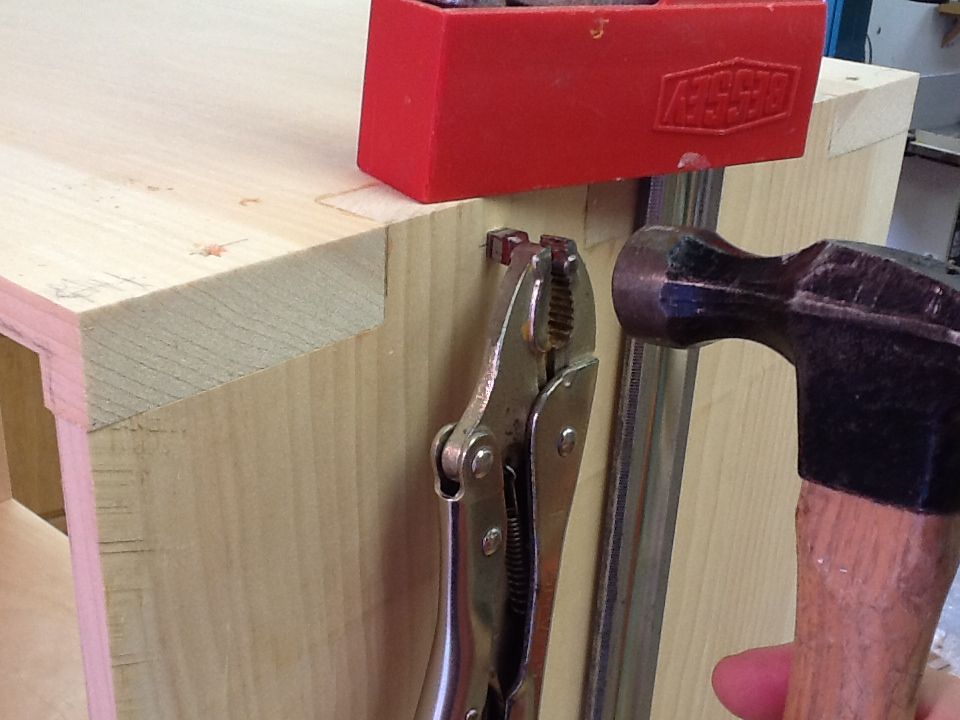
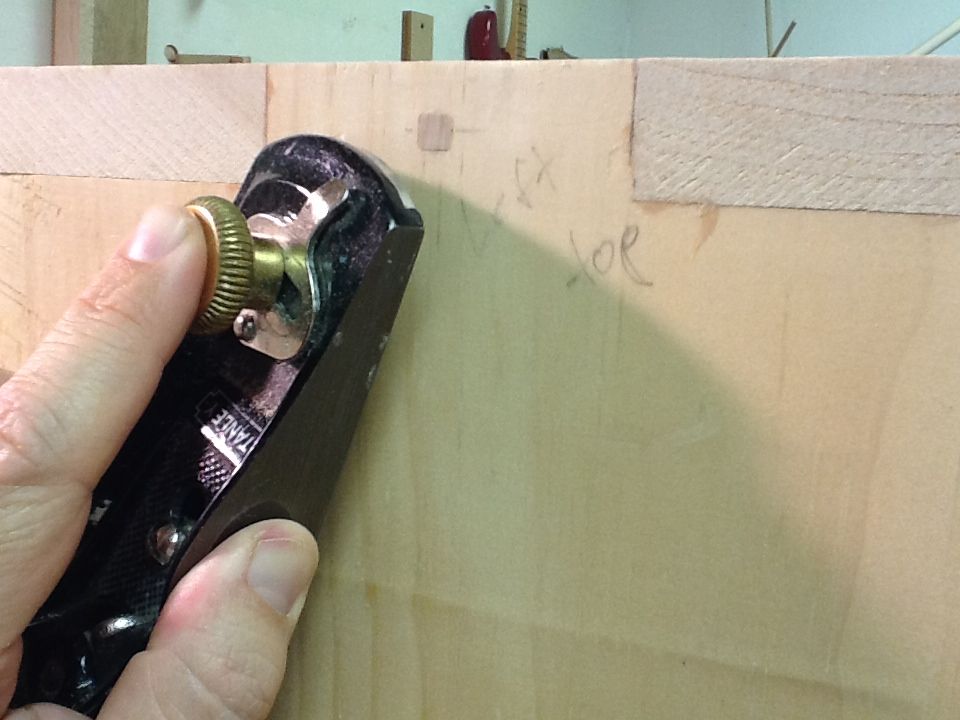
2. And here's how to use it. After drilling the hole through the tab and a fair distance into the mating part, you just tap in the tang to square the hole. A few key tips: Hold it in a vise grips to help keep it aligned square on the way in and to help wiggle it out afterward, put a clamp on the end grain so it doesn't blow out, tap in the tang just until the round edges of the hole flatten out, and mark the tang so you do all the other holes the same.
-
3. Use a wood for the peg that is as hard or harder than the wood it is going into. In this case, I used maple. And size your peg strips just a hair bigger than the outside of the holes.
-
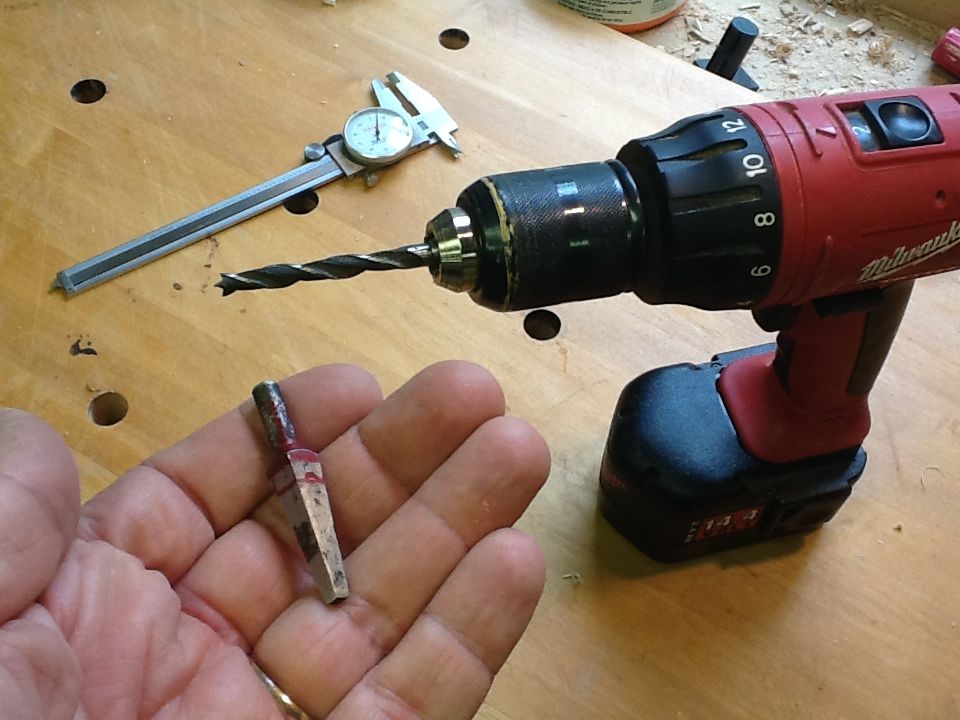
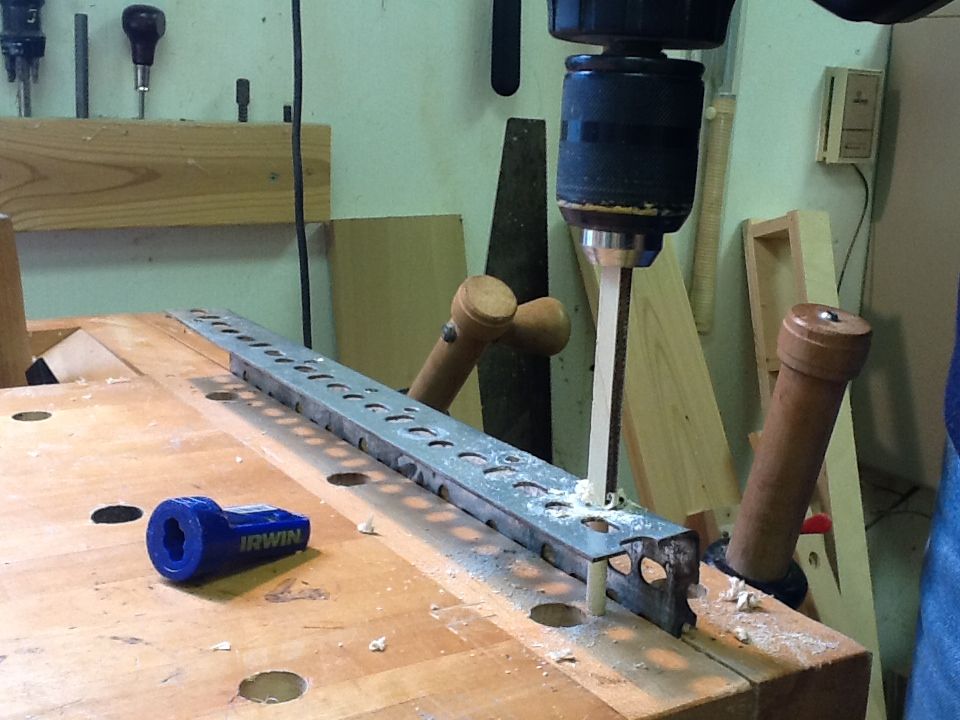
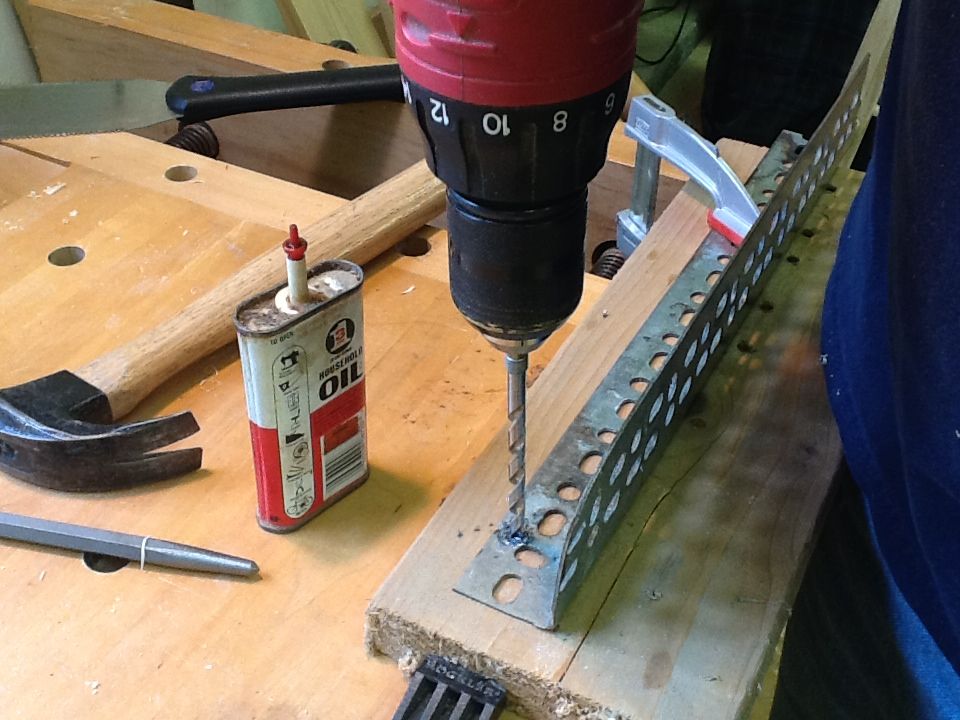
4. Now here is the cool trick for making the pegs. You drill a hole in metal, chuck the peg stock in your drill, and spin it through the hole to round the lower section in 10 seconds or so. I used a piece of angle iron, so my vise jaws acted as a stop for the peg!
-
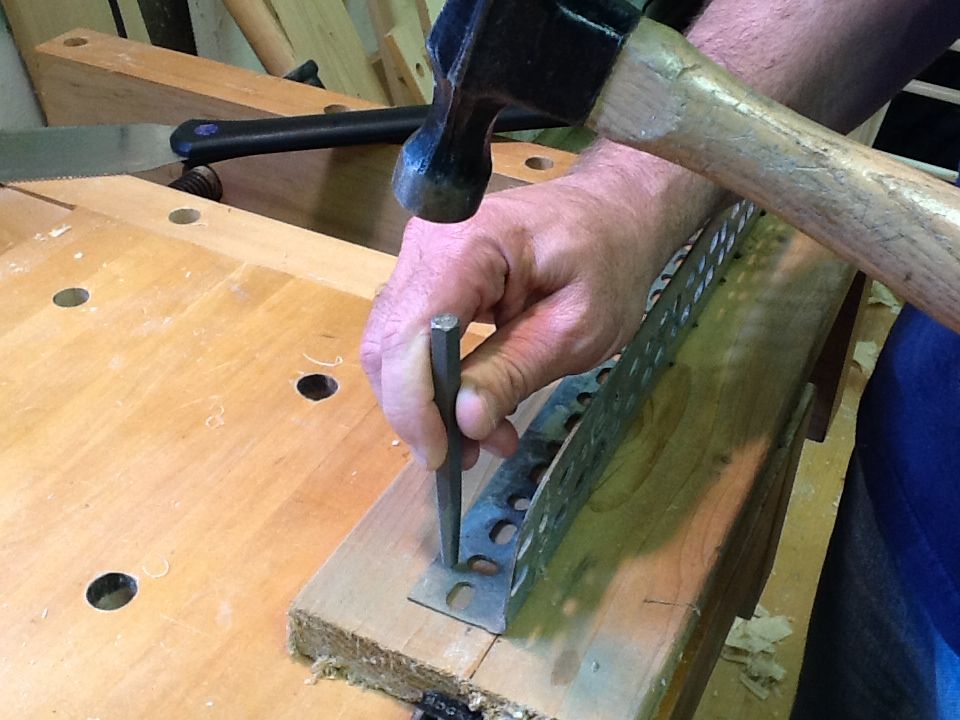
5. To make the dowel jig be sure to drill through the underside of your metal stock. That will leave the burr facing upward, where it helps with the dowel-cutting action. Always start holes in metal with a center punch.
-
6. Don't use the 1/4-in. brad-point bit for this hole! Use a standard 1/4-in. twist drill, with a drop of oil now and then to cool the bit and help the cutting action.
-
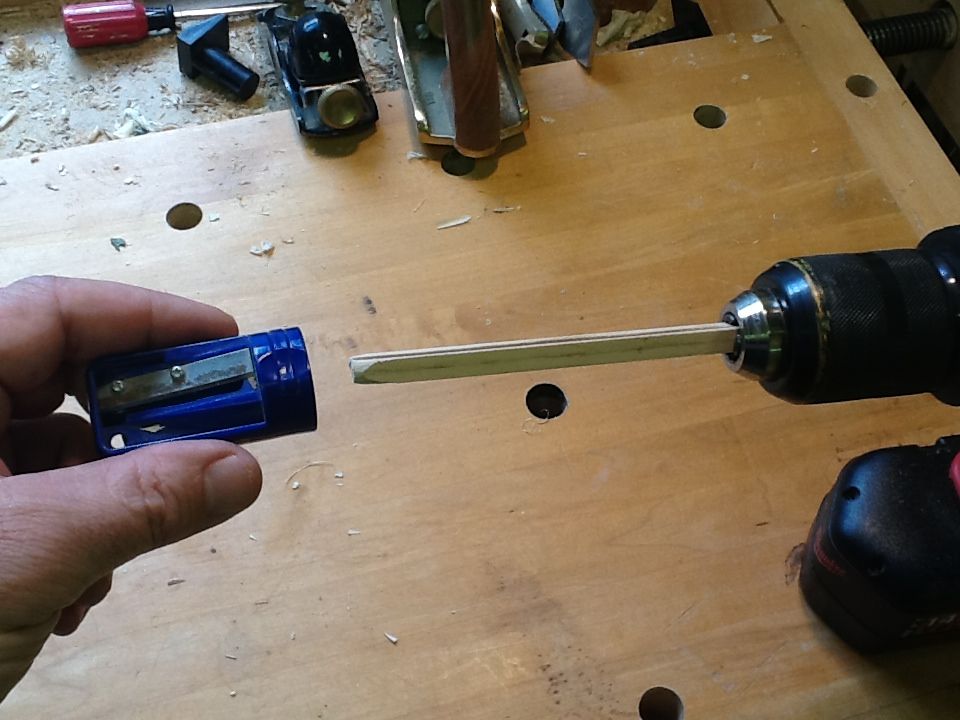
7. I use a large pencil sharpener to quickly chamfer the tip of my peg stock so it goes cleanly into the hole in my metal jig.
-
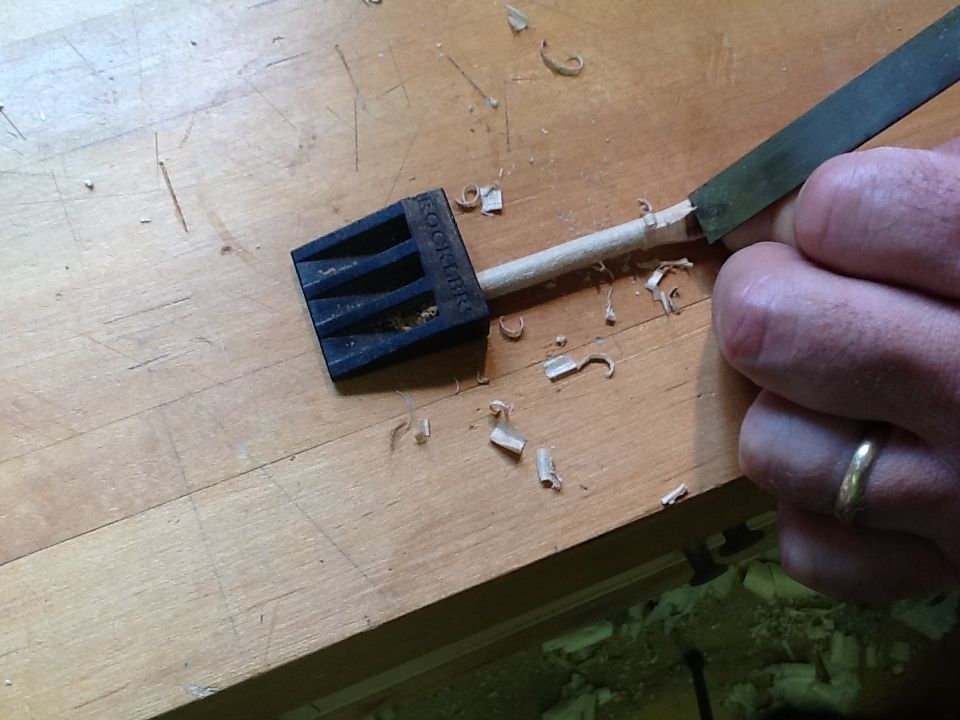
8. After creating the dowel section, you do have a bit of whittling to do, but it goes very quickly. First you bevel the flat faces, transitioning them down to the round section. Then you chamfer the corners, transitioning those, too.
-
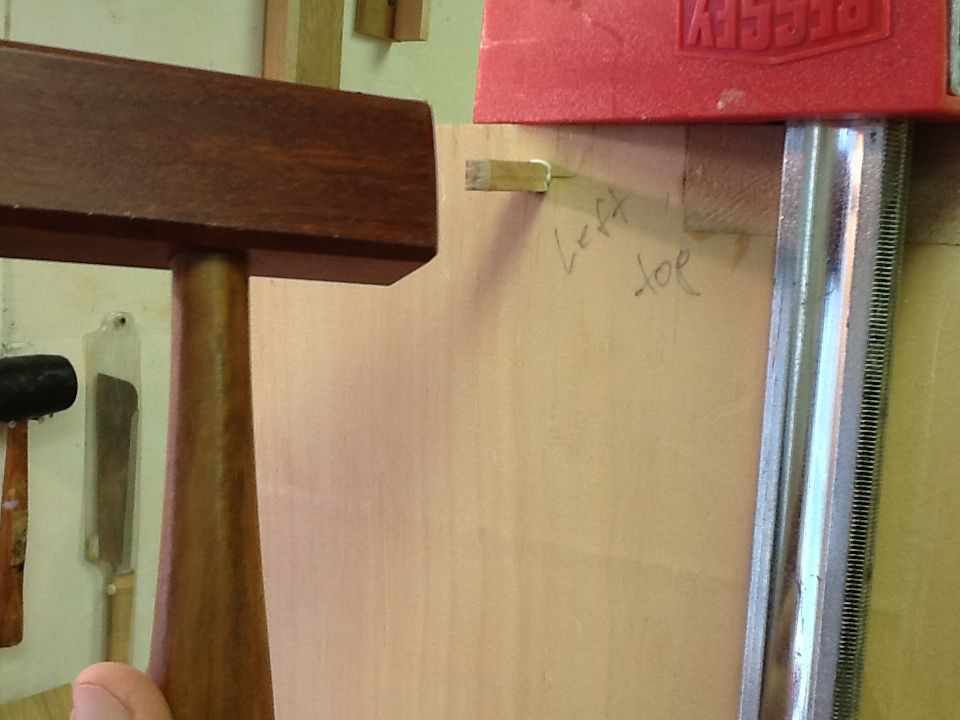
9. Now put glue on the peg only, and tap it home. My wood hammer doesn't splinter the ends. Use a clamp again to stop blowout on the top edge.
-
10. Saw off the excess, then plane and sand for a perfect peg.








Comments
Nice article - shame your formatting chops all the images in half when you try to print the article ... and yes, I tried formatting the paper for landscape and the images were still chopped in half and pushed to the RHS of the page.
Sorry, forgot to mention - it chops all the image-related text off as well.
I am still wondering what the trick is.
Great idea!
I had a similar project recently. I wanted square pegs on each corner of 2 large octagonal lamps. Cutting square holes for that many pegs would have cost the client too much. I have a metal lathe with a collet holder that takes square collets. So, I turned a round end on my square pegs and drilled holes to match. They worked great and add strngth to the project without taking hours to chop.
Mr. Christiana,
How deep below the surface does the square part of the peg go?
I'll answer everyone in one fell swoop: I was a bit unclear about what the "trick" is. It is the dowel plate I made, which quickly turns the square peg into a round one along most of its length. Of course the little sharpened tang thing, which turns the round hole to square at the opening, is pretty awesome too.
As for how much to leave square, I've been allowing about 1/2 in. at the top end. Also, when deciding how much to round on the peg, leave it that section a bit short to allow glue to collect at the bottom of the hole when you drive the peg in.
In any case, definitely experiment on some scrap wood to dial all this stuff in.
John Moran, sorry our blog platform doesn't allow easy printing. We'll work on that in the future. And maybe one of our web editors has some tips..?
For those that say they can't see the trick - it's easy. Essentially the square peg is only square at the end that shows. Most of it is a cylinder like a dowel. The hole it goes into is drilled into the carcase and the end is chiseled to be square. You could use one of those tools from Lee Valley that punches a square hole for making Greene & Greene furniture.
A couple of years ago I saw a great video (YouTube?) of a French Canadian making perfectly consistent mortice pegs with a simple homemade jig.
The language was impenetrable, but the jig was a gem.
Does anyone know where that video can be found?
Log in or create an account to post a comment.
Sign up Log in