Gallery
microBootlegger
Dec 18, 2008

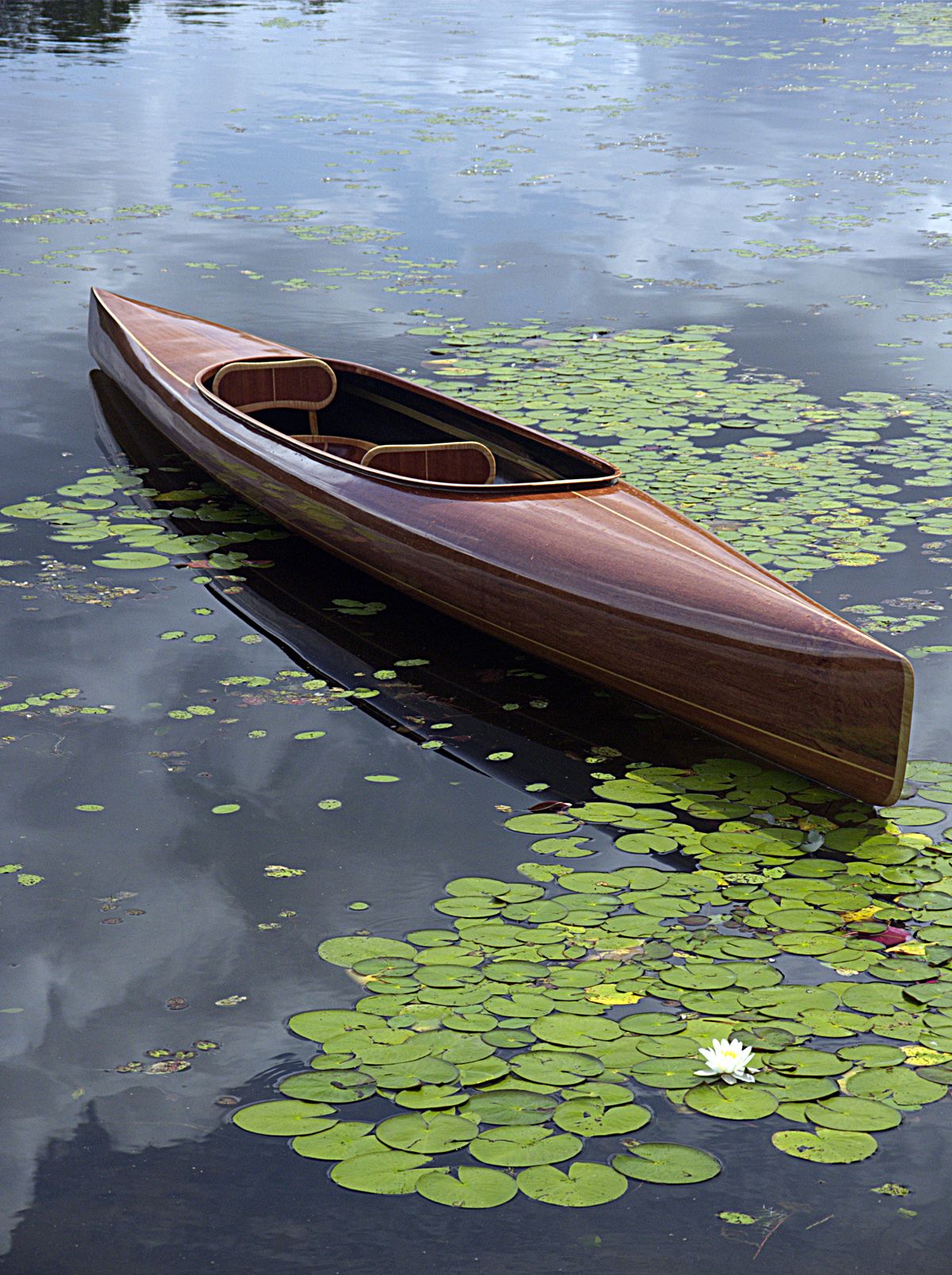
microBootlegger is a tandem double paddle canoe
I designed and built microBootlegger after seeing a photo of a a 1920’s Gold Cup racing boat name “Baby Bootlegger“. I liked the simple classic lines and thought I could adapt it to a tandem kayak or double paddle canoe.
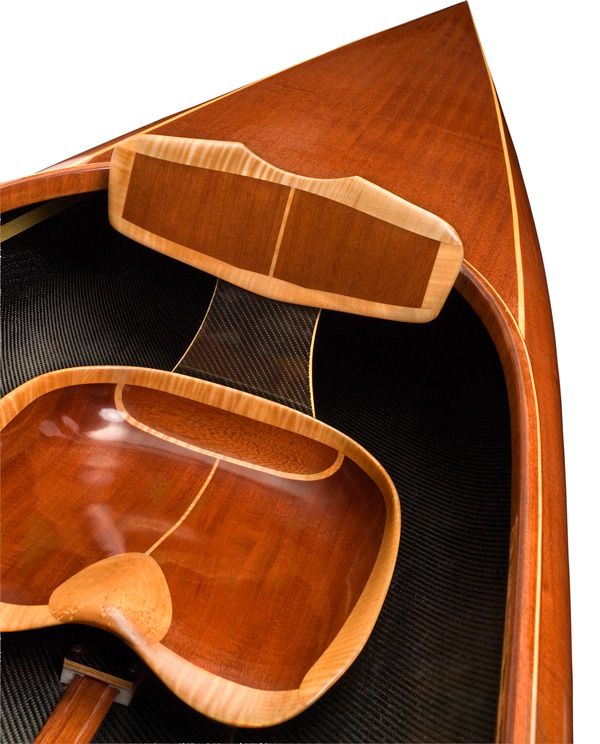
The construction is strip-built with 1/8″ book matched mahogany strips with fiberglass on the outside and carbon fiber on the inside. The seats are carved mahogany and maple.
This site is protected by reCAPTCHA and the Google
Privacy Policy and
Terms of Service apply.
-
microBootlegger is a tandem double paddle canoe
-
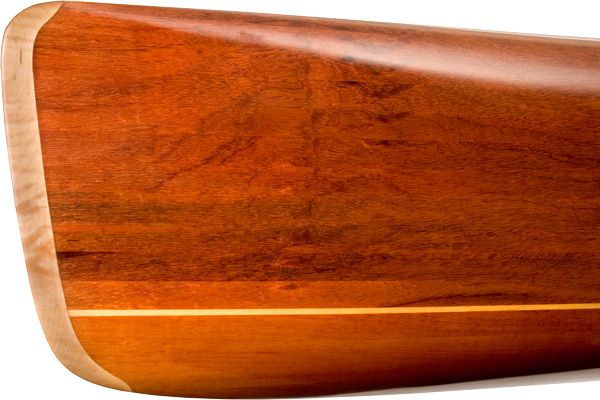
I used 1/8" thick flitch-cut mahagany strips to create a uniform pattern. The stem is curly maple.
-
The seats are carved mahogany and maple and are adjustable along a center rail.
-
microBootlegger is stable and efficient on the water.








Comments
What a stunningly beautiful boat. How long does it take to put one together? I visited your web site and saw the Stitch & Glue SOT which looks very nice. My wife and I currently paddle Wilderness System T-120 SOT kayaks. How much heavier would the wood kayak be and how well does it perform compared to the "plastic" kayaks?
Also, we've done light rapids on Central Texas rivers where whacking into rocks is a given. How well would the wooden kayaks withstand inept paddling rock contact. (Building one sounds very intriguing.)
You are the author of "The Strip-Built Sea Kayak"...right? Your work is inspiring. I have built a stitch and glue but I want to build a strip kayak someday. I am just now acquiring some tools.
johngoes, you were asking about how much heavier wood would be. My Wilderness Pungo 120 weight 50lbs. My 17ft stitch and glue kayak weights around 40lbs. It is 5ft longer and 10lbs lighter. It is very strong. While transporting my kayak last year, the front tie-down got caught under the wheel. It pulled the rope which pulled down on the front of the kayak hanging 5ft off the rack. As a result, the force of the pulling broke my Thule cradles, bent the Yakima bar about a 1/16 of an inch, bent the steel tie down hook and broke a nylon strap. When the tie-down broke loose, it snapped into my car doing $1400 worth of damage to the fender and bumper. They kayak had a less than a 4" stress fracture where it contacted the broken cradle. I haven't fixed it yet (been busy) but I'll just have to sand and re-epoxy the area. I was amazed at how strong it was.
Clean lines, and excellent curves, nicely done. I wonder how many hours it took to build.
Dear Builder,
You've used 1/8" thick mahogany! All the strippers I've seen have used 1/4". However, they all had fiberglass on both sides.
Did the use of carbon fiber on the inside allow you to reduce the thickness of the strips? Do you think a 1/8" thick hull would work with fiberglass on both sides?
I ask, because we're setting up to build a number of 18' kayaks and a 50% reduction in material is tempting.
Sincerely, Ted
John,
Plastic is weaker than wood, and the fiberglass on one side and carbon fiber on the other will make this a very strong and light kayak.
IMHO.
Wayne
Log in or create an account to post a comment.
Sign up Log in