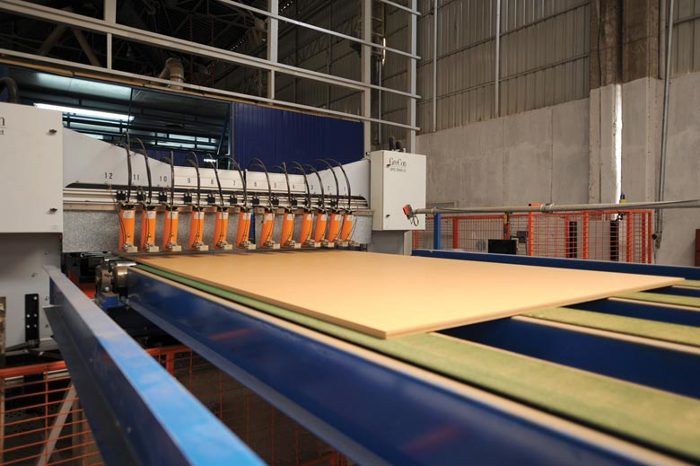
MDF coming off the manufacturing line at a Starwood Company plant in Georgia.
While MDF is widely considered a “material of choice” when it comes to constructing workshop jigs and fixtures, the thought of getting it anywhere near fine furniture is enough to induce a heart attack in most any serious woodworker. Let’s face it, it’s not wood. Rather, it’s what some might call an odd, space-age concoction of wood fibers and urea-formaldehyde-yes, formaldehyde. Sounds nice, doesn’t it?
Truth-be-told, I don’t often see MDF in the FW shop unless it has something to do with a jig. With that in mind, I posed a simple question to the staff and figured I’d share the responses. If you feel strongly one way or the other, be sure to sound off in the comments section of this post. And don’t be shy if you disagree with any of my quoted editors, make yourself heard. Yes, WE DO read those comments at the bottom of every blog post!
Should MDF have a spot in your shop?




In chatting with my colleagues about MDF, four of the most common topics we touched upon were weight, dust control, vapors, and fasteners.
- If you’re purchasing 4-ft. x 8-ft. sheets of MDF for a specific project, consider having it pre-cut to rough sizes before loading your car and taking off. MDF is a heck of a lot more dense–and heavy–than conventional plywood. Cutting it down to size beforehand will keep your back happy.
- Perhaps the single most important key to working with MDF is dust control. Use a dust mask, tool source dust control and a workshop air filter (if you have one). Long story short: the more dust control, the better.
- Stay away from nails and pre-drill all your screw holes. MDF edges are very brittle, so pre-drilling and countersinking are a must.
- Be sure you’ve got adequate ventilation. While ventilation is a good idea anytime you’re kicking up sawdust, it’s especially true when cutting MDF. The formaldehyde vapors given off by this product need to go somewhere. Better that it go out a window or door than into your precious lungs.
- Consider gloves. The MSDS (Materials Safety Data Sheet) of manufacturer Temple Ingland suggests woodworkers use gloves while handling MDF in the shop. And while a conventional dust mask is OK, these folks recommend using an NIOSH/MSHA approved respirator instead. You can easily find a decent respirator for around $40 and you’ll find plenty of other uses for it in the shop, so don’t hesitate to purchase one if you do intend to use MDF from time-to-time.
How’s it Made?
In a nutshell, MDF is made by breaking down wood into wood fiber, combining it with a urea-formaldehyde resin, and compressing it at a high temperature. For a quick peek at the process, have a look at the “how it’s made” video below. Interestingly, the video’s producer didn’t even mention the use of formaldehyde. I can’t help but surmise that this was funded by a manufacturer worried about mentioning the dreaded “f” word.
How to Work with MDF
We’ve been covering the use of MDF here at Fine Woodworking since the early 1990’s. For a complete picture of what it is and how to use it in a variety of applications, have a look at our resource roundup.
 Workshop Guide to MDF |
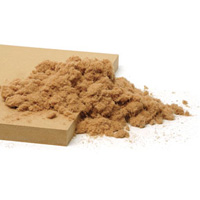 Is MDF Hazardous? |
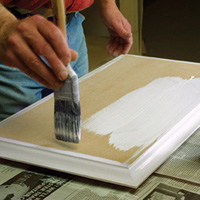 How to Paint MDF |
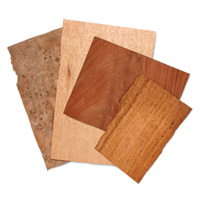 Preparing to Veneer MDF |
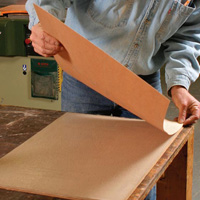 Veneering MDF |
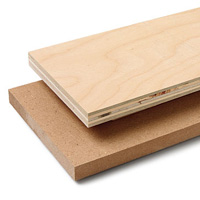 Veneer MDF or Plywood? |




Comments
Ed, only uses I can think of around my shop for mdf is either temporary jigs or the spoilboard on the cnc. I dread every time I have to install and flatten a new spoilboard, dust just gets everywhere. Other than that I don´t see much use for it anywhere quality work is concerned, mdf is just a bad start for any kind of FW.
MDF is great for jigs and patterns, but for fine woodworking? No i don't really see it useful. It can't handle moisture, it creates awful dust. and its not as strong as a good multiply plywood. Call me onld fashioned but i stick to solid hardwoods for all my furniture :)
MDF is great for full scale, half-scale or quarter scale mock-ups of designs we might later make in solid wood, so heck-yeah it "belongs." Anything that helps me avoid mistakes or improve a design before i rip into some precious hardwood definitely "belongs" in the process of making anything, especially "fine" furniture. Even if It doesn't end up in the finished piece, MDF belongs somewhere in the process of making it.
It is perfectly stable substrate for veneers, and veneers are definitely "Fine" WOOD working.
It is great for stage props, set design and stage decorations. That may not always be "fine," by some definitions. But if I get the job done for a school on time and under budget, that's fine with their comptroller, the audience and the actors.
MDF is good for audiophile speaker cabinets, where its consistent mass and lack of resonance are easy to calculate for best audio performance. It also machines easily for precision alignment of critical audio drivers. So, not only does MDF "belong" there, we could make the case that fine audio cabinetry is among the finest furnishings extant, since great audio speakers blend engineering, acoustical science (physics), AND the finest of fine furniture. ("Fine"--- In terms of precision and beautiful finishes)
MDF is great for modern free-form furniture and artistic designs that are not inhibited by wood movement or grain orientation. These may be artistically "fine" even though they are not copies of traditional fine antiques.
Its stability makes it superb for accurate workshop jigs (as other have noted). So, in that sense, MDF IS a part of making fine furniture, even if we don't use it in the piece itself. After all, we use metal planes and chisels. So it would be ridiculous to ask, "Does metal 'belong' in fine furniture?"
Stability also makes it a potential choice in moist environments, so long as it is finished properly. A wealthy TV mogul asks me to make a poolside seating / dressing area, but he hates teak and refuses to pay for it. Yet he loves the look of stone, even if it is fake stone made with concrete. I use MDF to make forms that make the furniture and out-buildings. Is that "fine?" It was for her!
MDF takes paint well, and so lends itself to painted projects: garage storage, workshop cabinets, machine covers, futuristic movie-sets, car interiors, boat interiors and appliances. Is that "fine?" Well, yeah, sometimes it surely is.
You may have seen a Television "set" I made from MDF that looked "fine" on camera. It only had to last one month, but still holds together after twelve seasons of abuse. Is that "fine?" Yeah, for the executive producer it is! (Especially when it came in cheap and fast for the pilot and has paid for itself a thousand times over.
MDF makes great "gobos", those acoustic partitions used in recording studios. I have seen (and made) some of the coolest looking gobos from MDF, that would certainly qualify as "fine furniture" in my book.
MDF and its cousin HDF are good for pattern-making and mold making. Those patterns and molds could be used to cast metal, plastic, ceramic or glass parts for fine furniture, regardless of what style you call "fine." Those MDF patterns and molds later make Teak sconces for boat interiors, control panels for the bridge or bathroom fixtures for the captain's cabin.
Almost all of those ideas have some relevance to furniture, furniture design, furniture installations, built ins, cabinet making... and all of those things "belong" to fine woodworking.
Yeah... I think there are definitely a few places where engineered materials like MDF, HDF and plywood are welcome in fine furniture making. At least, those are a few ways I have found it useful.
Now, if we state the question differently, it might have a different answer.
Does MDF belong in fine TRADITIONAL furniture?
We must not confuse the terms "fine" with "traditional." "Fine" furniture can be made from steel, glass or plastic. Fine furniture comes in many eras or styles: "modern," "retro-fifties" or "Deco." MDF definitely has a place in those.
"Traditional" fine furniture might not use MDF, unless we remember that some of the greatest furniture antiques are veneered, and the craftsmen of yesteryears would have swooned over a stable, grainless veneering substrate like MDF. Craft evolves, just as the materials craftsmen use evolve with them. If MDF was available in the 1800's, you can guarantee furniture makers wood have used it in their finest veneered pieces.
Now... ask me if I "prefer" wood over MDF for fine traditional furniture...
Include what the purpose of the furniture is, what the budget is, how soon you need it, and what style you want. Then the answer is easy.
The question is stated incorrectly and without proper definition of terms. To some, the word "fine" conjures visions of hand-crafted wood, hewn by experienced hands into any one of a number of venerable traditional styles.
To others, the word "Fine" means "precision." So to them, that may mean the unerring precision of CNC cut parts that consistently fit together without the need for tuning joints, hand-fitting drawers for piston fit or hand-planed doors with an even reveal.
For still others, the term "Fine furniture" only means "decorated with baroque ornamentation." They could care less whether the decoration was gang-cut by Asian laborers, routed by computer or painstakingly and uniquely crafted by an "old school" European violin maker.
My answer is simple if you state a clear question.
Do I "prefer" real wood over engineered wood?
For esthetics of tradition, Yes.
For stability, no.
For design freedom. No.
For economy? No.
For speed and ease of working. No.
When you ask, "Does MDF (or any other material) 'belong' in fine furniture?", you open a can of prejudices and preconceived notions about the definitions of "Fine."
Depending on your pet notions of what the term "fine furniture" means, the answer is vague. Once we realize that MDF or ANY other material can play a part in the conception, design, prototype, or clever imitation of ANY style, then YES it belongs.
And if we use ANY MDF jigs or fixtures to make the final piece, then it IS part of the process, if not "in" the "fine" furniture.
Like it or not, MDF and ALL other materials already ARE in fine furniture, in one form or another.
Declaring whether it "belongs" in the final product is a merely subjective matter of taste. Often that taste is not ours, but that of the person with the checkbook. So, like it or not, MDF, like ANY material, will always find a place in some furniture that some people call "fine."
OLD not onld
MDF is about the flattest material we can buy short of metal and plastics. That's the good news. The bad news is that it crumbles when faced with moisture and is not particularly strong. It is, in fact, the weakest of the wood or woodlike materials that I know of.
That said, as a substrate for fine (or other) veneer, it is close to perfect as long as the resultant piece is used within the strength parameters of MDF. When properly protected and braced it makes beautiful table and bench tops. It is quite good at doors. Used with proper consideration for strength and protection, the stuff makes beautifully stable and long lasting jigs and is OK for cheap furniture (think children or newlyweds.)
All of that said, I hate it.
I'm perfectly hapy to use MDF if it's appropriate for the job. Like others have already mentioned, it's great for jigs and patterns and as a sacrificial surface. I also use it a lot when I'm making plugs that will be used to make molds for fibreglass work. MDF can be tough as old boots if it's properly sealed.
Having said all that, there is, at the heart of me, something that simply abhors MDF for furniture work. MDF is wood with all the life taken out of it. Sure it's flat and stable but it simply dead too. When I pick up a piece of timber (even if its cheap Pine) I'm aware that this was once something growing in a forest somewhere. That makes me respect the wood and so I produce work of a higher quality. Don't think I'm being all romantic about this; I simply feel that wood is a precious resource and MDF is part of a more 'throw away' culture. When I build something really well out of proper timber, the first thing people want to do is touch it. They'll literally stand there stroking a piece of furniture. That never happens when I use MDF.
While all comments thus far are valid, goodguy set the discussion in a clear and thorough perspective. One of his points is this. An answer or conclusion should not be influenced by semantics. Hence, definitions are important. Furthermore, subjective points of view are not universal. What is fine to one maybe ghastly to another. What is practical to one may be undesirable to another.
One unmentioned use of such semi synthetic materials is tools. I had a radial arm saw with an HDF table. Being skeptical of its durability, I covered it with 1/4" plywood and used it to my heart's content for 25 years. The plywood topping was sacrificed. The table's flatness and orientation with the blade was checked periodically and rarely needed adjustment. HDF proved itself in that application.
MDF is also suitable in applications that don't depend on durable edge connections that experience relatively high loads or stress. For example, I was shopping for a bookcase and saw one made of veneered MDF. The shelves were adjustable and held in place by a U shaped steel wire running horizontally inside the end edges. Pressing down on one end of a shelf indicated the shelf wasn't stiff enough, it bulged around the wire support. So I made my own bookcases out of plywood veneered with birch or oak.
Another suitable application is doors. Exterior doors made of MDF or HDF are cheaper and will remain flat over a long period of time. I can personally attest to the disgust felt with buying an expensive exterior solid wood door and see it warp within a year.
MDF offers economic alternatives to mass market consumers who subordinate aesthetics in relation to function. Walmart, K-Mart, Sam's, Target and other stores are prime examples of such preferences. Many consumers don't care what the furniture is made of as long as it serves the desired purpose. This need not diminish the value of MDF. In the South and other humid areas, MDF furniture is more stable because it won't warp as some solid wood furniture.
Considering how frequently people move from one location to another and the diversity of lifestyles, the days of furniture as heirlooms are virtually over. Most furniture made for the mass market eventually becomes "hand me down", sold to others or is scrapped.
Like it not, MDF and HDF are here to stay. Using MDF instead of solid wood boils down to practicality, economics and personal preference.
A point that keeps coming up is MDF's lack of moisture resistance. But you can get Medex, which is an exterior-grade MDF that obviously handles moisture without a problem. As a plus, it's also free of formaldehyde.
-Steve
It would be interesting to hear what some of the professional contributing editors thought about this topic. I would guess that anyone working with todays commercial veneer uses MDF almost exclusively as a substrate. They may not like or enjoy the process but it is a necessary evil for ultra thin veneer.
Does Michael Fortune use MDF for veneer work, I bet he does. Is his furniture not 'fine woodworking'? It's better than anything I can build. Like everything MDF needs to be used properly and in the right context; I've seen some real junk made out of Mahogany as well.
Bob
Speaker cabinets! I had never thought about that. I would imagine that MDF absorbs a good deal of sound, thus helping to impart a warm tone to music? I'm no audiologist so I'm just taking a stab in the dark. That said, I am a lover of classical and jazz on vinyl and I have thought about building my own custom set of speakers.
Here's where I see a lot of debate: Lots of folks use the stuff for humidors lids, veneering over the MDF. Yet some folks say that moisture DOES pose a problem with this stuff. Conflicting information. Anybody here have any experience with using it in this manner? I only ask because I've been working on a couple of fine humidor projects recently. One of them will be lined with Spanish Cedar I was able to bring back from Cuba, and the lid lift will be fashioned from some iron I brought back from the El Morro (the old Spanish fort guarding the entrance to the Bay of Havana). I was able to pick up lots of large chunks that had flaked off of an old 17th century canon. Meaning: I want to make sure this humidor is built to last. The one I'm hoping to use those materials on consists of a box made of mahogany, veneered with rosewood and some fancy stringing. The lid is built from a high-quality multi-ply but I have considered using MDF. Any thoughts?
Best,
Ed
MakeitWithWood:
You raise a lot of great points.
Here's my questions. There's plenty of mass-market furniture out there built from MDF but quite frankly, all of the stuff I've seen is poorly built, meant to last for perhaps only a 3-5 years. Why can't someonw come out with an economical furniture line built using a combination of MDF and hardwood? No, this wouldn't be "fine furniture." But for cost-conscious folks, I think it would offer them a happy medium. And who knows - maybe there's a great business plan in there somewhere?
Cheers,
Ed
BStev,
I'll have to check with Michael to see if he uses MDF. I'm familiar with a lot of his work and most, if not all, of his veneering deals with curved panels. And he uses various kinds of flexible plywood for that. However, I do know that Thomas Schrunk recommends MDF over plywood for veneering. He has written for us about veneering and veneering is his primary business.
As for whether MDF can be used to make fine furniture, I'd say absolutely. Fine furniture is not a product of the material or the construction techniques. Its a product of a designer. In other words, if you give MDF to the right designer, he or she will produce fine furniture. It might not be traditional, but traditional isn't the same thing as fine. (I've seen tons of traditionally made furniture that was far from fine.)
You talk about MDF being only $30.00 a sheet of 3/4"! Baltic birch is "only $39.97 a sheet of 3/4"! In my opinion I would rather spring the extra 10.00 dollars and not have to contend with the dust, extra weight, and,-- and FORMALDEHYDE! OMG!
Bob Greenawalt
Hi Bob,
It might depend upon where you live. At least here in the northeast, Baltic birch ply will run you around $55 a sheet for decent quality material.
Best,
Ed
epirnik:
"Why can't someone come out with an economical furniture line built using a combination of MDF and hardwood?"
In short, manufacturers of cheap furniture follow the rules of planned obsolescence and market demand for low priced furniture. Sellers and consumers of cheap furniture don't value quality as much as utility. Those who want higher quality furniture must pay a premium, make it or have someone make it for them. Increasing energy costs and a challenged economy render cheaper furniture more desirable.
Another form of wood paneling is solid core plywood. It's superior to MDF because it's more workable, durable and solid.
Solid core plywood is my wood of choice for furniture with relatively thick large flat surfaces. It's easy to work with, less dust is created and little or no formaldehyde is used. The solid core permits edge connections subjected to higher stresses. The uniform properties over its area make it stable against warping. Solid core plywood is available in various hardwood veneers.
Furniture made of this plywood looks and feels like solid wood and with proper care lasts for decades. It's pricey but for me, it's worth it.
Whats next? Dove-tailed MDF? Mortise and tenon MDF? Hand planed MDF? Stained MDF? Carved MDF? Inlaid MDF?
Templates, patterns, work table tops, sacrificial backers, jigs - thats it.
MDF is ideally suited to such furniture pieces as a receptionist's walled desk. When I worked in the trade I built such units veneered with exotic hardwoods; used hardwoods where needed on edges, rails, etc. They are extremely heavy which is helpful in a high traffic environment and are as beautiful as any furniture pieces made from 100% hardwoods and/or plywood. Years in service and they are still holding up beautifully. I have also used MDF as the base material in painted fireplace surrounds, cabinetry for exhibits in museums, trade shows, etc. But for fine furniture -- no. For what it is worth.
Epirnik is right MDF about MDF for speaker boxes/cabinets and I almost had forgotten how MDF is an excellent material for speaker building.
I do a lot of traditional woodworking as well as my brother. However, my brother's other side hoby is speaker building and his material of choice is MDF because of its density.
He has built several transmission line speakers out of MDF and the sound quality is very crisp and clear which is a result of two main components: the type of speaker design meaning transmission line, and the materials meaning MDF. The rest goes to the quality of the speakers but if the two main components are of good quality and design the quality of the actual speakers can be less that top and sound like top grade.
And since a speaker has no moving parts per say makes MDF and excellent material.
Epirnik is right MDF about MDF for speaker boxes/cabinets and I almost had forgotten how MDF is an excellent material for speaker building.
I do a lot of traditional woodworking as well as my brother. However, my brother's other side hoby is speaker building and his material of choice is MDF because of its density.
He has built several transmission line speakers out of MDF and the sound quality is very crisp and clear which is a result of two main components: the type of speaker design meaning transmission line, and the materials meaning MDF. The rest goes to the quality of the speakers but if the two main components are of good quality and design the quality of the actual speakers can be less that top and sound like top grade.
And since a speaker has no moving parts per say makes MDF and excellent material.
Let's say that you are making a table top using $180 per board foot exotic hardwood of which you have a limited supply. Obviously, this calls for shop made veneers on both sides of a substrate and solid edge banding. So then, what do you use for substrate? My veneering expert friend has convinced me that Medex MDF is the very best choice..., and I agree. The finished table with M&T joinery and solid hardwood everywhere but the top will most certainly qualify as fine furniture.
I recently completed a fireplace surround for a client whose budget and interest in having the piece painted, called for MDF. The final product met their requirements and it came in, on budget and on time.
The design was exactly the same as if it would have been made from any traditional cabinet woods, solid or veneer. The wood selection and machining process took less time as there was no need to consider grain patterns. The assembly process was as easy as pie, as I used biscuits, glue and 23 gauge pins. Quick & easy. Had it been made of solid wood, I would have still used all of those same items.
Does it constitute fine woodworking? Yes it does... and no, it doesn't. Would it have been "finer" woodworking had it been made of traditional cabinet woods? Most certainly. However, who can argue with a satisfied client and a craftsman who received a decent wage for his work? Win, win.
I used MDF for the raised panels on my dining room wainscoting (poplar for the framing). Looks terrific-- but the DUST! O the dust. It kept clogging my router and I'd have to blow the router out after heavy use because so much got inside the motor.
Oh-- on the speakers-- perfectly fine for them. Richard Vandersteen has been building his speakers out of MDF for years-- and you'd be hard pressed (pun intended) to find a finer set of loudspeakers for the money.
Question for anyone who uses MDF. Are there different grades or quality available in MDF? Is the MDF at Home Depot different than what is available at a lumber yard? If so, what should I look or ask for?
This discussion reminds me of the general preference we seem to have for 'natural' things. But 'natural' things are just the ones that nature has happened to come up with (and include any number of harm causing substances and horrible poisons).
As to the dust issue, many woods have toxic dusts, and although perhaps not generated in the same quantity, still require that we all take a very aggressive approach to dust control. That is, we should be set up to deal with dusts like MDF dust anyway.
I wonder what fine woodworkers will say in 50 years about MDF? Use MDF where it's qualities (flat, hard, formable) make it the best option, and forget your 'natural' prejudices!
I have used mdf in furniture for 15 years. I think it is a good material for a lot of uses. I dont know how it is in the
US but here in Norway you can get it veenered in almost any
species of wood,that makes it perfekt for flat panels in doors
etc.However I would use solid wood in the rails and stiles.
We also get a fire retardant version called firax.
I suppose mdf is like any other material it is good for many
uses as long as one take in to consideration its specs. and use it accordingly.
There's a great formaldehyde-free MDF out there called Medite. I highly recommend it over the formaldehyde version - safer to work with and it won't be off-gassing formaldehyde into your's or your customer's home over the life of the finished piece. Medite is made by Sierra Pine, and it's also FSC certified. It's a little cheaper than their Medex, which is the outdoor/waterproof version used by sign makers.
I mostly build with solid wood (about 98%), but I will use MDF for the right application, like a veneered table top with solid edging. I've used it for veneer pressed panels because it tends to be more flat and stable than most of the hardwood plywood available these days.
http://www.davidhurwitzoriginals.com
hook up your festool machines to the portable extractors and dust becomes managable.
Source "green" MDF. We are based in south africa and managed to find a board manufacturer in Ireland who supplies the "green" MDF with a VERY low formadrahyde content. They also supply boards which are exterior grade and water proof.
Regarding fine furniture - my opinion NO.
If one thinks of fine furniture nothing but detailed solid timber pieces come to mind.
Great, reasonably priced furniture is attainable though.
I can't think why MDF should not be used to make 'Fine' furniture. In terms of dispassionate technology, it's vastly superior to solid wood for veneering or painting. I can't say I like it, but we can't get birch plywood for love or money.
We use a lot of MDF in our tiny French workshop, mostly for built-ins such as the billiard room on the home page of our website (www.timnott.com), the fitted walnut library and the Ash kitchen in the built-ins section of the web site gallery. And, as previously stated here it's great for router templates - used several to make the oak staircase.
We're working on another set of walnut/MDF built ins right now.
I think we've cracked the joining of carcases - no glue, just alternate biscuits, for alignment, and Spax MDF screws which are incredibly strong - you just need to drill through the face of one board and countersink, then drive the screws straight in to the edge of the other board. No predrilling and no spllitting unless we get too close to a corner. They have Torx recessed star heads - which are a vast improvement over pozi or slotted as long as you are strict about replacing the cordless sccrewdriver bits at the first sign of wear (we pay around 3$ for ten).
One lesson we've learnt is DON'T use ordinary MDF for kitchen cabinet carcases or any other situation where the MDF might get wet. It swells and bubbles badly at the slightest hint of water, but there's a moisture-resistant grade that's tailor made for kitchens, bathrooms etc and isn't much more expensive.
Hazards. MDF is foul to work with because of the fine dust. The dangers are fairly described in Wikipedia and this site here http://www.childrensfurniture.co.uk/mdf.html.
Bear in mind that most wood dust can be harmful and our carcinogenic, it's just that the dust from MDF is incredibly fine. So, we use dust extraction at source, even on the biscuit jointer. On the table saw we have a big chip extractor (which we plan to move outside the shop) and connect the shop vac to the 1 1/4" spout on the crown guard. My son wears disposable masks, I don't (but should) as I can't get one with them. We also have a Jet air cleaner, which, as a recent issue of FWW stated, really does make a heck of a difference. Next year we plan to move carcase cutting and MDF cutting out of the main workshop and buy a vertical panel saw (about 2500$, but then we are doing this for a living).
Hope this helps
I'm a hobbiest, not a pro, but I recently visited the nearby shop of a builder of heirloom quality one-off furniture whose pieces often sell in five figures. He works mostly with Japanese hand tools. He was nearing completion of a tall chest with eight or ten drawers of various sizes in a very contemporary rendering of a classic design. The piece had exquisite hand cut dovetails, great detailing and a wonderful, luminous, hand-planed finish. The drawers were solid wood, but when I asked about the quilted big leaf maple carcass, which was breathtaking, I was told it was veneer over MDF. He was so matter-of-fact, and I was so surprised, I couldn't reply. I just nodded as if to say, "of course," and went on admiring. I've been meaning to circle back and ask a few more questions, and this discussion has brought it back to mind. I have heard other builders say that modern cabinet woods don't have the structural quality and stability of the wood used generations ago by hand builders in what are now antiques, so MDF is often used under fine veneers in high quality furniture.
As far as I am concerned, using the words "MDF" and "Fine Furniture" in the same sentence is an oxymoron. For that matter, using "painted" and "Fine Furniture" in the same sentence is also!!! On the balance of LOVE versus HATE of MDF, I am way, way, way out on the end of HATE. I seldom even use it for jigs -- since I usually have enough offcuts of birch or baltic birch plywood around the shop to make the few jigs that I use. For large jigs, I much prefer even fir plywood over MDF. After all I consider myself a WOODworker and do not consider MDF to be wood.
I'd have to say that we talk a lot of ideologically driven hot air on the use of MDF, but when push comes to shove vote with our feet by using the stuff all over the place.
Like everything else in the world it's not bad, not inherently good. It just is. There's no one size fits all answer.
It's in the end a situation specific judgement call - there's arguments for and against it from almost every perspective.
The real game is surely to make good life and design choices - on the way to making beautiful and useful stuff while doing minimal harm.
The MDF issue will be sorted out along the way.
ian
I agree that mdf is great for jigs, shop furniture and even some built ins, but not for fine furniture. I have a lifetime warranty on my furniture and the hope is that it lasts for generations and not just my lifetime. After generations of moving and possibly getting caught in the rain and other inclimate conditions when moving, the mdf will not hold up. The joints become week. I no longer even use plywood or hardboard for the backs or drawer bottoms of case pieces. I know mdf and plywood save time and cut costs, but we are talking about fine furniture. Mass produced high end furniture is definately expensive but not necessarily fine, heirloom quality.
I try to be environmentally responsible in my woodworking, and that introduces some new factors when selecting materials for a project. My general rule is to restrict all-solid-wood construction to furniture that has a reasonable chance of outlasting me. That means carefully-designed, freestanding furniture in forms that are likely to stay useful: presumably, we’ll always need tables, chairs, beds, etc. For most built-ins (particularly kitchen and bathroom cabinets) and technology-specifc furniture (entertainment centres, computer cabinets), I’ll happily use engineered materials like plywood and MDF. Let’s face it: these projects aren’t likely to last more than a few decades (if we’re lucky!), and using large amounts of solid wood for short-lived items is irresponsbile on a planet about to hit 7 billion people.
In practice, I use MDF for all kinds of shop furniture, jigs and fixtures, and as a veneering substrate in furniture and built-ins. I only use MDF made with urea-formaldehyde-free adhesive, and I strongly encourage you to do the same. Even if your shop has excellent dust collection and you aren’t worried about exposure during construction, standard MDF continues to emit significant amounts of formaldehyde vapour throughout its lifetime. This can contribute to indoor air-quality problems even in today’s homes. Sooner or later, North America will have to catch up with Europe and start building truly energy-efficient houses; since these houses have a lower rate of exchange with the outside air, it becomes even more important to keep toxic substances out.
Some options for MDF with no added urea formaldehyde:
* http://www.healthybuilding.net/healthcare/2008-05_ProductComp_NoAddUrea_updated.pdf
* http://www.valuecreatedreview.com/greenoption s.htm
I find it good for Utility use (i.e. table tops and casework in the shop) and for jigs and templates, but not fine furniture. Sure, you can use slimer cuts for panels in Craftsman style doors, but I wouldn't use it for kitchen cabinets for the simple fact that paint weakens over time and MDF soaks up water like a sponge if it gets wet. Plus I wouldn't want anything that my family would be eating off of to be exposed to any chemical compounds (we've got enough of that mess in our food as it is!)
That's not to say it can't be used for many fine pieces, depending on whose building them. It does take paint well and is very stable if properly sealed. Dense as hell though. Guess I love it and hate it too! ha ha - T.L.
I was in a doctor's office yesterday and realized the waiting room chair frame I was sitting on was made of MDF. They were stained and looked like maple or cherry. It was thick MDF stock--probably 2", and was obviously cut out on a cnc router. There had to be some concealed bolt-type hardware holding the frame together, but what a huge cost reduction that material must bring to that chair vs. a solid wood frame.
I use mdf for many of the stated functions--painted door panels, templates, mock-ups etc. There are other mdf products I don't think have been mentioned:
--Ultra-light mdf is roughyl half as heavy as regualr mdf, about equal in weight to veneer-core plywood, but otherwise works similarly.
--Ultra-refined mdf is made from finer particles and is actually heavier than standard mdf. Routed edges will be smoother.
--There is a hybrid plywood panel (Mendi-core is one brand name)that combines veneer-core ply for the inner cores with a thin layer of mdf on the outer 2 cores. This gives the screw-holding features of veneer-core plywood combined with the smoother surface of an mdf-core panel.
--You want to choose the best products for the purpose at hand. When building large cabinetry projects, I choose veneer-core ply for the inner cabinetry because it's the lightest in weight. I'll choose the hybrid venner-core/mdf panel for the more prominent surfaces like doors and end panels. It's worth noting that panel manufacturers use the best veneers on mdf-core panels because they are more widely used for premium architectural millwork projects. So an A-1 mdf-core panel will typically be superior to an A-1 veneer-core panel. The mdf-core panel is also more likely available in sequence-matched multiples.
Tony O'Malley
http://www.tonycustomwood.com
Houston equals humidity and risk of water incidents. I have seen mdf, even painted or treated, disintegrate, warp and swell out of shape too often. I think the use of mdf in fine furniture for veneers has to depend on the climate for the finished piece. I use it for fences or jigs occasionally.
I use mdf as work surfaces in the shop. With A few coats of tung oil and finished with wax it is actually a great surface and it looks "nice". I am amazed at how long it has held up. I also use Armor Core plywood a lot for paint grade cabinets. It has mdf plys with a wood veneer on the outside. It's super smooth and flat and paints up very well but doesn't look like mdf and isn't as heavy.
I'm lucky enough to choose my projects, which I assume is true for most of the readers on this site.
Woodworking is something I do to enjoy, and that affords me the ability to make decisions based on my personal preferences and not the profit margin.
If I'm going to invest part of my 80 years on this planet in building something by hand, I want it to be something I'm completely and thoroughly proud of, and for me that means no MDF.
I've built a couple pieces that had some plywood in them for close friends who needed something cheap (including stage props for church), but I would never admit to having built them and like doing furniture repairs, consider it a favor of personal compromise to someone who means more to me than my woodworking principals.
Having said that, I do use MDF for single-use jigs and templates or backer boards on my drill press. Anything I expect to use again will be made of baltic birch.
I think that with hand-made furniture, like people, the most important parts are those you can't see. It's what's inside that counts. That's why I include a set of in-process photographs of all my pieces to the people who receive them. They can know and enjoy for years to come how every aspect of this piece as the integrity of craftsmanship and multi-generational value.
If I ever have to do veneer, I'll back it with Baltic birch... but even that will be the result of having no other option.
Think of it this way... that wedding ring you are wearing... I bet it's solid gold, right? Why not just have it gold-plated steel? Because every time you look at it, you'd know it's not real. Same thing with fine furniture.
I have used MDF to build jigs but I have also used it to build furniture with pretty nice results. It's heavy and a pain to cut to size and dust control is a must but in my opinion it definately has a place in a furniture shop.
The biggest piece I made using MDF was for two built in book cases on either side of a window. The house was a 1930's colonial and the design followed other cases in the house. The book case was on the top portion and the bottom was selving & drawers covered by two raised panel doors. The drawers were half blind dovetailed construction and the doors were cope & stick. I made both cases completely out of MDF and installed them using custom MDF molding made to order. I used a spray finish inside & out and when complete they looked like they had been in place since the house was built.
For me it has a place in my shop and I would use it where I thought it would work well.
Rob Drummond
Hillsboro, NH
A great material for jigs and mock ups. I've also used mdf for "little use" furniture that doesn't get moved a lot. I built a speaker box for a boom box in a car--heavy as heck but the kid loved it. Fine woodworking? no way.
Does it have any problems with damp, as it could lessen the uses it has with jig making?
I use MDF on most of my table tops. A 3/4" sheet has good weight to it and I wrap the top with a 2" apron. I veneer both sides of the mdf, the bottom I use paper backing so that the top remains flat and doesn't bow. I use mdf on the tops because it remains dead flat and wood movement is nil, so I can screw the top right to the base and not have to worry about it.
The biggest problem I have with MDF is the fact that it's weaker and heavier than solid wood, so horizontal surfaces need to be carefully supported otherwise they'll sag under their own weight over time.
I made a 48" temporary countertop with a layer of mdf over a layer of construction ply, with plastic laminate on top and edged with oak. No aprons, supported at both ends. Over 8 years it has sagged noticeably. A solid wood equivalent wouldn't have done that.
I think MDO would be a better substrate for veneering. The smoothness of MDF with the higher strength and lighter weight of veneer core.
I like to use MDF because it is a full 3/4" thickness, not the 23/32" of plywood. Does anyone know where to get HDF panels? The only place I've seen HDF is in composite flooring.
Aside from one post so far, no one seems to acknowledge the danger of MDF. Paint it, veneer it, laminate it - it doesn't matter, it continues to outgas for years into the homes that it sits in. Quite clearly, it ought to be banned as a highly toxic material. It may not be as bad but one day someone will realize that it should have been treated as asbestos is now. It causes severe respiratory and skin problems in those susceptible to it.
It is also responsible for the mass destruction of dwindling rain forests - much more so than solid wood products. This is an issue I've never seen covered in FWW in the 30+ years I've been a subscriber. There are all sorts of discussions about exotic wood that's used in furniture as well as the use of MDF but no attention is paid to the environmental consequences of what we do. For my part, I use recycled wood or wood that is certified by the Forest Stewardship Council as being sourced from sustainably managed forests.
I think it's time for FWW to address these issues in a major feature.
A cabinet maker changed my mind about MDF. When properly sealed and finished it is more stable than natural wood, looks just as good, and is much easier to machine. I was suspect until I saw his work.
I tried his finishing technique on my own and was amazed. If you saw this piece in person you would swear that it was solid cherry.
http://www.222artisans.com/images/EagleFreedomLiberty.JPG
I had a restoration and repair business and saw alot of it. The problem with this product is you can't use any standard wood glues to repair it. The moisture from the glue makes it swell. I had to use expoy or cyanoacrylate. This was especially difficult when working with damaged veneers or crushed corners. Also it doesn't hold screws very well in hinges or handles. This material junk. Most of it used for "knockdown"furniture such as shipped in flat boxes. PS- I saw alot of furniture from Asia using it now for "quality furniture".
I agree with Danniel. I can't abide the stuff and will go to unreasonable lengths to avoid it. The dust makes me itch, sneeze, eyes water - and it's effects last for days. Apparently the outgassing can be reduced by buying a special museum grade at huge expense, I believe it is available in England, so must be available in the US, but here in NZ... ?
The house we live in has a cheap nasty staircase made of it - it creaks and groans as you go up and down.
15 year ago I try to do a cabinet in MBF not a tiny one a 24X40X72 assembled with biscuits. I do it in Louis XV line and curve and rased panels. I use wood only to ad strenth to shelves. Since I moove 5 times only the top crown molding brake in moving, I am redoing it and will replace it in two weeks. Need to be repaint and stil strait and solid.
I saw a beautiful entertainment center at Ethan Allen priced at over $5000. I got their catalog for proportions and designed my own replica. Most of the casework is painted. I used MDF for the painted parts, and red oak for the drawer fronts, glass door frames, and crown molding. Using wood I had around the shop, I built this monster center for under $300.
I have no problem with MDF when it will be painted. All the exposed cut edges were covered with face frames of solid wood. I would use it again under the right circumstances.
With the vast range of skills and integrity in the craft of woodworking, it is natural to experiment with products that are less expensive. Especially when a piece will be painted it is tempting to short cut that which will not be seen.
Dead flat... absolutely. Easy to shape for jigs, templates, and fixtures... without doubt.
A product that will withstand the test of time, move after move, child after child... not a chance.
Others posting their joy at the versatility of MDF, or stating that craftsmen of old would most certainly have used the material are quite right.
Though standing the test of time, I am certain, would have glaringly demonstrated the many weaknesses of this inferior material.
MDF for fine furniture... I say Boo... and boo to those that try to justify this inferior and dangerous product as worthy of the classification of Fine Furniture.
I've built a few foos ball tables in my short life time, and i find that MDF works very well for the painted playing field, with all the play field lines and what not. I've been lucky enough to salvage throw-away 1 3/4" particle board doors which i like to use as a sub surface.
I just built an entertainment center entirely out of MDF, except for the drawers which are made of clear poplar and dovetailed. It machined easily with all tools. It came out fine because I painted it all. I think that's fine when painted. But to think that you could replace it with solid hardwoods for fine furniture is ridiculous. Shop jigs and some cabinets painted is fine. I also agree that the stuff is heavy and the dust to be irritating if proper ppe isn't used.
Certainly MDF has fine properties for quality furniture, uniformity and dimensional stability just to mention two. However, I'm concerned about deterioration of the MDF if it gets wet or sits in very high humidity, its lack of repairability, and about the long term value of a piece built using it--- n.b. that some moving companies' insurance programs refuse to cover pieces made with manufactured woods.
I just built a book shelf out of MDF and it is great because MDF paints up so mush nicer than anything else.
I have worked in a cabinet shop for 20+ year and have learned that MDF has to be sealed completely to keep out moisture.
I sincerely hope Associate art director Kelly Dunton will rethink using MDF with it's possibility of formaldehyde off-gassing to build furniture for his new baby's room.
A couple of years ago, my wife and I learned that Teflon coatings on cookware could be off-gassers when heated. Since we both had breathing difficulties, we immediately replaced our Teflon-coated cookware with stainless and cast iron.
The change in our breathing at mealtime was very evident! We had no idea what we had been doing to ourselves.
Please, Mr. Dunton, be cautious with anything that might put noxious gasses in your home.
I really liked the advise in the article about using gloves and respirators. Always remember the old motto: Safety First!
Lots of limitations with MDF, however, I've had little issue with it for constructing built-in cabinets, provided it is primed + painted. Solid material is best for doors, drawers, MDF for shelves <3' in length. Can really dull blades as well. Appropriate for closet shelving also.
MDF is horrible stuff it blunts tools and the dust it produces is dreadful BUT it is flat, it takes paint wonderfully and produces a sharp crisp edge. It's cheap but it has to be painted (I wanted a painted kitchen anyway). The edges have to be sealed ( I use PVA sealer from my local builders merchant). I've just made 30+ panelled kitchen cabinet doors with MDF rails, stiles and panels. The doors are made with stub tenons and glued with PVA. I used inset European cabinet hinges to avoid spitting the edges but you can always insert a small wall plug into the edge to accept a screw for the hinge. Use an oil-based primer and then any water based undercoat/top coat. I gave the doors a total of five coats of paint (another drawback of MDF - painting seems to take forever) but the result is great. You can make cabinet end panels to match the doors in exactly the same way.
I am just beginning to do woodworking and my skills so far are limited. Good wood is expensive and good trees are rare.
The thought of attempting to build something with imported mahogany and then ruining it scares me. Money is a significant factor.
I can build a lot of stuff and also buy more tools if I limit my craft to inexpensive raw material.
The same applies to commercial furniture.
Everyone needs furniture , but only the rich can afford solid wood furniture. For most people function is more important than style or appearance.
The best compromise for most people would be to use the expensive wood where it is most visible and to build the hidden parts with something strong but affordable.
Someday when I am very skilled , or win the lottery , I may build everything with expensive solid wood.
That said I prefer to use good plywood or pine wood. I have seen flake board crumble and disintegrate when it gets even a little damp. It definitely is no good for outside uses.
If I was making something that I wanted to last for 100 years , I would avoid MDF. Use solid wood and then seal it with good paint , varnish , stain , or other top quality sealer.
I like many other woodworkers out there have used MDF for jigs and mock-ups. I worked on a project for a customer who provided the panel material. The customer provided me with 5 sheets of 1/2" MDF covered on the back with backer veneer(I believe it was Luan)and the front was covered in Brazilian Rosewood. The rosewood came from a legal supplier, who purchased rosewood veneer from reclaimed stumps. I contacted one of my suppliers, just to find out what the cost would be to replace a panel. The supplier informed me I would have to buy 5 sheets at about $1,200.00 per sheet. I would not want to have to pay for this project if it was strictly of solid rosewood.
Because the MDF was only 1/2" thick, I had to build the cabinet out of 3/4" plywood and basically use the customers material as a thick veneer. The cabinet in question was a to enclose a very large Subzero refrigerator on the kitchen side and a display case on the dining room side. The entire cabinet and shelves were face framed and edged in walnut.
It can be a cost saver as well as lessen the impact on our environment. It also moves a lot less than solid panels.
Yes, there is a place for MDF in fine furniture. Just look at some of Terry Moore's work in the NH Furniture Masters. He does a lot of veneering on MDF.
I am an old fashioned purist and don't use MDF for furniture.
But I do use it for jigs and I recently used it for a major wainscoting project in our colonial home. I was concerned about outgasing but found a product that I believe solves both the moisture and outgasing problem. The product is a two part epoxy primer (CPES) used extensively by the wooden boat building and restoration industry. It is made by Smith and Co. and is available from Jamestown Distributors in Bristol, RI. The epoxy soaks in then cures to cures to a hard state thereby hermetically sealing the wood or MDF. It is an excellent primer and is compatible with latex and oil based products. I believe FW had an article on finishing wood exterior furniture that recommended it. It's not cheap but in my view is a perfect remedy for the above mentioned concerns .
MDF is flat and stable, which makes it a good surface for veneers. It has held up well with two for two solid mahogany end tables MDF-veneered with cherry table tops. I’ve refinished our entire home (baseboard, door trim, wainscoting, & crown molding) with MDF at 1/10 the cost of traditional materials. Cutting and routing require good dust collection; Priming and painting all surfaces are required to seal the material from moisture.
While it is true that MDf is less fun to work with than solid wood, it is probably worth observing that in the case of veneered furniture it is an excellent core material. While MDF is heavy, it is also stable and tends to be very flat. Also because of CARB regs manufacturers are reducing the formaldahyde content.
Because of the sequential cutting of veneer it is possible to create surfaces on furniture that harmonize much better than what is possible considering the solid lumber supply in many parts of the country. Also on a stable core, patterns can be created with veneer that would explode made of solid wood. Contemplating how many of the pieces in the gallery section of the magazine are veneered pieces, it is very probable that many of them have an MDF core, and they are spectacular pieces of furniture. I would argue that MDF has found a place in fine furniture.
According to me, MDF, as all other materials, has its own challenges and its own limits. But, for someone who is open to new opportunities, new experiences, and I must add new excitement, MDF should not be put aside. Please take a look at the storage chest I entirely made out of MDF. For me, woodworking is not a destination, it's a journey.
https://www.finewoodworking.com/item/11170/storage-chest
How about this bed I made for my daughter? The storage chest was meant to match the bed.
http://i1009.photobucket.com/albums/af216/bricofleur/LitRo.jpg
Best,
Serge
http://atelierdubricoleur.wordpress.com
I'm not surprised by the limited definition of "fine furniture" to be found amongst the FWW readership. As noted, certain things can only be accomplished through veneering.
Health concerns of using MDF are duly noted and not disputed.
Flatness and stability are critical for a veneered panel's core. Despite it's virtues in this department, the weight of MDF is definitely a drawback. The tools at your disposal may help here (beam saw vs. cabinet saw)... but sooner or later, a human will be lifting this piece.
Consider incorporating okoume plywood into your panels, although it is relatively expensive (~$170 per 18mm x 4 x 8 sheet?). It is quite flat as plywood goes, though not necessarily ready for veneering without some surface treatment. It may depend on the type of pressing. Vacuum bagging can be more forgiving of surface irregularities (depending on how your bag is loaded, i.e. what materials are adjacent to the panel when in the bag.) A hot press with stiff metal platens needs a very flat, uniform panel.
When bagging with yellow glue, remember that the removal of moisture is critical to the glue bond, and that a vacuum is not the ideal environment for the removal of moisture. A layer of newspaper next to the veneer will help to absorb some of the water in the glue. Also a "blanket" of canvas wrapped around a ~1/8" thick sheet of neoprene or other rubber is very helpful in the vacuum bag. The canvas can absorb some moisture, and helps with airflow across a panel surface (uniform vacuum). The rubber provides a fairly flat surface under the bag skin, but is just flexible enough.. A good recipe for a bag sandwich is: bottom of bag, 1/2" melamine (used as a loading platform), newspaper, backer veneer, core, top veneer, newspaper, 1/4" melamine, canvas, neoprene, top of bag.
Plans for sanding (tool selection) and orientation of the panel should be considered. A large table top, to live in a room with a strong side light? It needs to be flat! Running your panel through a wide belt sander after veneering? It needs to be flat!
Some products which are useful are 1/8" MDF skins which can be applied around a ply core prior to veneering, and 1/16" 3-ply sheets which can be banded onto built-up MDF (or composite) edges to avoid telegraphing the glue joints through the veneer. In this case your parts will be nearly finished dimension when applying face veneer, which shifts some attention to earlier stages in your construction.
Cross-banded veneer also helps with the telegraphing, but is annoying to prepare and unless applied before the faces, leaves you with a visible double glue joint at the edge.
Be especially careful of thick laminations under veneer, and when the final home of a piece is in a radically different climate than the producing shop. Consider using polyurethanes, Unibond, epoxies... to avoid introducing unnecessary moisture into the work during production.
Also to the person describing the 48" top with laminate: Is there laminate on the underside of the panel? Remember everything must be balanced. It may not be sagging, but warping due to moiture having easier access to the underside of the panel. There is a backer grade of laminate available for this purpose. It is basically the phenolic core without the decorative layer.
Well I guess I've rambled on enough here!
Oh, and since I was talking about laying up veneer in the vacuum bag with yellow glue...
A serious glue roller is needed to pull this off before the glue starts to skin over, at least on a large panel. ;)
e.g. http://www.veneersystems.com/index.php/action/item/id/56/prevaction/pricelist/
Also, the canvas/rubber combination helps to protect your bag from being damaged by sharp corners, etc.
As a solid wood furniture maker, MDF does not have a place in my furniture. However, I do find it usefull to make patterns, fixtures, and an assembly table top. When a customer purchases a piece of furniture from me, they expect more than what is available in the large stores. My definition of fine furniture is "furniture that will last for generations, built of quality materials, solid joinery, and can be refinished if necessary."
Ever try to refinish MDF furniture?
I recently made a dinning room table with a leaf for my daughter in Philadelphia and used light weight MDF for the core.It was veneered with 1/16th figured Western maple both sides and bordered with birdseye. This was not my first choice but cross banded plywood was not easily available.The structural nature of the product caused me to use inserts when attaching the apron and the sliders as I did not trust the material if I just used screws.Also the edge treatment had me worried so I splined the table edge with 1/4 inch ply and excivated the table and leaf edges to create a greater glue surface.Next time I will wait for delivery of cross banded plywood
In my shop we use birch ply for jigs and avoid that awful dust from MDF.A bit of wax and/or shellack provides slip where required
From Victoria B.C.
It is awful stuff to cut, not doubt about it. It has no long grain strength, so it will sag if you don't take that into consideration. It does not make as nice a veneered panel as crossbanded 5 ply lumbercore, but it's a lot less work.
It does not contribute to the logging of rain forests. Machinable mdf is all pine fiber from temperate forests. If it had been around 100 years ago, we'd have more forests today, not less.
Most mdf does outgas formaldehyde. The newest indoor air quality standards in California are being met by replacing urea formaldehyde resins with phenolic resins. Several previous posts mentioned Medex, which I think is one of these. As the board mills ramp up to meet these requirements, you'll see more of this. Phenolic resins also make the board more moisture resistant.
I am disappointed with MDF and will avoid it in the future... I just recently spent a week re-doing our closet - new cabinets, shelves, etc - All done with MDF.....Wow it looks great - but.... everything smells like mildew - I have traced the smell back to the 6 sheets of MDF that were used for the cabinets - so obviously there is a water/moisture retention and mold/mildew growth issue to consider with MDF (Sheets came from a big box store - never rained on as far as I know...
Going forward, my remaining stock will be used for jigs/templates or misc temp blocking....
MDF definitely has a place in the workshop. It is a smooth, flat and stable material. Obviously it is an excellent choice when making woodworking jigs or templates. Also when working with veneers it is an excellent substrate if solid edges are applied prior to veneering. When using MDF you have to consider the final use of the furniture. For example I would never use it where strength is a requirement or moisture will be an issue (flooring). The beauty of MDF is that a percentage is made from wood waste from other manufacturing processes and uses trees of lower quality. This is a huge environmental benefit where trees are stretched further producing less overall waste. There is also a shift in the use of formaldehyde in the manufacturing process and you can find alternative MDF products that use differenbt adhesives in the manufacturing of the board. The biggest drawback is the dust that is created when working with this material. It is very dusty and a proper respirator is a must when working with MDF.
John Jerman http://www.simplywoodworking.com
I want to know how long before the Government bans its sale here in the U.S. With all those 'dangerous' chemicals in it, it shouldn't be long. "Afteral its for our own good."
They banned French Polish made by Zinzer and now only sold in Canada.
I have used MDF in combination with real hardwood, veneers, and plastic laminates. Used in the right places, it is fine. It makes great moldings if they are going to be painted.
I hate the stuff. It doesn't even make decent firewood. Real wood,whether cheap pine or expensive cherry is a living, breathing medium, and making furniture from it gives the wood a new life. This is especially true if you're using old wood that might be headed for a landfill. MDF has no life in it. It doesn't breathe or react ssignificantly to anything really except moisture. I hate the stuff, but I do use it on occasion. It works well for shop jigs. I also have a three foot by three foot section I use as a gluing table. Fine furniture? Well, you'd have to go a long way to convince me of that.
Personally, I detest the stuff, however I use it in the shop for jigs and shelving. I will also use it for underlayment for laminate countertops, but that is about it. As far as the furniture that I build, no way...I don't even like veneer plywood, but the technology has advanced to the point where it is more economical than solid wood in many cases. I also do boat building, needless to say, there is no way MDF is going to get close to those.
Interesting stuff. I lean toward agreeing with pdxwoodsmans comment."MDF for fine furniture... I say Boo... and boo to those that try to justify this inferior and dangerous product as worthy of the classification of Fine Furniture."
Since I cut my own trees,mill and stack my own hardwood stocks, I am a little bias. I have used mdf some for jigs and great work surfaces. Even cutting that stuff outside with a mask and gloves on leaves me chokin. It just ain't natural.
Please! We all know what mdf stands for. Is it necessary for the acronym to be explained in almost every issue?
MDF. The readers of FWW (Fine Wood Working) know what MDF is. Please stop the repetitive explanation of the acronym MDF(Medium Deisnity Fiberboard) in almost every issue. MDF (Mediuem Denisity Fiberboard) has many pros and cons. I would bet that all current wood woorkers have at least some in there shop.
Hmm, after reading all of the comments, maybe this post should have been called, The good, the bad, and the ugly of MDF. Oh, and in case you're not sure what MDF stands for its...
MDF is great for a few things. It is great for painted millwork, but where it shines is modern furniture. I build plenty of modern pieces, most of which are built from MDF and veneer.
Also, most plywood suppliers will only sell 10 foot sheets with an MDF core.
Well MDF has gone up in price quite a bit in the last couple of years and is now closer in price to decent ply (decent but not good) so I have gone to ply for "shop wood". It is worth the little extra for the benefits it brings to the table.
MDF is good saving material but if possible had better not to use MDF for something what to place near to spleeping area and human touch...
I know this topic is stale but I just read some postings after I posted my previous one. We need to be clear - MDF is not made from logging by-products such as small branches and unusable saw logs. And it is not just made from plantation pine and hardwood forests. Whilst some is produced from these sources, it's main source of supply is old growth rainforest. And, more often than not, the plantations that are being used to provide the wood chips for MDF are planted where old growth rainforest has been clear felled first to provide wood chips. MDF manufacture provides limitless, repeat reward for the original ecological vandalism.
As to sealing MDF before painting: in the Netherlands where I live we have special MDF primer which works like a dream, specially for the edges. It is water-based (!) and it dries very quickly.
But for edges one can just as well use ordinary wood-glue. If you glue a strip of MDF onto a leaf to make it look twice as thick then I recommend sanding the (clamped) double-thick edge BEFORE the glue is dry. That way the glue-line becomes invisible and the edge gets sealed at the same time!
And yes, make sure all sides get at least a coat of primer to avoid warping...
I THINK NOT FOR FINE furniture MAY AS WELL STAY WITH PRESS WOOD HATE THAT CRAP TOO
As i have said previously ..."GARBAGE WOOD" OUTSIDE OF
JIGS AND SOME VENEERING BASES IT IS TERRIBLE TO WORK ON.
OH YES ! IT DOES WARP...ITS ONLY SAVIOR IS ITS CHEAPNESS...
I think the key words here are very simply "FINE FURNITURE". If MDF is used...it is not fine furniture. And you might as well go down to Walmart and buy what you're building if your time is worth anything, if you are going to build furniture with MDF.
It does have a place in the construction industry however. I haven't found anything that works better for countertops if you're going to use a laminate.
But as far as fine furniture goes...MDF does not apply, and cannot be used in the same sentence when you're talking about what fine furniture is constructed with.
I think the key words here are very simply "FINE FURNITURE". If MDF is used...it is not fine furniture. And you might as well go down to Walmart and buy what you're building if your time is worth anything, if you are going to build furniture with MDF.
It does have a place in the construction industry however. I haven't found anything that works better for countertops if you're going to use a laminate.
But as far as fine furniture goes...MDF does not apply, and cannot be used in the same sentence when you're talking about what fine furniture is constructed with.
If ever the expression "it's only skin deep" applied to anything, it is MDF. Whether it is covered with veneer or paint, it is only a knock away from revealing it's true nature. Use and abuse that would add character to real wood furniture over many years will spell disaster for anything made of MDF. No, it is not appropriate for fine woodworking!
MDF has its place, but not in fine furniture. Fine being the key word. When I apprenticed, my master craftsman explained that nails, sheet goods and pocket screws were for cabinets and glue tables. Fine furniture requires hardwood, tendons, frame and panel or breadboards and knowledge of hardwood and its characteristics through the seasons and life of the piece. By his definition, fine furniture lasts many lifetimes when build correctly.
MDF is for anything that will eventually be removed with a sledge hammer.
Forgive the auto correct, not tendons but tenons.
We bought an MDF "fine furniture" dining table at DWR. One spilled cup of water and the surface is irreparably warped. When I called the company, they made it sound like we were idiots for spilling water on a dining table. (Cat spilled the cup while we were out and was on the surface for perhaps four hours.) several stores in our neighborhood with very pricey pieces. In particular, Ligne Roset has $10k wall units that are MDF.
I build painted custom shaker cabinetry from 100% MDF with fantastic results. It took years to adjust my processing and construction methods but I believe MDF cabinetry is superior in almost every way to plywood or solid wood.
A few tips: Wear a respirator (not a dust mask) and buy low formaldehyde board. I also wear nitrile mechanics gloves always.
Drill pilot holes for all screws; drill them precisely and vacuum the sawdust from the holes (otherwise the screw acts as a "piston" against the sawdust and splits the panel). Pocket screws work well if you drill a 1/8 pilot hole for a #8 screw after the piece has been clamped and vacuum before fastening. I use a 12" long bit for that.
Faceframes can be attached with glue and clamps and no fasteners. A few nails are fine too but are not necessary -- MDF glues really well. I like using finish nails and a dab of lightweight spackle to create a little nailhead divot that can be seen after the cabinet is painted. The customer should be able to see the hand of the craftsman in subtle ways for Shaker to look authentic.
Prime edges and 1/4" panels with shellac (I use a sponge for this) and wipe them as dry as you can. Primer can be applied immediately over the wet shellac.
HVLP spray equipment and latex paint gives an outstanding result with zero VOC's using Sherwin Williams ProMar 200 semigloss paint (except for the small amount VOC's from the shellac used). I paint every panel and edge before assembly, then apply a final coat to the outside after assembly.
Cope and stick doors made from MDF are rock solid since the 1/4 inch panel is glued in (no need to worry about expansion). Same for drawer bottoms. My cabinet doors and drawers don't rattle when their closed.
Best advice I can give: Ease every edge with one 45 degree stroke from a block plane. That will eliminate chipping, makes assembly easier and leaves a little vein line where two panels are joined (like on doors and face frames). You can use a router, but a block plane gives a little variation and the look of hand craftsmanship.
I heard that MDF is banned in USA,is that true?
I want to know ,is it trouble to sell MDF to USA from my country?By the way,i'm from China !
I'm going to say very briefly that while I've had one or two horrible experiences with MDF, most of the time I tend to just do rough storage boxes or spaces so I've also had pretty good experiences too. But I would agree you should stay away from it if you're intending to do something a bit more fine and intricate.
Log in or create an account to post a comment.
Sign up Log in