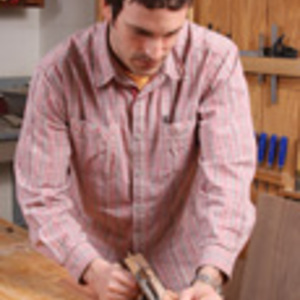
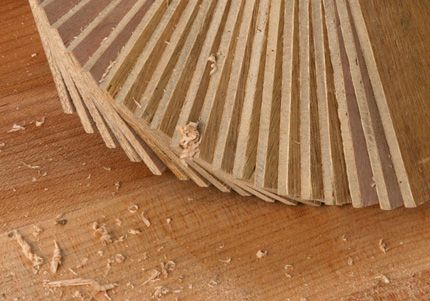
Learn how to save your vise with spacers in the latest episode of our Fast Fix video series.
Let’s face it, a workbench is largely useless without a good quality vise to help secure your work. If you’ve ever built your own bench, you know that this indispensable tool can be quite pricey. That’s why it surprises me whenever I see someone clamping a small or narrow work piece using only one end of a vise, while the other side racks inward due to a lack of support.
The solution? A simple set of spacers that not only keep your vise from racking, but keep a tight grip on your work as well. Learn how to build one in the latest episode of FineWoodworking.com’s Fast Fix video series. And be sure to visit the home of Fast Fix for even more time-saving tips and techniques.


Build Your Dream Bench
 |
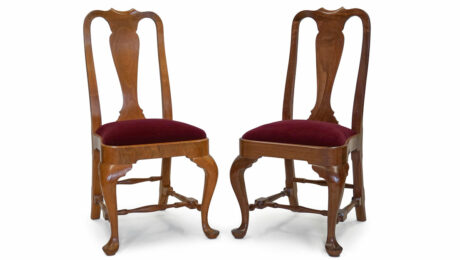
A Workbench 30 Years in the Making Charles Durfee’s classic trestle table seats eight diners, although the author explains how to modify the design to seat more or fewer people. Full-size, CAD-drawn plans are also available. |
 |
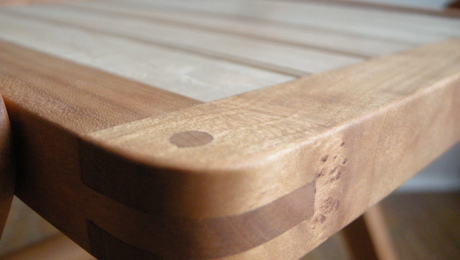
Pins and plugs make Gary Rogowski’s mahogany side table a pleasure for eye. Breadboard ends keep the top flat and are adorned with ebony accents on their ends. |









Comments
Maybe I'm in the wrong spot, but I need some 1/2"-3/4" collets to assemble my wood turning tools. The collets go in the end of the handles and a 1/2" or what have you HSS chisel is slipped in and screwed tight. Anyone know where I can get these collet Thanks for any help. Bill @ knotty Grove Woodsmith
A collet might be overkill.
You might think about using a ferrell to keep the receiving end of the tool from splitting when you drive the chisel in. The purpose of the ferrell is to keep the handle from splitting. It indirectly holds the chisel tight. A chisel doesn't have threads.
The way I understand your question, inserting a collet into the handle, and then the chisel into the collet, you still have a problem of holding the collet. In addition, the diameter of the receiving end of a chisel handle isn't large enough to accept a collet that would be large enough to hold a chisel!
On heavier chisels (not turning tools) that a struck with a hammer or mallet, you might also put a ferrel on the striking end.
I use the appropriate size hard copper tubing for chisels, file handles, etc.
Hope this helps.
OOPS - 1/2" pieces of hard copper tubing are the ferrels for wooden handles to tools - not the handles themselves.
billyfishhead: That's a perfect question for the Knots forum. I'm betting you'll get a TON of answers if you post in there. Hope it helps!
http://forums.finewoodworking.com/forum
Cheers,
-Ed
are you talking aboout the adapters for the metal handles for hosaluk or Kelton type handles? If so try craftsupplies.com
Log in or create an account to post a comment.
Sign up Log in