No. 5 Shaker side chair
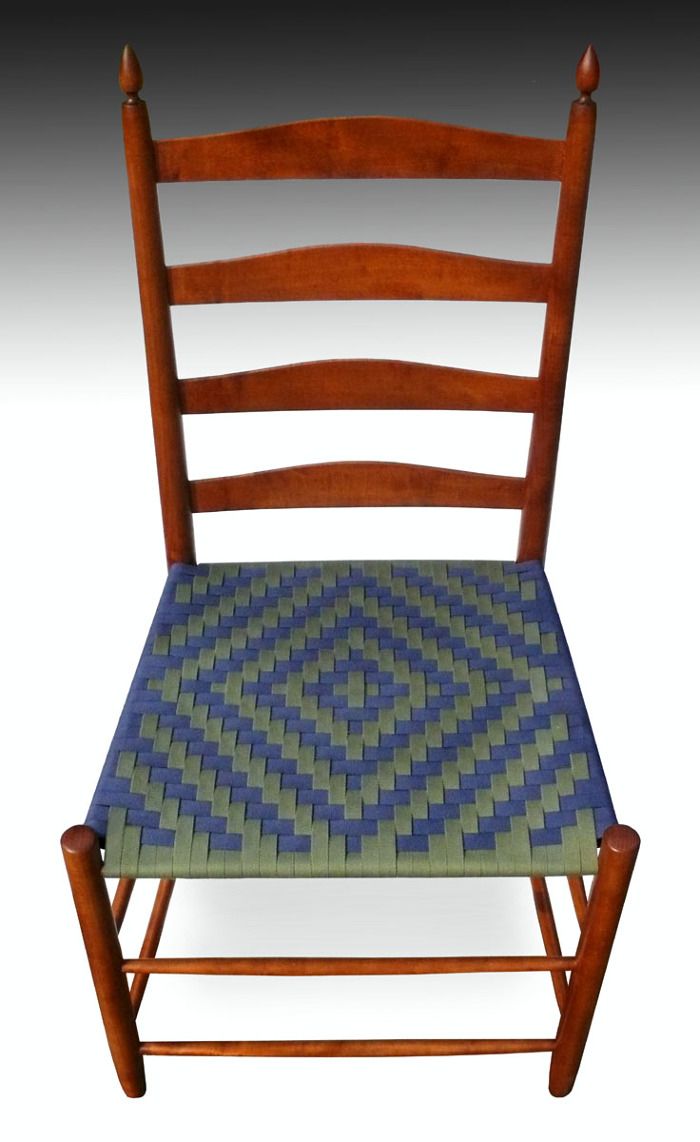
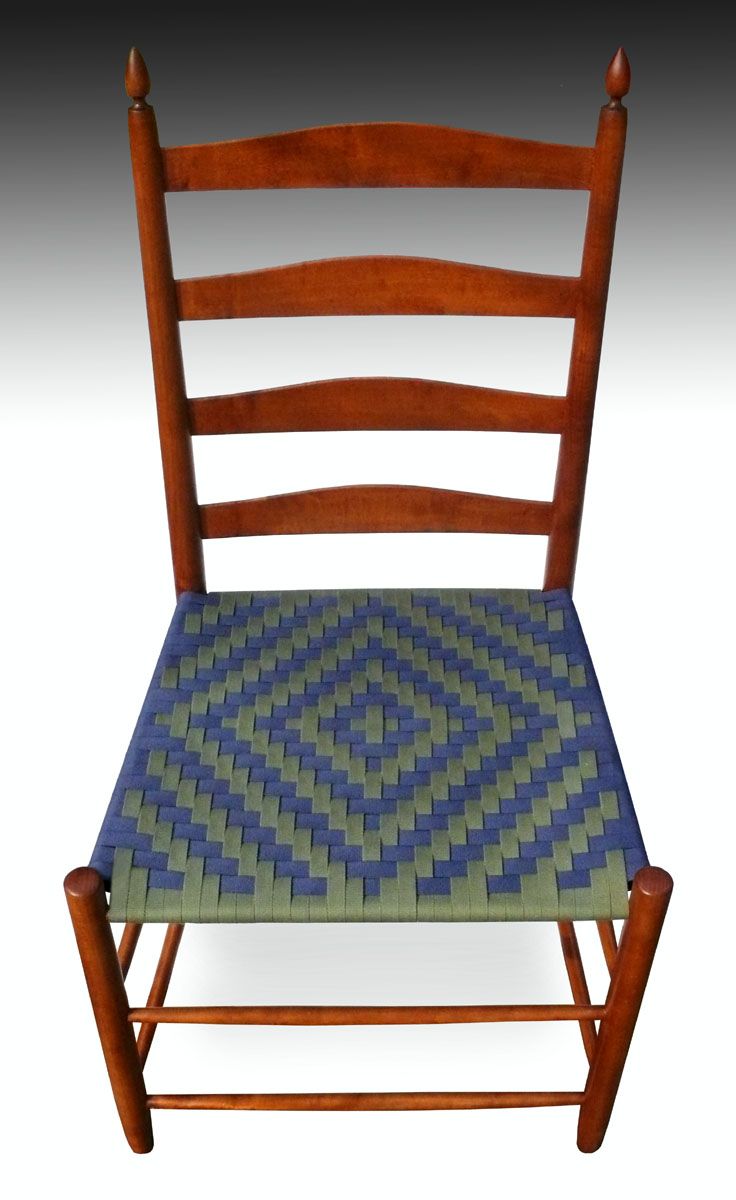
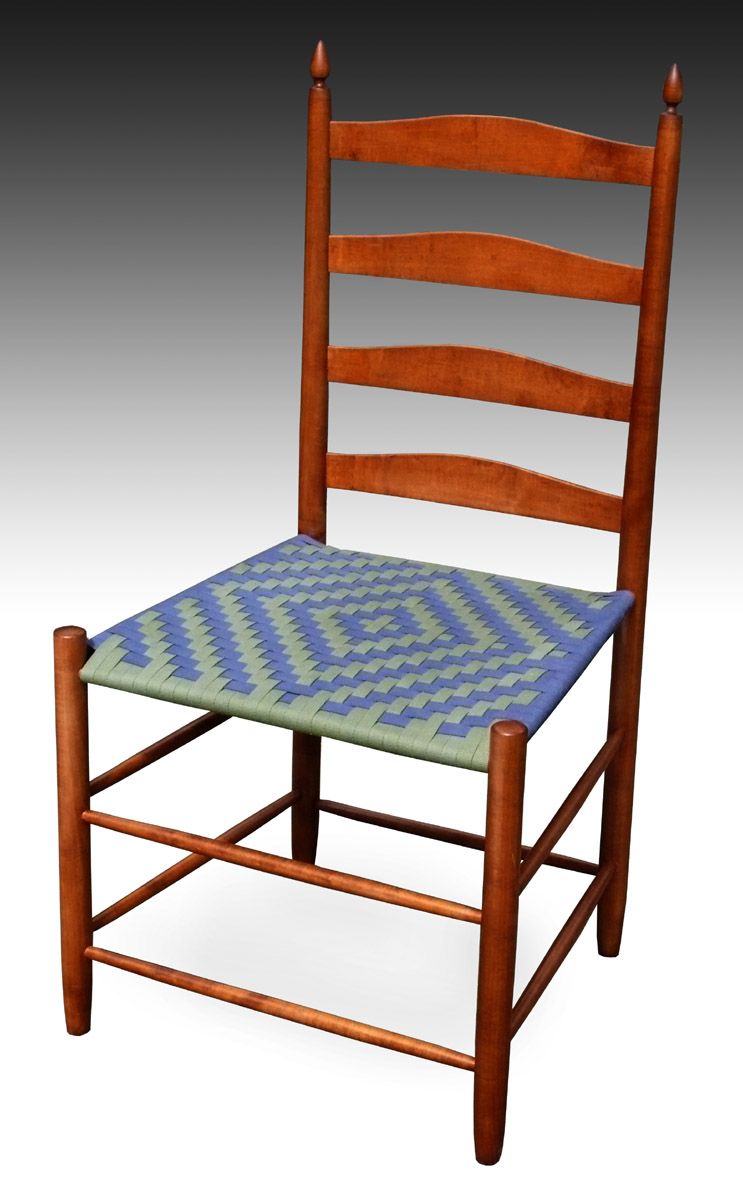
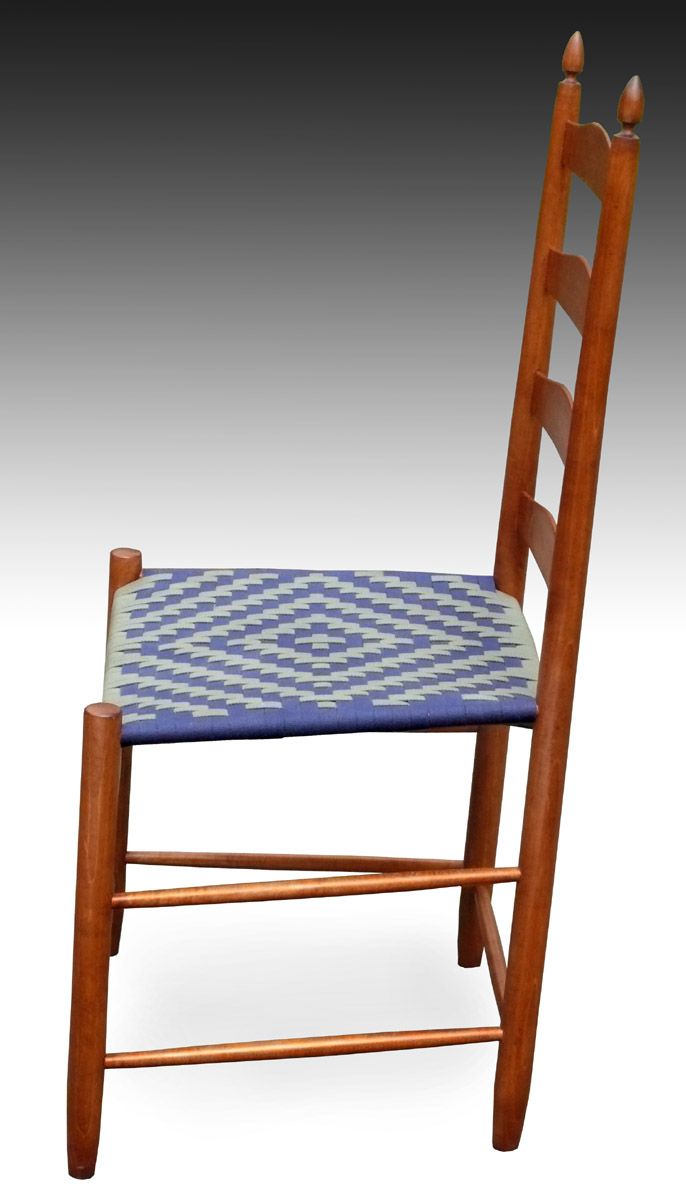
Chair addiction continues. This No. 5 chair is a good size for a dining or side chair. I built it as a prototype using soft maple because it’s inexpensive. Seems plenty hard enough to me. The legs lean back 5 degrees for comfort, and the upper back legs are steam bent to lean back a little further. A certain Windsor chair enthusiast goes on at length about how Shaker chairs are back-breakingly uncomfortable. Well, we have Windsor dining chairs, and this chair is easily as comfortable, if not more so. In addition to its leaning back, the fairly thin stretchers allow it to flex a bit as you sit in it, adapting the chair to your sitting posture.
Stretcher blanks are baked in the oven to drive out moisture and shrink them a little. Then they’re turned as quickly as possible, and the chair is glued immediately. Moisture returns over the next few days, expanding the stretchers for a super-tight fit. Seat is woven with 5/8″ wide cloth tape. Frame is dyed then hand-rubbed (four coats) with a mixture of varnish, tung oil and linseed oil.
-
-
-
For comfort, chair leans back 5 degrees.



Comments
Another great piece Chuck!
Hi Twistjawa,
Thanks, and glad you like it. If you're interested in making Shaker chairs, I proportion the seats using a PC program that I wrote. Based on your approximate dimensions, it figures an an exact spindle distance between legs that will fit the seat's tape rows exactly, without gaps at either end. It also calculates the angle of splay (from front to back), and converts that angle to a circumference dimension for positioning holes to create the splay. It's very flexible in terms of the tape width you use and how much splay you might want. If that sounds confusing, it has a pretty good help system that explains everything. If you'd like a free copy (for PCs, not Macs) just give me an email address and I'll send it to you.
All the best,
Chuck
Thanks for the offer Chuck. Unfortunetly not only do I own a Mac, but I feel my woodworking skills aren't sharp enough to take on chair making. I think I'll live vicariosly through your chairs.
Chuck,
I'd sure like a copy of your program.
[email protected]
Just remove the "no spam".
Thanks,
Martin
Hi Martino23,
Happy to send it, but do you me I should remove the letters "nospam" from your email address?
Hi Martino23,
That should have read "do you mean I should remove the letters
'nospam' from your email address?".
Log in or create an account to post a comment.
Sign up Log in