
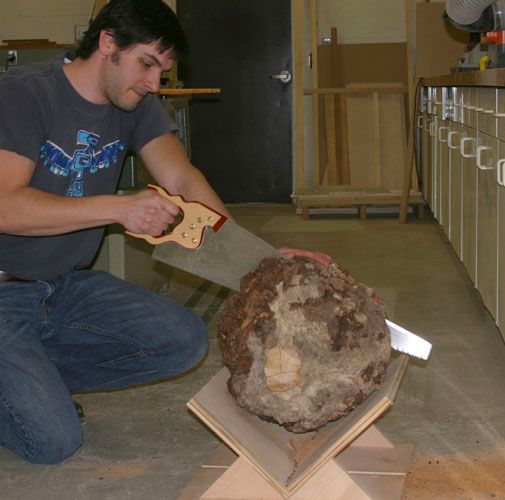
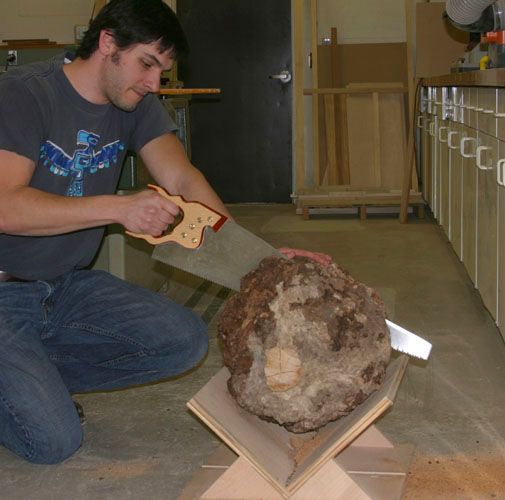
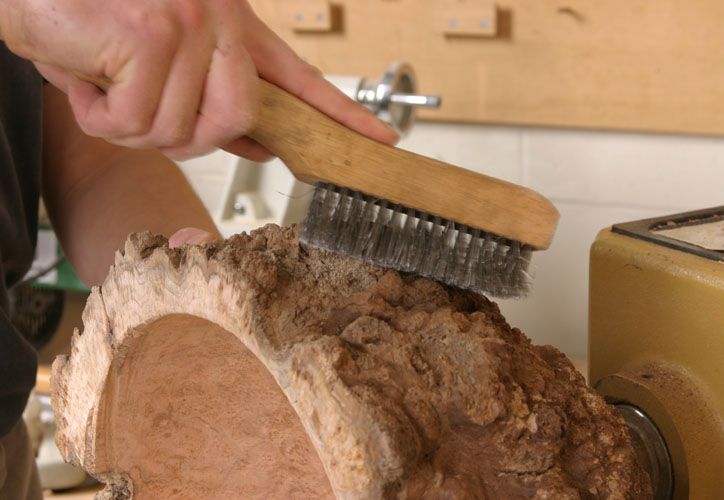
The burl was too big to be cut in half on the band saw, so a handsaw did the trick. I first pried off all the bark and cleaned up the outside with a wire brush to keep the handsaw happy.
A few years ago I was hiking behind my in-laws home in Western Massachusetts when I spotted a good size cherry burl. The tree itself was only about 5 inches in diameter and this 16 inch diameter burl sat about 10 feet up. It became a habit to check on it every once in a while when I would visit.
This past Thanksgiving I went for a run and cooled down afterwards by going to check on the burl out back. As I got closer to where I was sure I saw it last, it was no longer in the horizon. A strong wind must have snapped the tree about 6 feet up and the burl lay on the ground with a 4 foot stem on either side.
The tree was technically on my wife’s uncle’s land, and when he gave the O.K. (Thanks Ed), I knew it was finally time to try bowl turning.
Check out the photos to see the process from start to finish.
-
The burl was too big to be cut in half on the band saw, so a handsaw did the trick. I first pried off all the bark and cleaned up the outside with a wire brush to keep the handsaw happy.
-
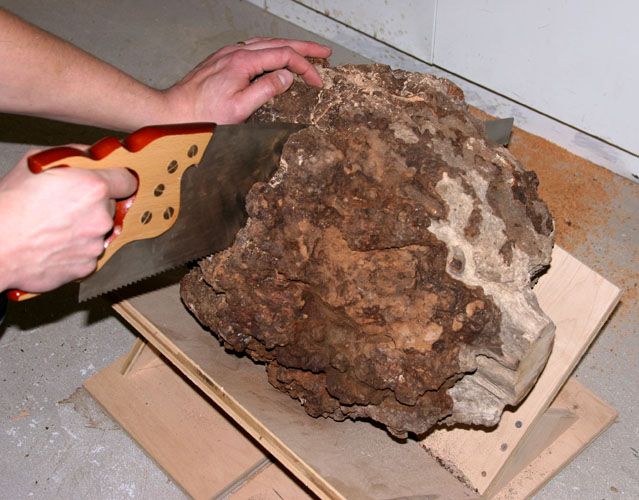
Halfway there...
-
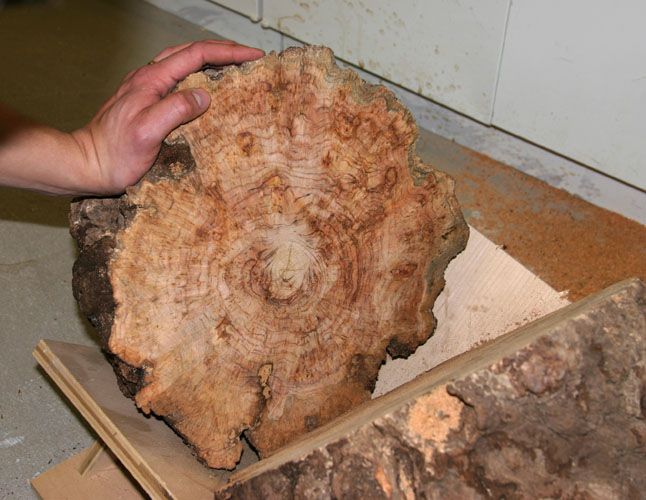
Aaaagh, the figure revealed.
-
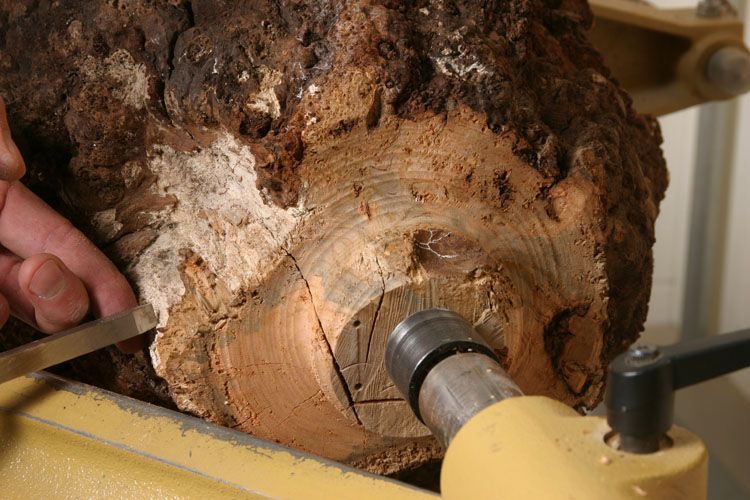
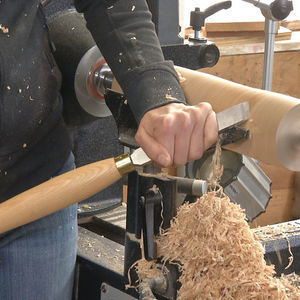
Step 1: I mounted the burl between the drive spur and the live center and turned a tenon on the bottom. Having never turned a bowl before my co-worker Kelly gave me all kinds of great tips.
-
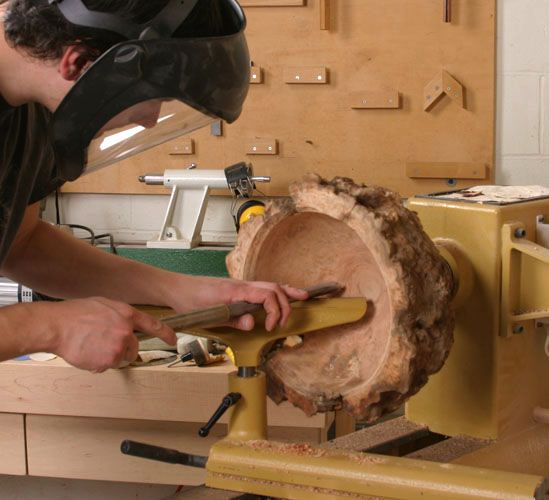
Step 2: Here the burl is mounted on the lathe by tightening the bottom tenon in a four-jaw chuck. I then used a gouge to rough out the inside shape. I should mention that I broke a handle in half with the first gouge and then switched to an all steel handle to feel a little more secure. Nice and easy seemed to be the key at this stage.
-
Step 3: I tried using a turning scraper at this point, but catches were hard to avoid. I set the lathe to a low speed and used a gooseneck card scraper instead.
-
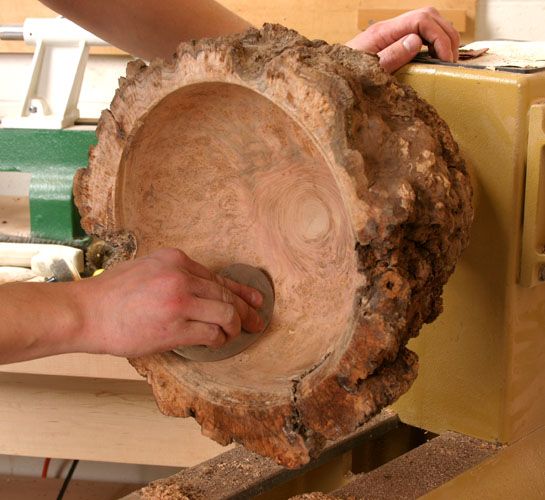
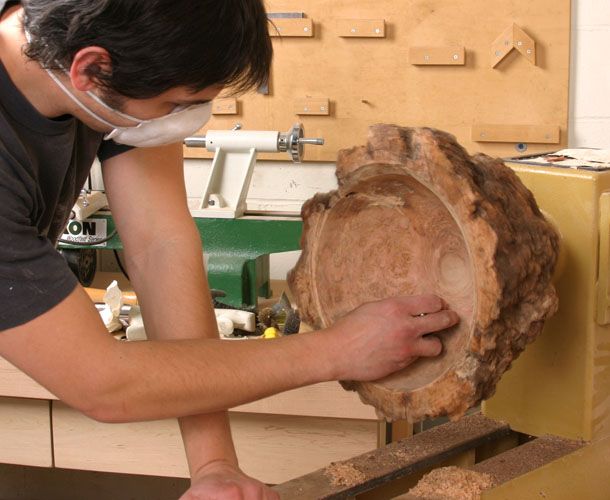
Step 4: Hand sanding through grits up to 600.
-
Step 5: I used a wire brush again for a final cleaning up of the outside.
-
Finishing Up: I removed the burl from the lathe, cut the tenon off the bottom, and used a gouge to hand carve a rim at the top and a design on the bottom. I applied two coats of tung oil to the outside and five coats to the inside, sanding in the second-to-last coat with 600 grit paper.
-
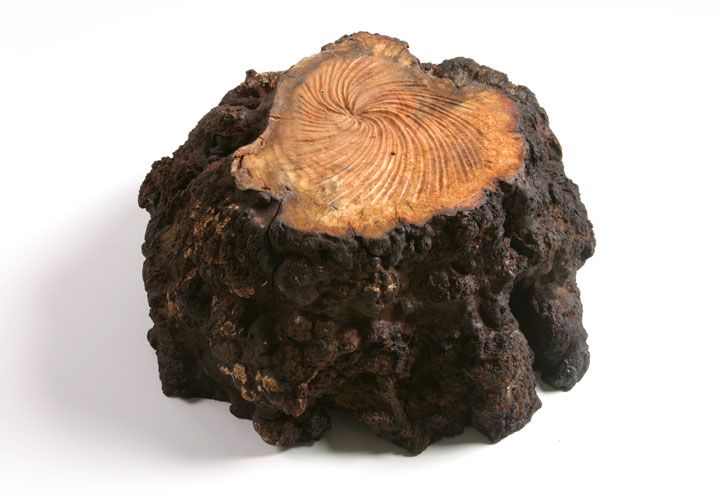
Here's a view of the carved bottom design. This was done to relieve a bit of the center of the bottom to help the bowl sit flat on its outer edges.
-
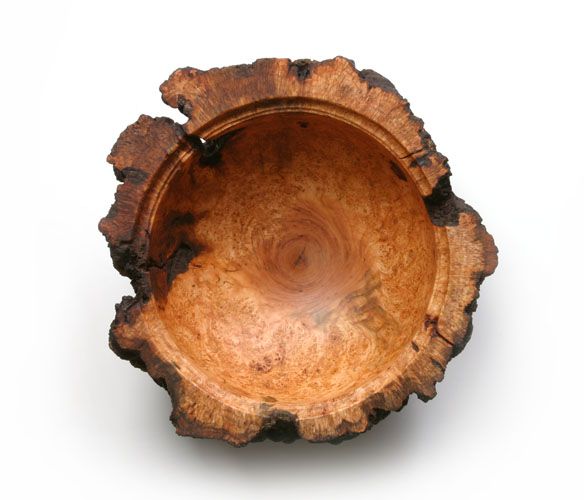
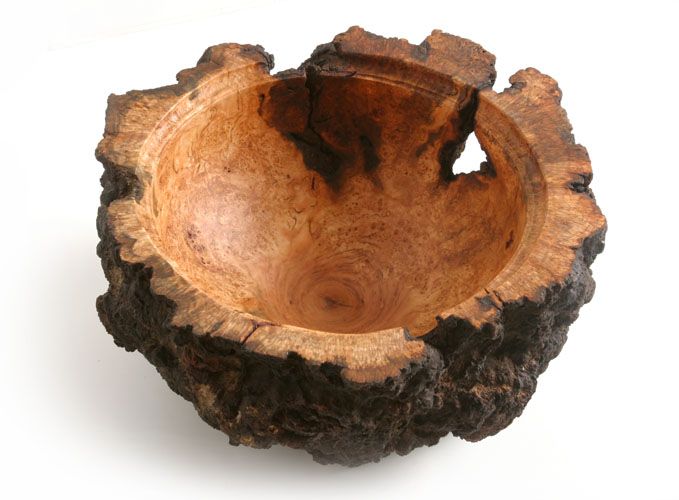
And here's the finished bowl. It was a fun project, but much trickier than I expected. The end grain was tough, especially with all those tiny little knots in the burl, but I think all the time spent taking small cuts, scraping, sanding, and finishing was worth it, to have a one-of-kind bowl. Well, maybe two-of-a-kind: I still haven't decided what to do with the other half.



Comments
Just looked at this bowl in person. It is so beautiful!
I'm bowled over, JT. Nice job.
This is just amazing! I have never seen this process done and I don't think it was as easy as the pictures show. Lots of love in this bowl, for sure. I love the story how the creative person here uses the Creator's design and elaborates on it with the wooden bowl. A once well served cherry tree, now continues to serve as this beautifully designed bowl. Gorgeous!
Not sure who to give the credit to for the actual turning,but job well done! There's not too many turners I know that have undertaken the task you just accomplished. I always pressure wash burls 1st and try to avoid leaving the pith which will most likely crack the bowl if you'd like to keep it around for awhile. Nice detail on the bottom, even an old turner like me just learned something.
John,
Real nice job! I have a "gift" maple burl that I have been trying to figure out how to turn and I like your approach and will try it. Thanks so much for sharing.
Turner of Truro
Great job on the bowl. I love how the tung oil brings out the figure of the burl. My one concern is about the card scraper. I just read a story about a guy that had one catch on the bowl he was using it on and got a nice trip to the hospital.
I always love stories about people being able to salvage wood and make something beautiful with it. Well done!
Log in or create an account to post a comment.
Sign up Log in