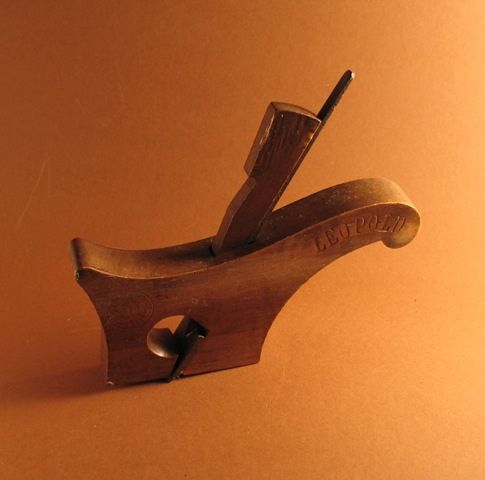
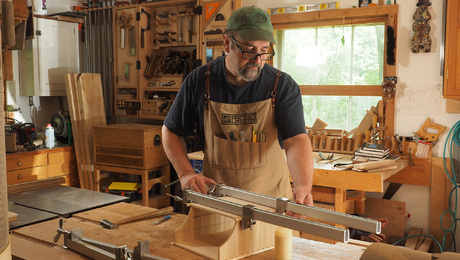
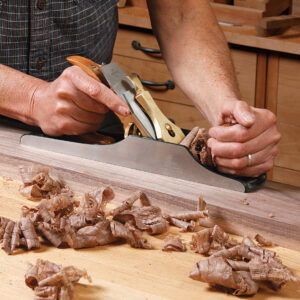
Working on how to design a table? I’ve got a copy of “500 Tables: Inspiring Interpretations of Function and Style” up for grabs. The first person to correctly identify what type of plane this is wins a copy of the book.
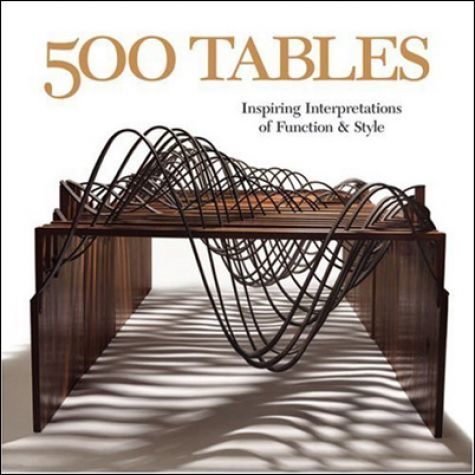 Published by Lark, “500 Tables” reads like a visual encyclopedia of table design. Chock-full of work by master craftsmen the likes of Gary Knox Bennett, Michael C. Fortune and David Hurwitz, it’s sure to keep you inspired as you sail your way through the sawdust.
Good luck!
Looking to build your own table? Our Projects and Design section is loaded with resources and plans.
This site is protected by reCAPTCHA and the Google
Privacy Policy and
Terms of Service apply.



Comments
A carriage makers rabbet plane.
A coach makers Rabbet Plane,
A coach maker built the wooden parts (frames,floors, moldings)of coaches, carriages, buggies, railway carriages etc.
It looks like an old Coachmaker's Plow plane, due to the shortness of the sole.
Wait...I take that back. I think it's an old Spill Plane.
i think this is a instrument makers shoulder plane?
[email protected]
It is a French coachmaker's plane
Aha! It's a Luthier's Plane, possibly a Luthier's Rabbet Plane or Bunny Plane. (???) Well, it looks like one, anyway...
Happy Monday folks,
mvflaim, you won yourself a book.
Cheers,
Ed
Thanks! I finally win something!
Congratulations to Mike.
It is not my intent to dispute Mike being the first to answer the question correctly and I apologize if it seems I am splitting hairs but this may be a matter of semantics and keeping history correct. There was a difference between a carriage-maker and a coach-maker, and a coach maker would have used that type of plane.
“American Woodworking Tools” by Paul Kebabian and Dudley Witney
Chapter 7 deals with Wheelwrights and Carriage Makers.
“The Term carriage was frequently used to identify vehicles for carrying people, including the coach, buggy, surrey, phaeton, and other styles.
The Trades, however, distinguished between the carriage-maker, who constructed the wheeled undercarriage, and the coach-maker, who built the coach body attached to, or suspended above the undercarriage. A parallel may be drawn between the relationship of the house carpenter and joiner and that of the carriage-maker and coach-maker: in each case the latter performed more exacting work then the former and used a considerably greater variety of hand tools.”
Then it goes on to explain the difference between the tools used in coach-making and regular joinery is the design of the planes. Coach-makers planes having short soles because all the surfaces worked were shaped in curves of varying degrees. The Coach- Makers Rabbet plane was used on the front and center pillars of the frame to form the recess for the hinged door.
Thanks
Mark
Log in or create an account to post a comment.
Sign up Log in