
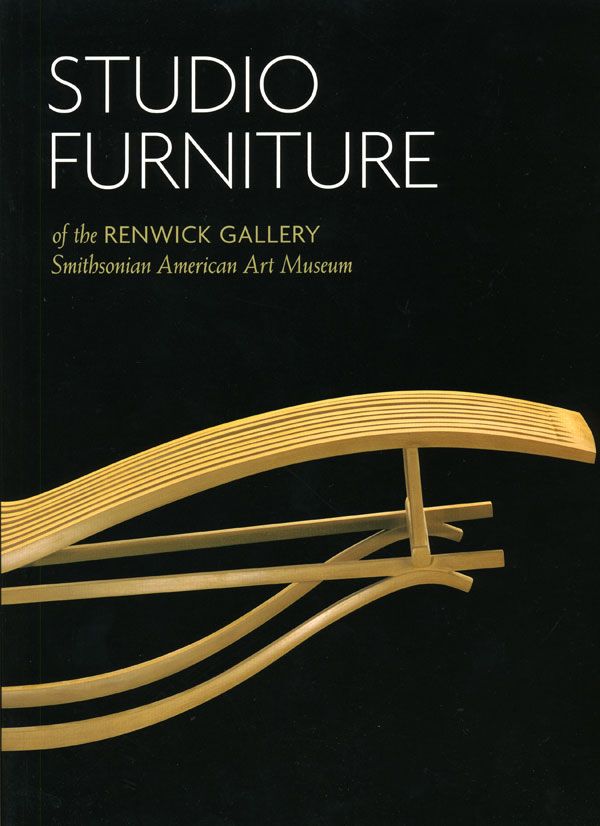
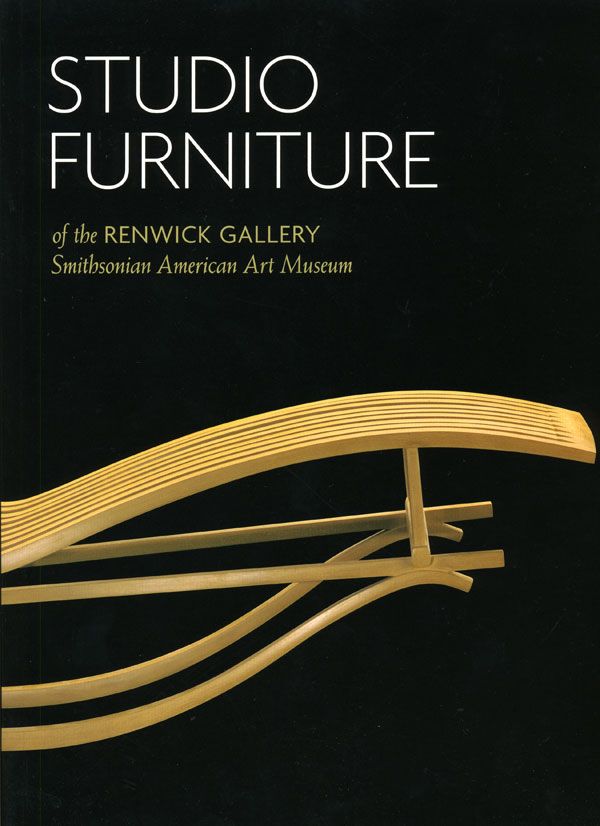
Studio Furniture of the Renwick Gallery by Oscar P. Fitzgerald
Studio Furniture of the Renwick Gallery by Oscar P. Fitzgerald
Smithsonian American Art Museum in association with Fox Chapel Publishing, 2008.
$35.00; 224 pp.
Buy this Book
 The best thing about museum collections is that the pieces are all actually there, to be experienced in person. That’s also the problem with collections: that the pieces must actually be there. So any collection that purports to be representative of a major movement ends up hamstrung by logistical realities. I’m guessing here, but the seminal piece or piece must not be available in many cases.
In this beautiful, wide-format soft cover, Oscar Fitzgerald does an admirable job of describing each maker’s importance to the movement, but the book is only as good as the collection itself, and time and again, I found a maker’s signature pieces missing. Garry Knox Bennett, John Dunnigan, Wharton Esherick, Michael Hurwitz, Kristina Madsen, Jere Osgood, the names are right but the pieces weren’t.
The curators had better luck with some than others. Wendell Castle and Sam Maloof got full justice. And I was exposed to wonderful pieces and makers I had never seen before. On the other hand, recent artists were included whose work is, frankly, mediocre. I saw a blasé version of a Windsor chair, a bad knockoff of a Maloof rocker, and a mediocre children’s chair by someone who was briefly a student and apprentice and then left the field. And some true heavyweights were left out: David Lamb and Terry Moore, with their unmistakably contemporary but always sure handed takes on period furniture; Brian Newell and Michael Puryear, who do the same thing with Asian and African motifs, respectively. Check past back covers of Fine Woodworking for others.
I came away thinking that the way to do a definitive book on the studio furniture movement is not to base it on one exhibit, even one at the nation’s greatest museum like the Renwick Gallery. Why be at the mercy of a curator’s whimsy and the realities of collection when all you need are photos of the pieces, not the pieces themselves? I’ll forward that thought to our books department here at the Taunton Press. Maybe they’ll take up the mantle.
-
Studio Furniture of the Renwick Gallery by Oscar P. Fitzgerald
-
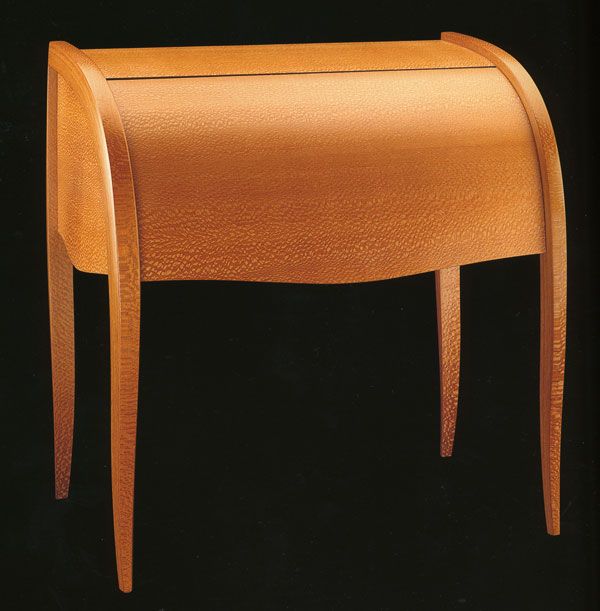
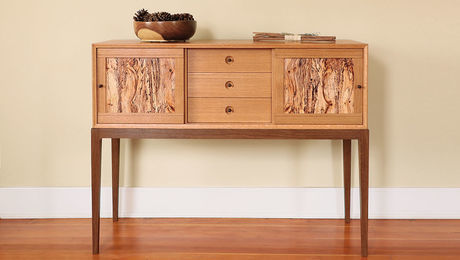
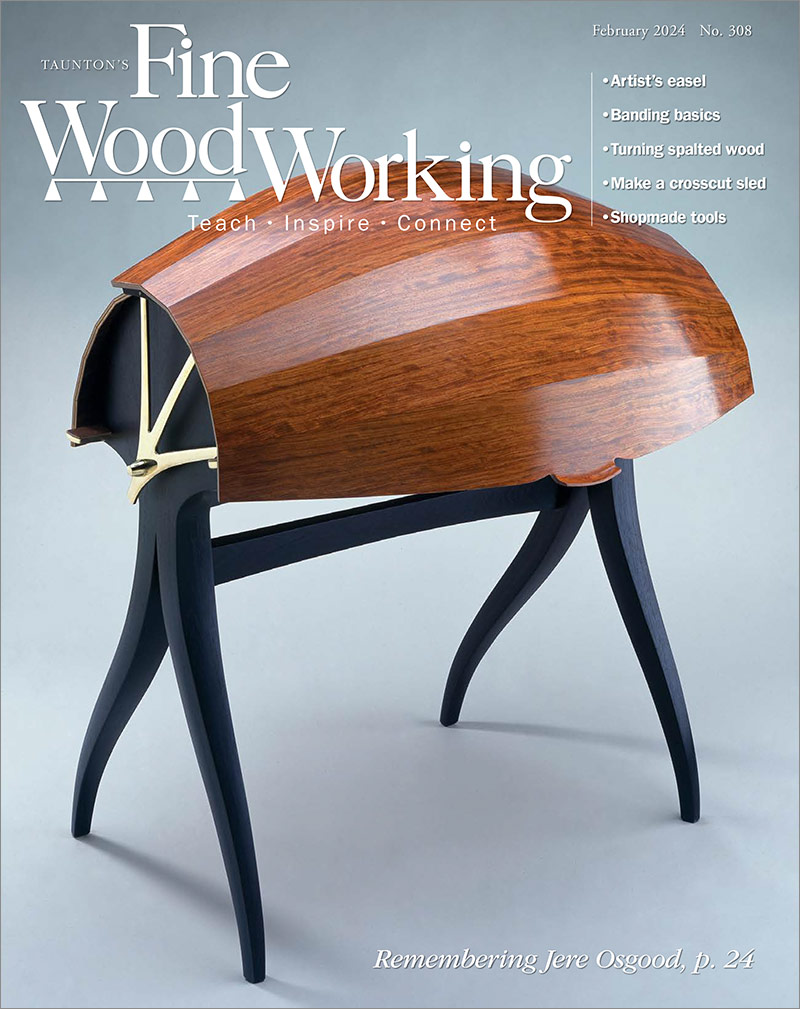
A desk by Jere Osgood
-
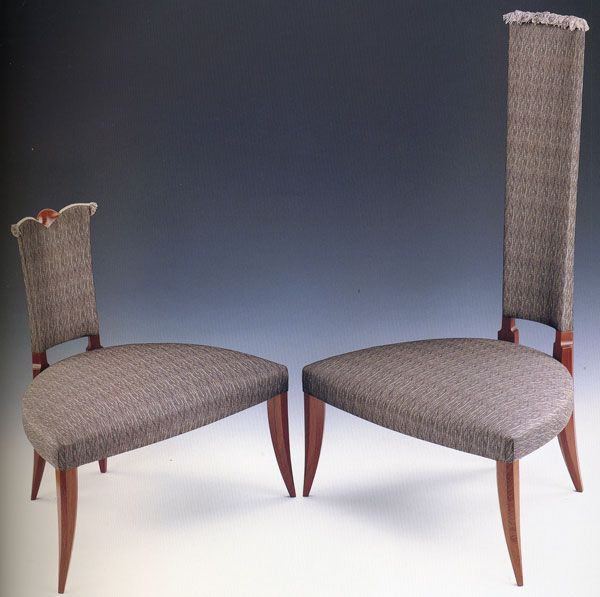
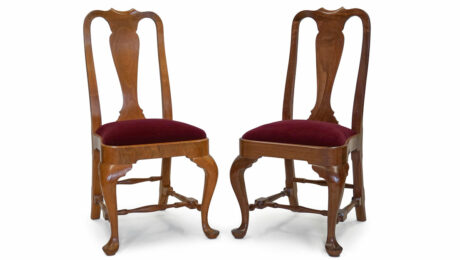
Two chairs by furniture maker John Dunnigan
-
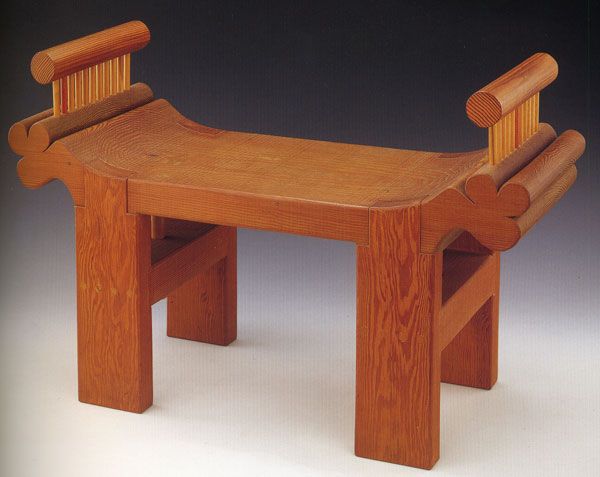
A bench by California furniture maker Garry Knox Bennett




Comments
I visited this collection a few years ago with Chris Gochnour (of Fine Woodworking fame) and came away from the exhibit with mixed feelings. I thoroughly enjoyed the exhibit but did think that some pieces were over-rated.
It seems the same makers are featured in every one of these 'Studio Furniture' books that comes from any museum. Not that I don't appreciate their work but it was good 20 years ago and some of the work featured is actually from 20 years ago. Isn't there anyone else that is worthy of this kind of showcasing, maybe someone that hasn't been around for quite so long? How about a book on the generation of makers that came after all these big names? I love to see quality work by any maker but how about something new from someone new. Hasn't Wendell Castle trained a couple makers, where is their work? To me it is just the same stuff in the same type of book from 20 years ago.
Bob
BStev is right. There weren't enough of the best contemporary makers. The more recent choices were the weakest of all. I hope Taunton will do a book like this and get it right.
Nice Woodworking for Studio Furniture of the Renwick Gallery, It`s morden furniture......! Look more http://www.comfyuk.co.uk
Log in or create an account to post a comment.
Sign up Log in