
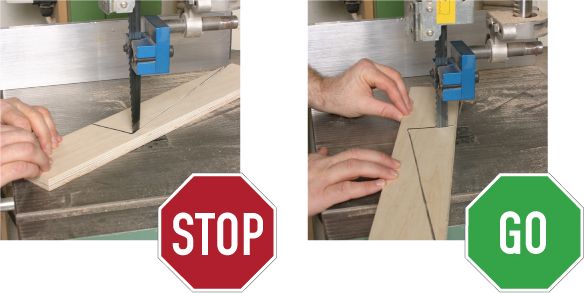
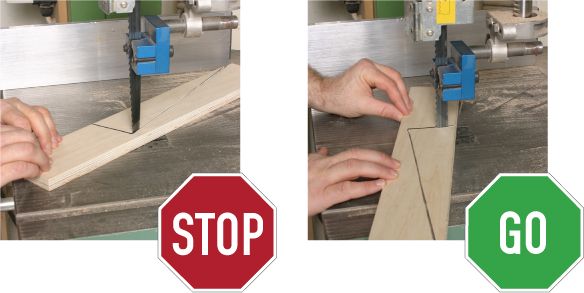
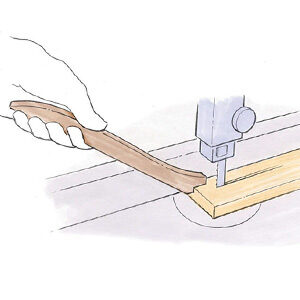
Wrong Way, Right Way: To prevent backing out of a cut or binding the bandsaw blade, make relief cuts first.
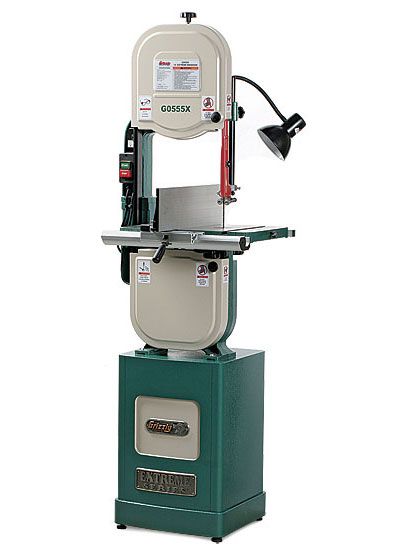
Where a carpenter might use a handheld jigsaw to make curved cuts, most woodworkers turn to a bandsaw. With its continuous cutting action and broad table, the bandsaw offers better control and cleaner cuts than its small cousin.
As with most tools, setup is very important, as is a sharp blade. With the guides retracted, the blade should be adjusted to run in the center of the upper wheel. Then all of the guides should be adjusted close to the blade, with the side guides set just behind the teeth to avoid being damaged. The user should push firmly but not too hard on the workpiece, letting the blade do the work.
| See how Fine Woodworking‘s editors rated Bandsaws in the Tool Guide. Compare models and post your own ratings too. |
The following is a list of safety precautions to consider when cutting with a bandsaw:
1. Always follow the manufacturer’s safety guidelines for your bandsaw
2. Keep your fingers out of the path of the blade
3. Decrease the feed pressure as you approach the end of the cut
4. Keep the wheel covers shut when the saw is running
5. Adjust the upper guide approximately 1/4 in. above the workpiece before starting the saw
6. Keep the blade guard in place
7. Disconnect the bandsaw from the power source before changing blades
8. Always wear eye protection when working with the bandsaw
9. If the blade breaks or runs off the wheels, do not open the covers until the machine has come to a complete stop
10. Stop the saw before removing small chips that have become stuck in the throat
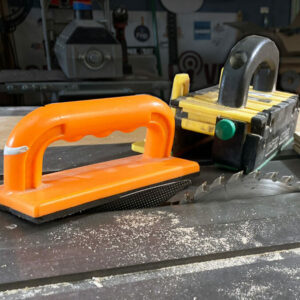
11. Use push sticks when necessary to avoid placing your fingers near blade.
12. Be sure the workpiece stays in contact with the table at the point where the blade exits.
Do you have more bandsaw safety advice to share or a scary bandsaw story? Post a comment below and help your fellow woodworkers stay safe.
-
Wrong Way, Right Way: To prevent backing out of a cut or binding the bandsaw blade, make relief cuts first.
-






Comments
Never crosscut a cylindrical piece without proper jigs to hold it in place. If you do the piece could rotate, bind and break the blade or cause injury.
Ensure that the out-feed table is big enough to support the cut pieces. Extend the out-feed and side table if necessary so that both cut pieces will be fully supported.
The band saw will do a good job of squaring or slicing a log of natural wood but it is very important to start with one flat face to ride on the table. Without a flat face the log could twist or roll causing the blade to get pinched, bent or snap. First flatten one face with a hand held planer (for example) or fasten the log to a flat board to act as a sled. Once you have one flat face you can cut a second face at right angles to it and thereafter proceed to the jointer or table saw.
Make sure your saw is place on a more stable table. This will avoid unnecessary shaking while making your cut.
"Great wood-working tools."
Log in or create an account to post a comment.
Sign up Log in