
Bench-Chisel Safety
Chisels are sharp and can easily cause injury, so follow these safety precautions when using a chisel.
 Apr 01, 2009
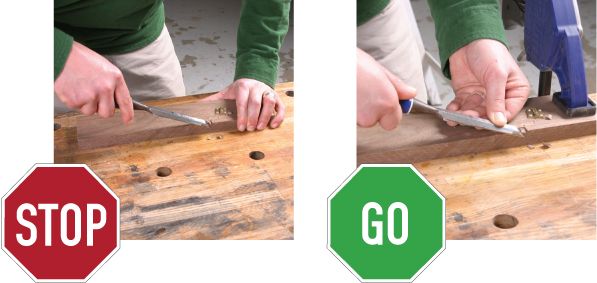
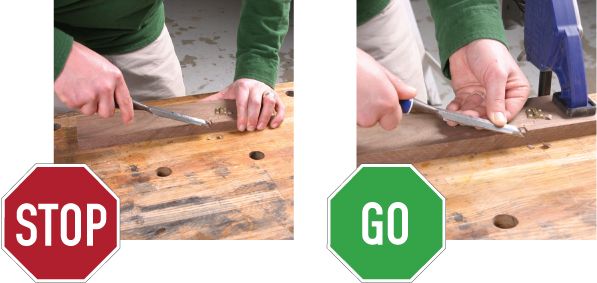
Wrong Way, Right Way: Never hold a workpiece with one hand while chiseling with the other. Secure it with a clamp or bench vice.
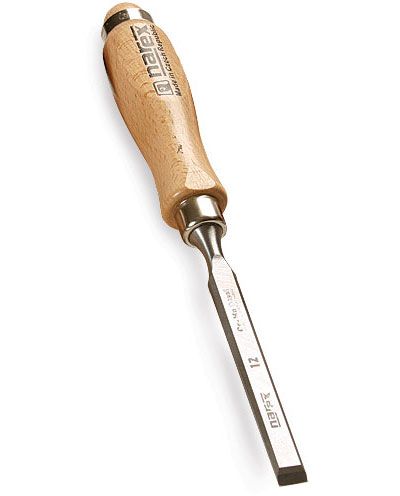
Bench chisels are an all-purpose tool used for a wide variety of cuts, from paring away slivers of wood from a tenon, to chopping out the corners of a drilled or routed mortise. Additionally, specialty chisels, such as mortising chisels, do one job very well.
For heavy chopping operations, the bench chisel is powered by a mallet. Other operations can be done strictly with hand pressure. Regardless of the task, however, all chisels must have a perfectly flat back and an extremely sharp edge to work properly. So it takes some initial tuneup and ongoing maintenance to keep them that way.
Even though chisels aren’t powered by motors and belts, they are sharp and can easily cause injury. The following is a list of safety precautions to consider when using a chisel:
.1. The number one rule of chisel safety is to keep them sharp. A dull chisel is a dangerous chisel, as it will require more effort to push the chisel through the stock.
2. Always clamp the work securely in a vise or to the benchtop
3. Never hold the work with one hand while chiseling with the other.
4. Always cut with the blade pointing away from your body and keep your hands behind the cutting edge.
5. Use sandpaper to break the sharp machined edges on new chisels to prevent cutting yourself while holding the chisel.
Do you have additional safety advice to share about chisels? Post a comment below and help keep your fellow woodworkers safe.
-
Wrong Way, Right Way: Never hold a workpiece with one hand while chiseling with the other. Secure it with a clamp or bench vice.
-


Comments
You can cut yourself quite easily when you are NOT using the chisel. It may be lying about on your bench or you are fumbling through a drawer to pick up a different tool and end up cutting yourself. When not using your chisel put a plastic cap on its end to protect yourself and to protect it.
Log in or create an account to post a comment.
Sign up Log in