Gallery
New infill plane by Juan Vergara
Feb 22, 2013
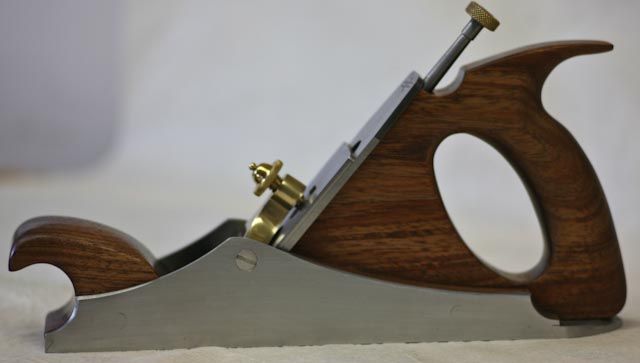
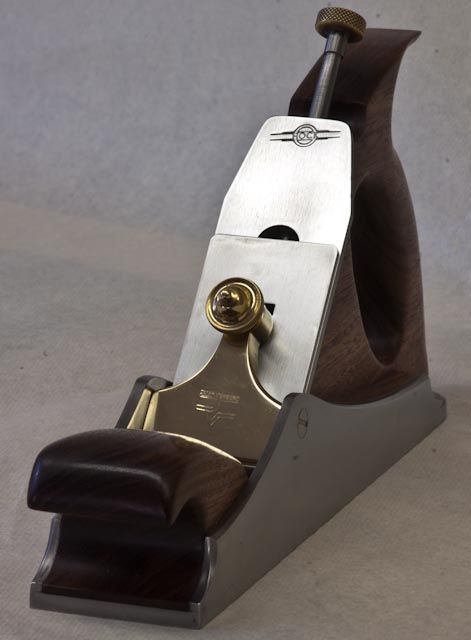
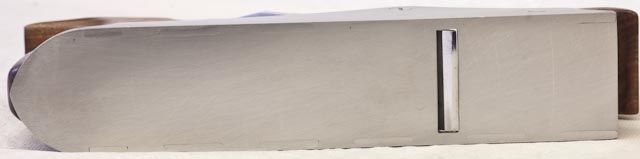
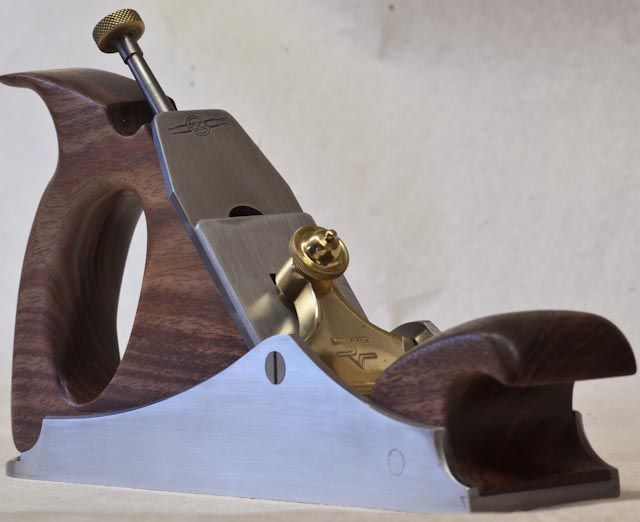
Here’s my latest infill plane, now up on e-Bay. The design of the plane remains that of my last, but the infill, starting with the closed tote, differs reflecting input from George Wilson, Derek Cohen, and others. Here are the technical details:
- The plane measures 2 1/2 x 12 inches, plus another 3/4 inch for the overhang of the bun.
- The sides and sole are made of 0-1 tool steel, 3/16 inch thick for the sides and 1/4 inch for the sole, held together with double dovetails carefully peened, filed and sanded until the joints (almost) disappear.
- There’s a steel frog measuring 1/2 x 2 x 1 1/2 inches pitched at 50 degrees riveted to the sole of the plane just aft of the mouth, making for a very low center of gravity.
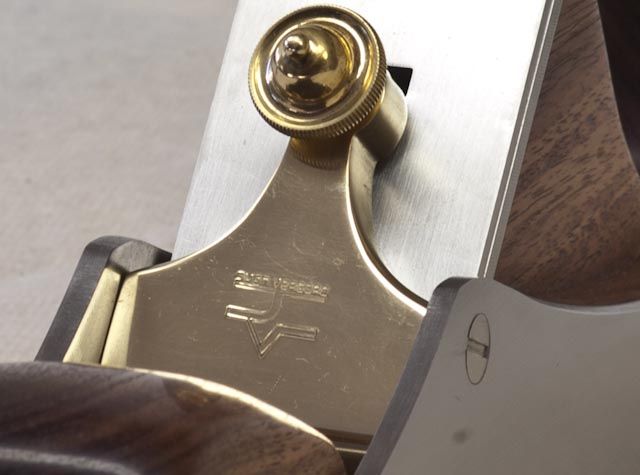
- That’s a special-order 2-inch Hock iron, 3/16 inch thick, beveled at 30 degrees plus micro-bevel, and pitched at 50 degrees. It’s honed “scary sharp.”
- The leading edge of the chipbreaker is beveled at about 50 degrees in accordance with the conclusions of a Japanese engineering study (Google “Chipbreaker Japanese Video”) showing this as a way of improving a hand plane’s performance.
- The mouth is a mere sliver, registered 3 1/4 inches from the toe.
- The plane weighs 7 pounds.
- This baby will give you a glass-like surface on pretty much any board you want to work. The photos show the shavings I got from some very old, very dry, very tough quartersawn oak, from some gorgeous hard maple, and from a board of unknown species picked up at a garage sale that’s harder than even the oak and the maple.
- The Norris-type adjuster is made by Ray Iles.
- The infill is black acacia, wet sanded three times to the 400-grit level with Tried and True varnish oil and polished by hand with Micro Mesh abrasives to the 12,000-grit level, topped with Liberon wax. It’s baby-bottom smooth.
I am eager for input, positive and negative, from all corners. My goal is to make superb planes, and I figure the best way to get to that point is to listen carefully to folks who know more than I do. And I don’t have a thin skin, to be sure, so let fly, one and all.
This site is protected by reCAPTCHA and the Google
Privacy Policy and
Terms of Service apply.















Comments
How much $?
Bidding starts at $1K.
Log in or create an account to post a comment.
Sign up Log in