Cantilevered Bar Stool
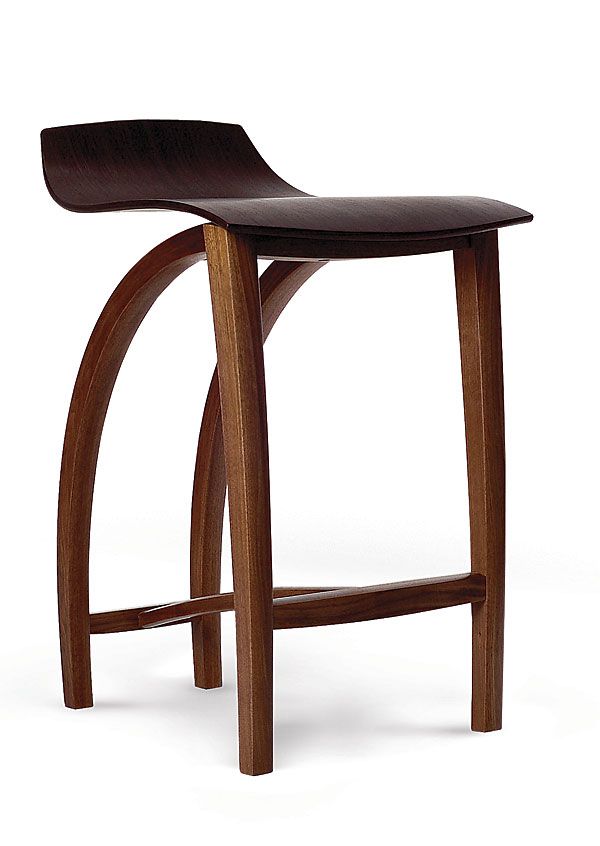
Cantilevered Bar Stool
Woodworker: Reed Hansuld
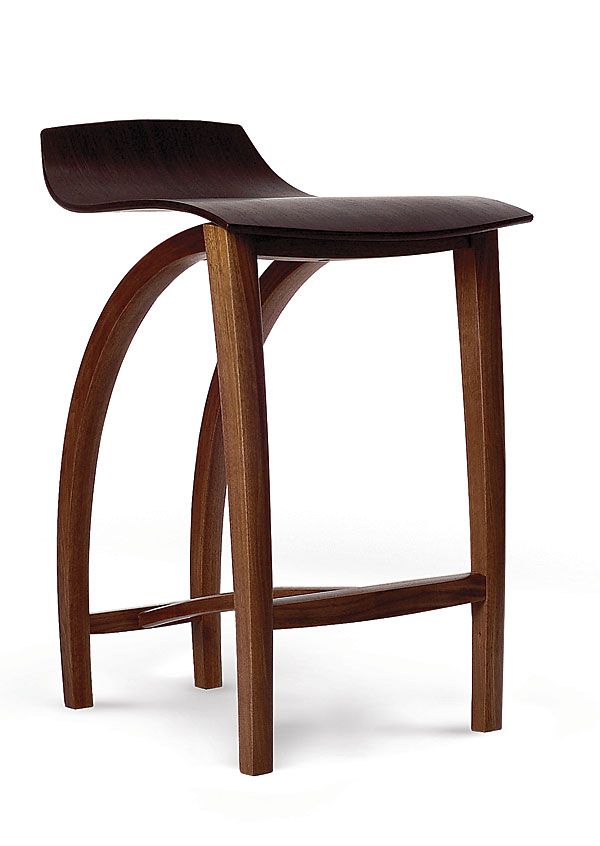
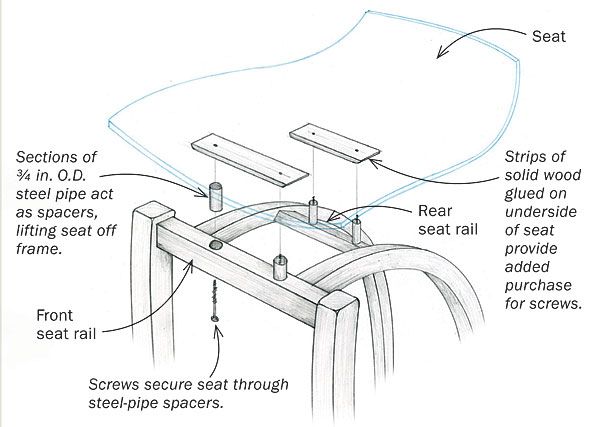
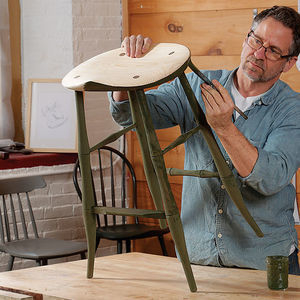
Hansuld wanted to create “something that would play on the eye” and challenge expectations of what makes a sturdy bar stool. For efficiency’s sake, he also wanted to limit the number of parts required to make the stool. With its upswept seat cantilevered out over back legs that bend 90° to meet the front seat rail, his design is striking and simple. To make it structurally sound, Hansuld used tapered bent-laminations to make the back legs, joining them to the front seat rail with double slip tenons. He added a curving H-stretcher system to connect the back and front legs. And to make the leg structure even stronger, he fitted a rear seat rail between the back legs. The seat is a bent lamination-three layers of 1⁄8-in. Baltic-birch plywood stained around the edge with water-based dye and veneered top and bottom with wenge. To allow the seat to “float” yet still be supported solidly, Hansuld used lengths of pipe as spacers in the four spots where he attached the seat to the frame. The stool is 19 in. deep by 18 in. wide by 28-1⁄2 in. tall.
-
Cantilevered Bar Stool
-
Connecting the floating seat


Comments
Eye-pleasing design. I like the way the downward curve of the rear legs matches the upward curve of the rear of the seat. Total design is efficient yet elegant.
Log in or create an account to post a comment.
Sign up Log in