Eye-Fooling Cabinet
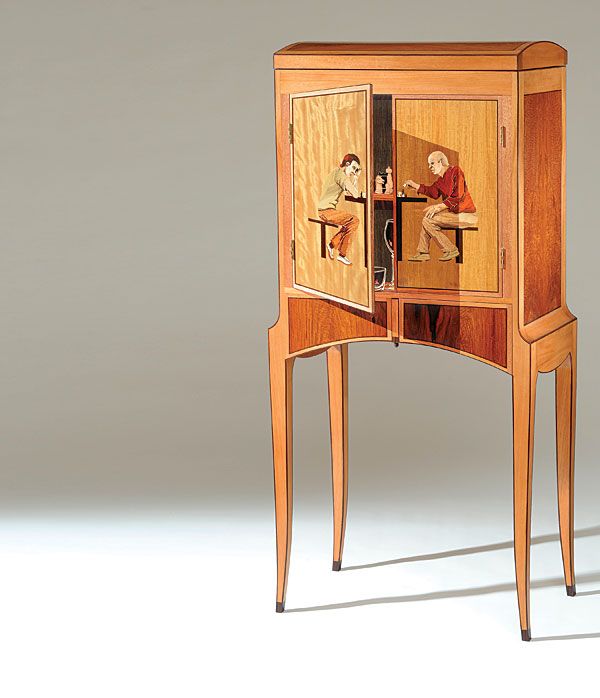
Woodworker: Silas Kopf
When he started out as a woodworker in the mid-1970s, Silas Kopf didn’t know any experts in marquetry, so he taught himself the craft from a book. But he never stopped looking for teachers. A trip to Italy in 1984 opened his eyes to the secrets of intarsia—a combination of marquetry and inlay perfected by Italian craftsmen during the Renaissance. Their work often featured eye-fooling tricks of perspective, and the seemingly half-opened door on Kopf’s recent cabinet is a direct tribute to the golden age of intarsia. Several years after his trip to Italy, Kopf began studying the work of Abraham and David Roentgen, 18th-century German makers whose cabinets for kings and tsars were not only embellished with superb marquetry but bursting with inventive mechanisms and secret compartments. Kopf’s cabinet is an elaborate homage to the Roentgens as well, but the evidence is well hidden.
Photo credit: David Ryan



Log in or create an account to post a comment.
Sign up Log in