-
3 Steps to Great Glue-Ups: Sliding Dovetail Joints -
Buying and Using Trim Routers -
Dedicated Sled Delivers Perfect Finger Joints -
How to Cut Sliding Dovetail Joints -
How to Make a Simple Jig for Offset Knife Hinges -
Five Minute Guide: How to Use a Tablesaw -
Five Minute Guide: Glue-Ups -
Upgrade Your Jointer with a Segmented Cutterhead -
How to Drill Windsor Chair Mortises -
Tablesaw Tapering Jig is Safer and Faster -
Fixing Woodworking Mistakes -
How to Apply an Aerosol Finish -
Best Tabletop Finish -
T-Track is a Smart Workbench Accessory -
Box Making Tips and Tricks -
Router Jig for Perfectly Aligned Dadoes -
How to Sharpen a Card Scraper
Reader's Gallery
FWW Magazine Gallery, member
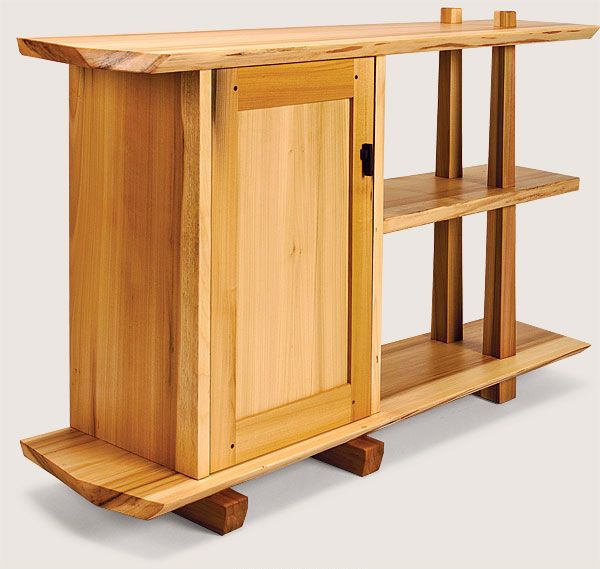
In building his asymmetrical cabinet, Sterling left the natural edges on the planks he chose from the Esherick poplar as a way of honoring the tree. Sterling likes using live-edge boards, he says, because it makes each piece of furniture unique and “lets the tree speak in its own language.” His cabinet is 13-in. deep by 43-1⁄2-in. wide by 28-3⁄4-in. tall. The door pull and pins are walnut. Photo: James Mario
Design or Plan used: Not specified
posted in: Reader's Gallery, walnut, Tullp poplar, Esherick-inspired
Esherick-Inspired Cabinet
comments (0) October 24th, 2012 in Reader's Gallery
In building his asymmetrical cabinet, Sterling left the natural edges on the planks he chose from the Esherick poplar as a way of honoring the tree. Sterling likes using live-edge boards, he says, because it makes each piece of furniture unique and “lets the tree speak in its own language.” His cabinet is 13-in. deep by 43-1⁄2-in. wide by 28-3⁄4-in. tall. The door pull and pins are walnut. Photo: James Mario
Design or Plan used: Not specified
posted in: Reader's Gallery, walnut, Tullp poplar, Esherick-inspired


Comments (0)
You must be logged in to post comments. Log in.